I have deliberately included this page for SRS rather than include it in the history of the Derbi brand. The origins of what would become Derbi started in Mollet del Valles, to the north of Barcelona. In 1922 Simeó Rabasa i Singla (1901–1988) created a small bicycle workshop with his brother-in-law, Vicenç Solá, aimed at the assembly and repair of bicycles.
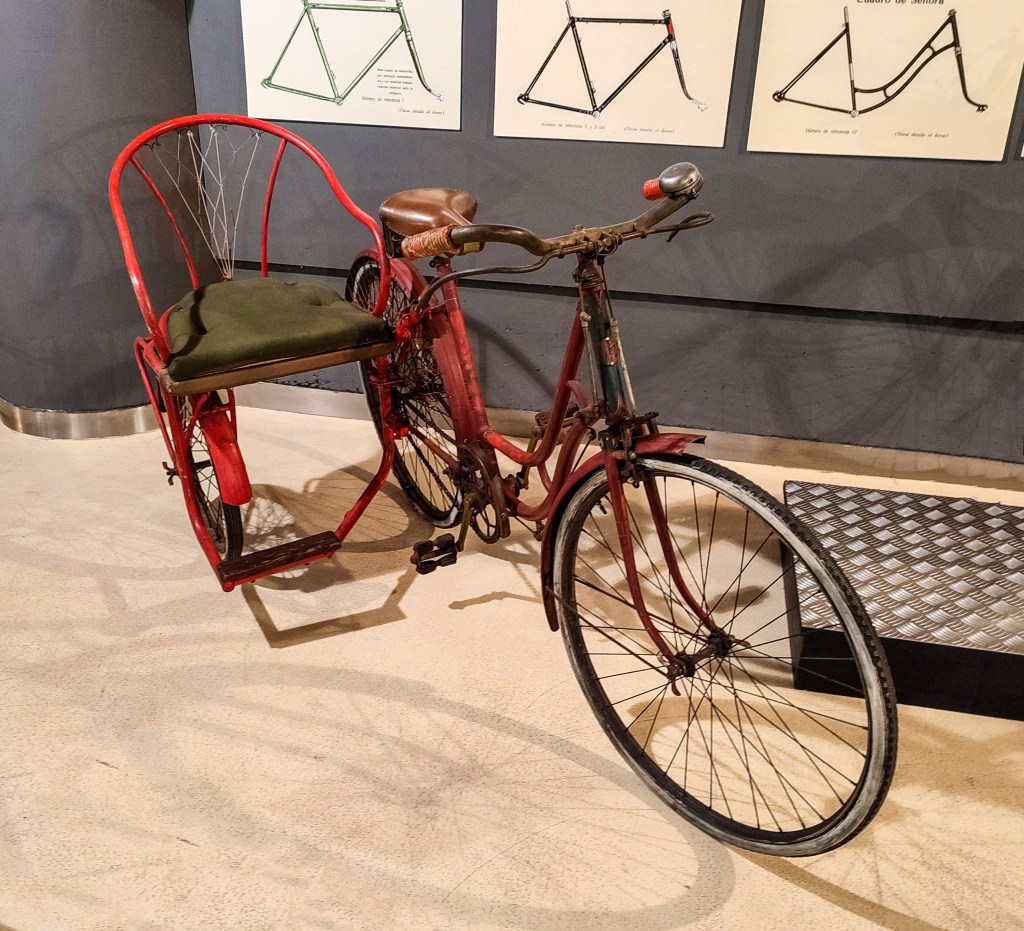
This Rabasa cycle and sidecar dates from 1922 and was used by the Barcelona Fire Brigade.
In 1929, Simeo Rabasa and Vicenc sola decide to part company and, whilst Sola remains in Mollet del Vallès, Rabasa sets up as “Bicicletas Rabasa” in the Martorelles area. Rabasa had initially bought in bicycle frames but then he starts to manufacture his own and had established a reputation for quality that saw him win contracts to supply frames and other parts to local manufacturers.
By the mid-1940s, the motorising of bicycle frames, either with fixed or auxiliary engines, was becoming more common and Rabasa had decided to enter that market himself. He won a contract to supply the first 1,000 frames and forks for the new Moto Guzzi Hispania 65cc, which appeared in 1949. Armed with that experience, when the contract was completed, he began to produce his own moped.
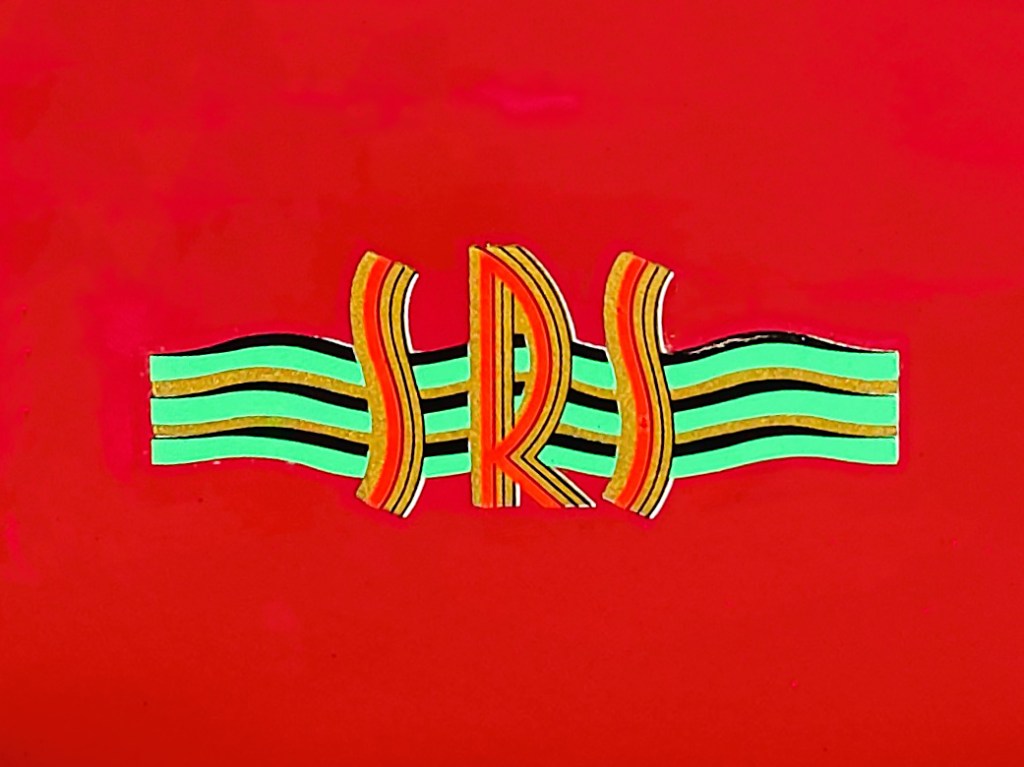
His first machines were badged with his own initials as the SRS (Simeó Rabasa Singla) and were quite advanced, in comparison with the competition. It featured an IRESA, (Industrias Reunidas Espanolas, SA) single-cylinder, 2-stroke, air-cooled engine, initially of 48cc but from 1951 it was increased to 53cc giving circa 1.5 CV. These engines had a cast iron cylinder with an aluminium cylinder head and had a 2-speed transmission, with a hand change lever. Unusually, the SRS was also fitted with suspension to the front (telescopic) and, from the second variant, a plunger type suspension to the rear.
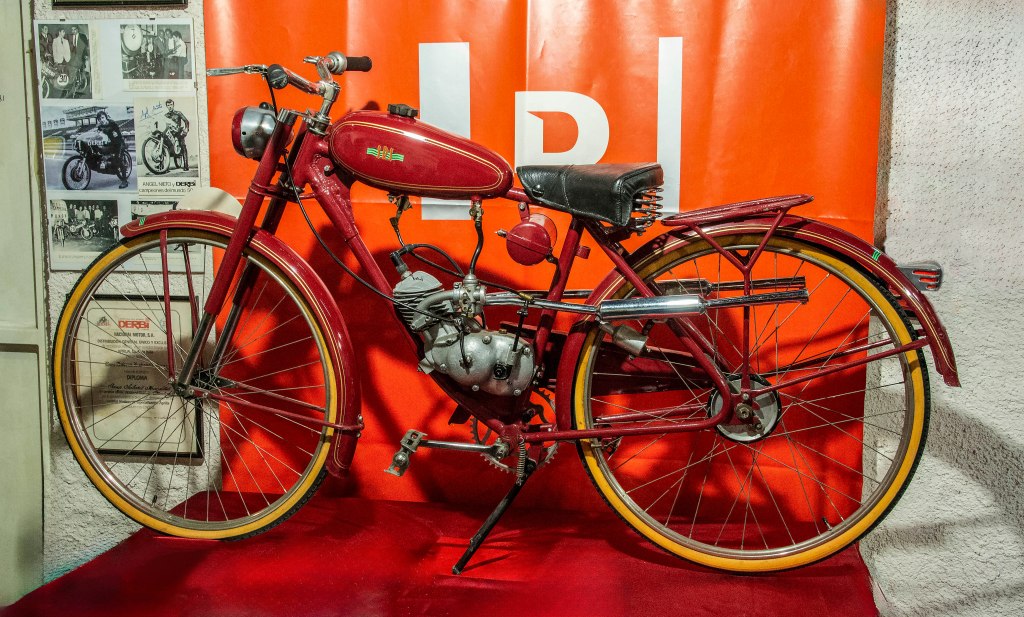
This first series SRS is part of the Pujolar Collection, based in Santa Cristina De Aro, Catalunya, Spain
The SRS proved to be very successful and led to Simeó Rabasa making another change of direction for his company and its future. In 1950, he changes the company name to the Nacional Motor SA but uses the commercial name Derbi, taken from the Catalan phrase “Derivats de bicicletes”, meaning derived from bicycles and the Derbi brand was born.
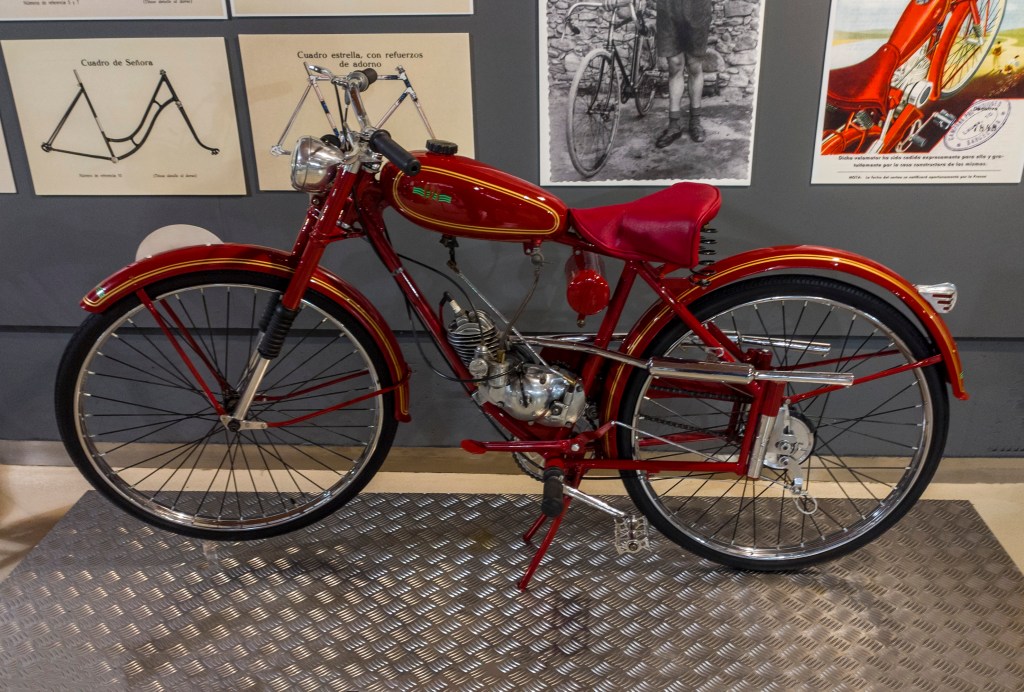
This second series SRS was displayed at the Museu Moto Bassella, Catalonia as part of the 100th Anniversary of the Derbi brand 1922-2022 and was on loan from the Pujolar Collection, Santa Cristina De Aro, Catalunya, Spain
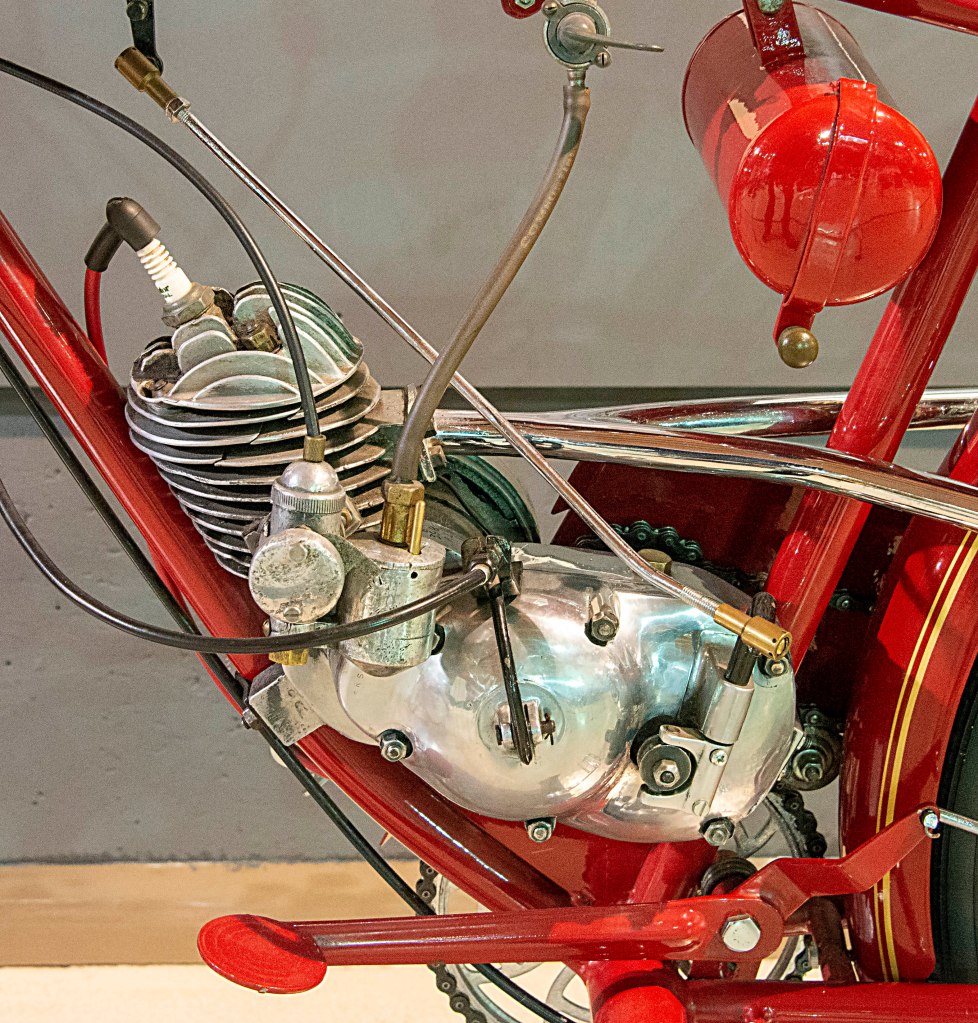
The IRESA, (Industrias Reunidas Espanolas, SA) single-cylinder, 2-stroke, air-cooled, 48cc engine.
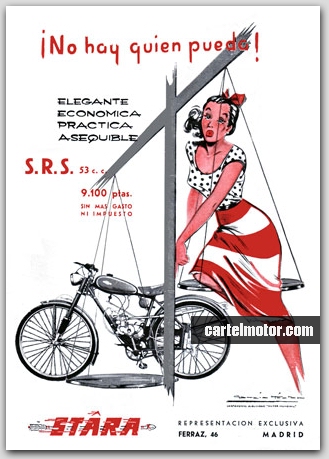

 Spanish Motorcycles
Leave a comment