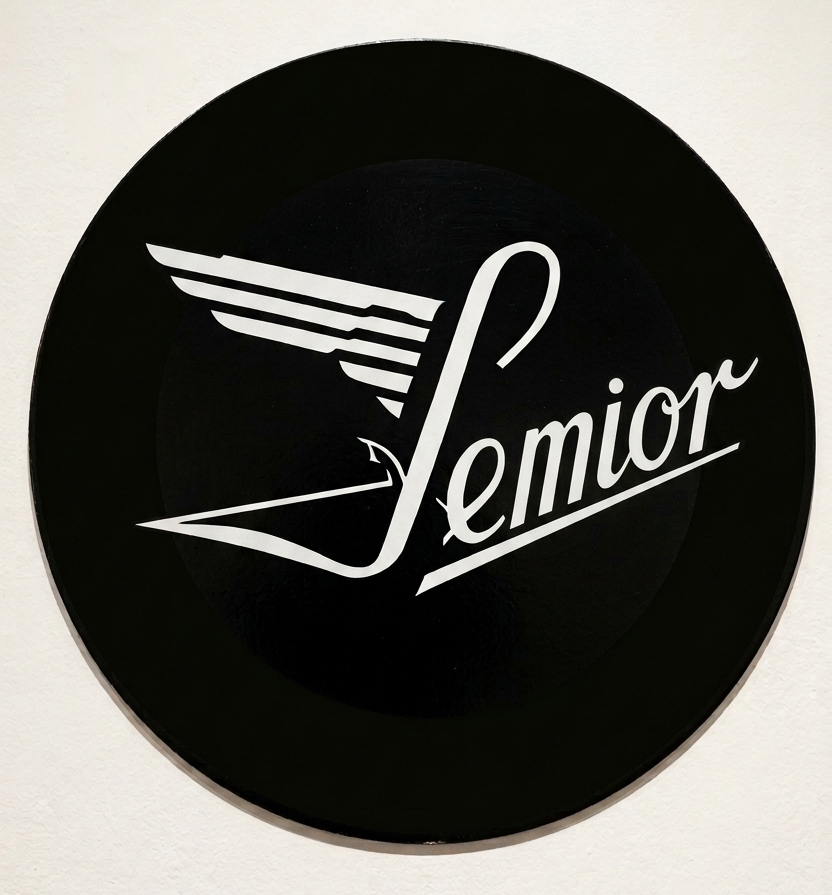
Carrocerías y Construcciones Mecánicas Semior S.A was created in the late 1940s. The fusion of the 3 partners – Serra, Miró and Ortolá – gave the initials needed to create the simplified brand name Semior.
They had premises at Calle de Espronceda, 328 in Barcelona and had the intention of manufacturing cab units for delivery lorries before that fell through and they turned to the production of sidecars.
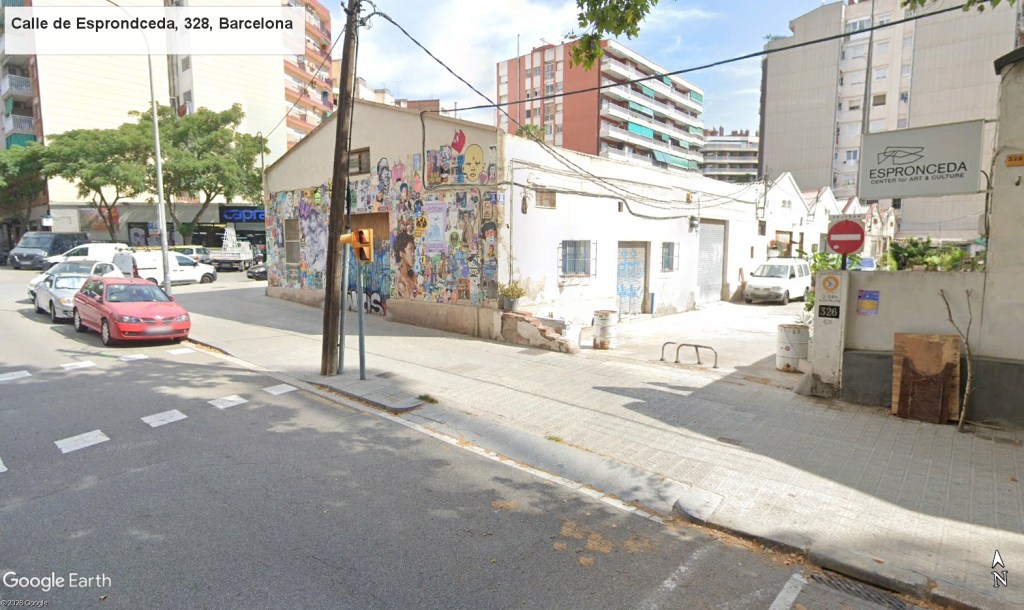
Map imagery © Google Earth. Data providers: © Google
This graffitied industrial unit at Calle de Espronceda, 328 in Barcelona is believed to be the premises used by Semior.
The Spanish motorcycle historian Francisco Herreros, in a copy of Moto Retro, made the point that, although not the first sidecar manufacturer in Spain, Semior could be defined as the father of the Spanish sidecar having manufactured designs in series as opposed to ad hoc bespoke creations for each individual client.
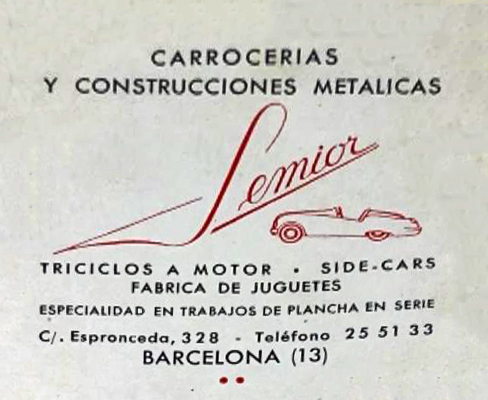
Initially, Semior did build individually ordered sidecars to meet client’s specific demands, but they then entered into an agreement with Sanglas, to produce sidecars for them. This arrangement moved them towards a more standardised product base to ease production etc and the main distinction by 1951 was the size of the motorcycle that was to be used. They produced a unit for bikes up to 350cc and another for bikes above this capacity which, in post WWII Spain almost certainly meant a Sanglas.
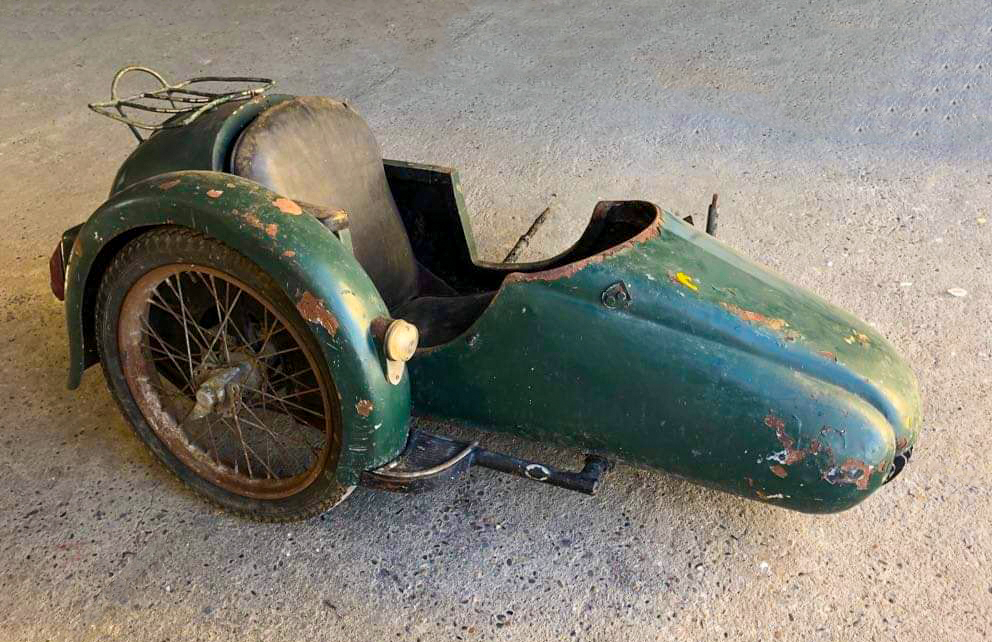
This unrestored green Semior is part of the classic motorcycle collection at the Red Baron Bikers Den (https://redbaronrestobarbikes.com/) in Paitan West, Sual, Philippines.
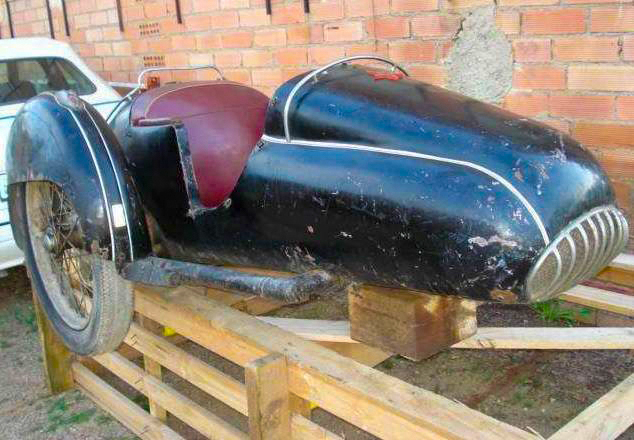
This black Semior is also part of the collection and has now been restored.
The Semior sidecars were a quality product, well designed and well-engineered in an era when the quality of the raw products that were available was very inconsistent. They incorporated a ball joint type hitch with extendable tie rods that allowed accurate adjustment of the sidecar to the bike. The sidecar wheel used an adjustable helical spring type suspension whilst the “boat” or body of the chair was itself suspended on the frame by 2 more helical springs.
Surviving Semior sidecars are a rare sight in museums, but it can be difficult to identify them, as some of those built directly for a specific bike manufacturer, carried that makers badge. However, early Semior sidecars had a distinctive front grill on the boat.
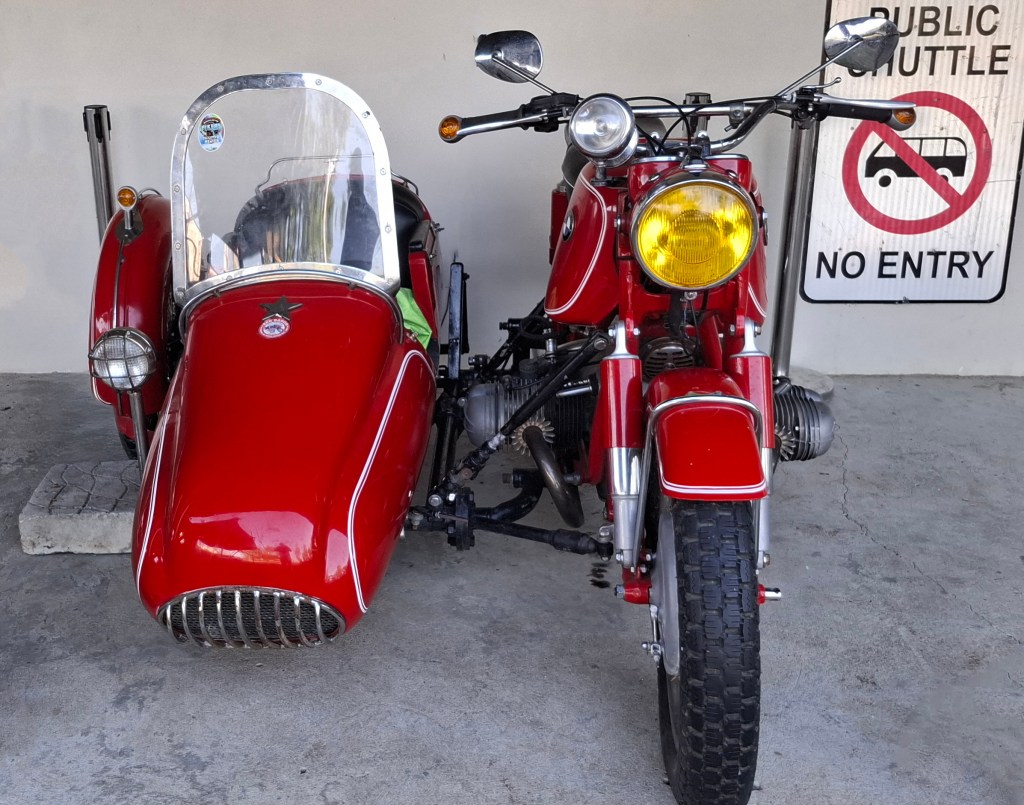
This is the restored black Semior, now coupled to a 1960 BMW R69, 600cc.
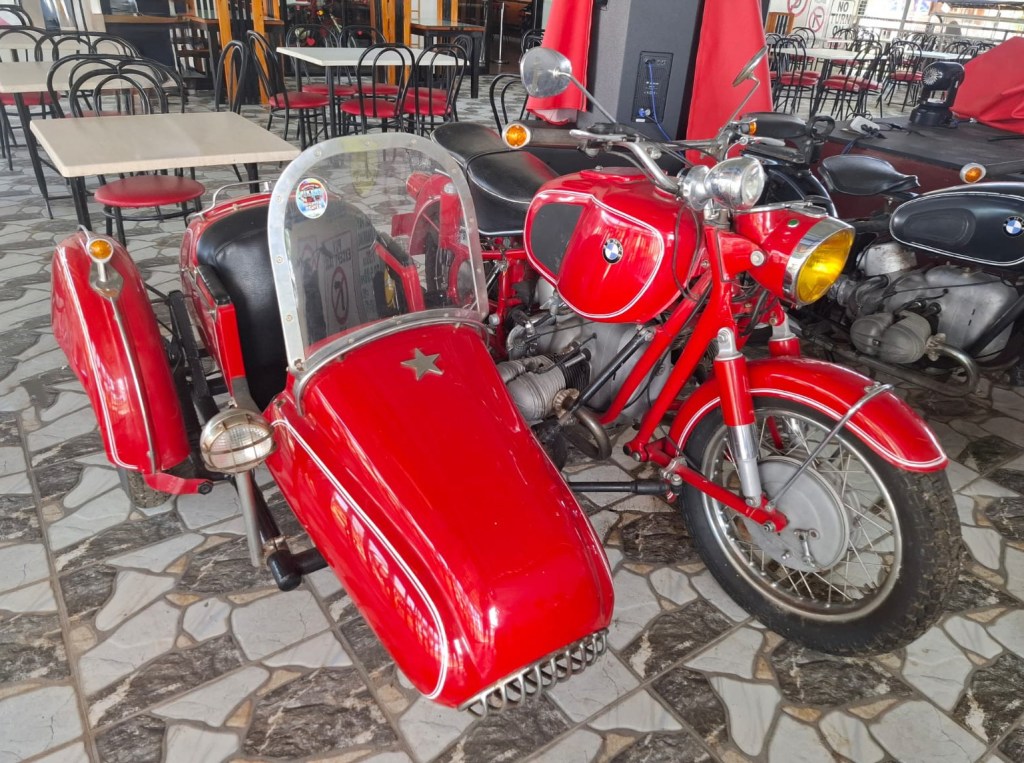
Both the Semior sidecars in the Red Baron Bikers Den collection were sourced in Spain and exported to the Philippines, in an unrestored condition. The red chair shows the distinctive front grill and was restored within the Philippines.
In addition to their “normal” passenger sidecars, Semior manufactured skeletal sidecars for road racing and box/cargo type sidecars for industrial uses.
In a departure from their sidecar output, Semior surprised the market by presenting a new motorcycle at the Official International Trade Fair held in Barcelona in 1952. The bike was very advanced for its time with a 175cc, single cylinder, air cooled, two stroke engine that incorporated a four-speed constant mesh gearbox. The bike also featured advanced suspension with a telescopic front fork with variable springs.
The stated intention was to manufacture in series, but the production stalled in March 1953 after completion of a pre-series run of 25 machines. Disagreements between the partners led to a split and Semior was discontinued as a brand and Edeta was created. None of the 25 machines are known to have survived.
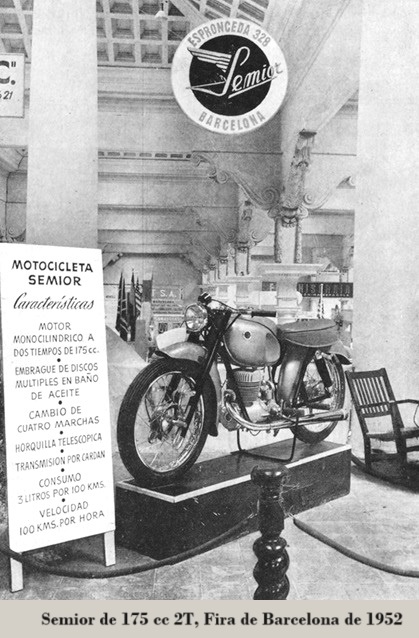
This is a publicity shot from the 1952 Barcelona Trade Fair and is, to my knowledge, the only photograph of the Semior 175cc that exists.

