

Between 1952 and 1959, the town of Figueres (Girona) was home to a small motorcycle venture with an unusual origin. Its founder, Antonio Banet Estampe (18 Nov 1892 – 19 Mar 1965), was a French national born in Espira-de-l’Agly, near to Perpignan. In 1915 he settled in Figueres, Spain and was involved in the construction industry. In 1920 he married and went on to have 3 children but he moved from construction into manufacturing bicycles.
Banet had established a modest bicycle‑manufacturing workshop in Figueres, Casa Banet, and manufactured under the RENOLT brand name with a snake as a logo. With limited equipment and financial means, the company’s early production was on a small scale, and its bicycles were sold mainly within the Empordà region. Only later did distribution gradually extend to the rest of Catalonia and eventually the Balearic Islands.


This is a Bicycle Price List (kindly supplied by Lluis Vila) from Casa Banet, the premises that Antonio Banet operated from at Calle Caamaño, 20, Figueres. The motorcycles were built at nearby premises on Calle de Llers, 17.
Industrias Ruter brand made an entry into the motorcycle world in 1952 with a 125cc, four‑stroke, model. According to anecdotal reports, technically, it was little more than a direct imitation of the French Motobécane D‑45. Fewer than two dozen units were built, and nearly all were sold locally in Figueres and nearby towns.
A year later, in 1953, the firm introduced a second motorcycle: a 90cc, two‑stroke, machine running at up to 4,000 rpm at maximum output. It featured a three‑speed handlebar‑operated gearbox and a double‑cradle frame. Although not exceptional, it performed noticeably better than the earlier model and achieved greater commercial success, with around one hundred units being produced and sold mainly in the provinces of Barcelona and Girona.
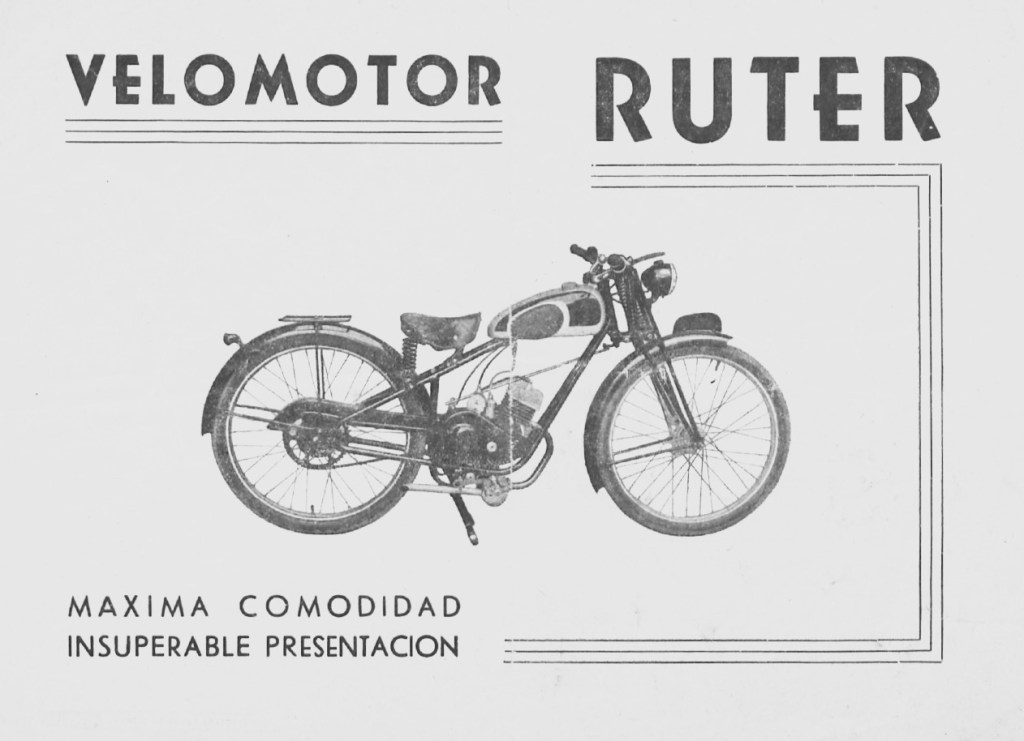
This commercial brochure for the Ruter Velomotor was kindly supplied by the public Library, “Biblioteca Fages de Climent” in Figueres.

By 1956, the entire range was redesigned. The first two models were discontinued and replaced by two new, two stroke, machines of 95cc and 125cc, created by the company’s new designer, Lorenzo Pujol. Later, as Ruter suffered financial difficulties, Pujol to move to the nearby manufacturer, Rieju.
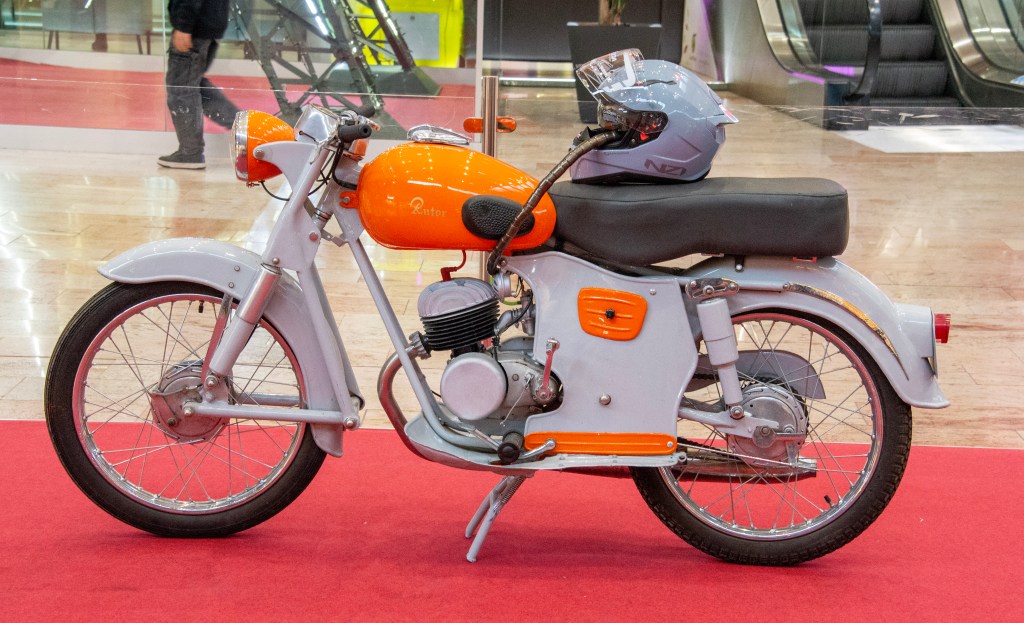
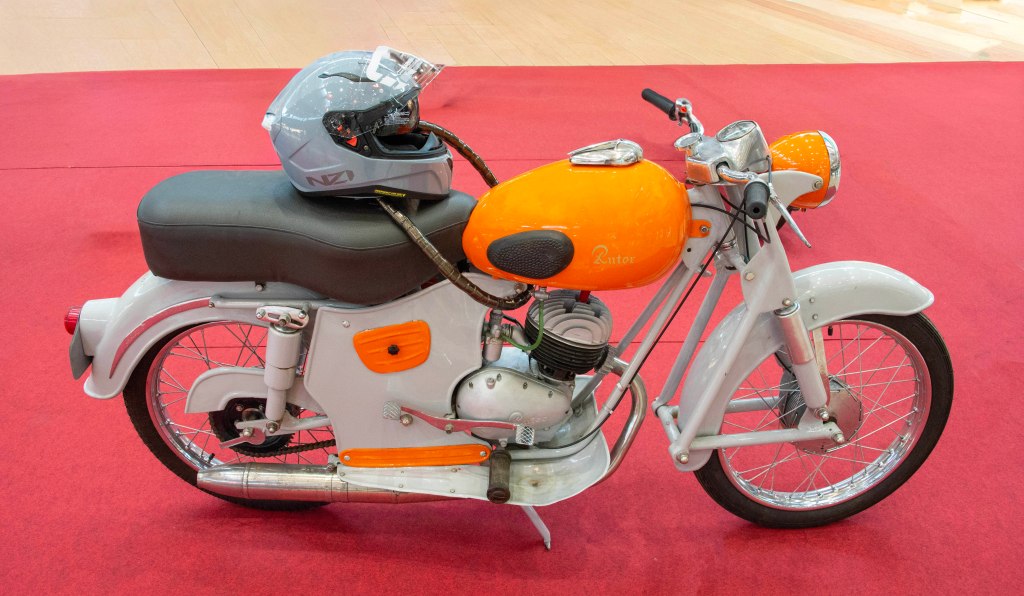
This is a rare example of the 125cc Ruter with the Earles type front forks. This motorcycle is part of the collection of the late Joan Cabañó and I am very grateful to the Directors of the Museu de la Tècnica de l’Empordà (MTE) of Figueres who arranged a display of Figueres manufacturers at the Gran Jonquera Commercial Centre.
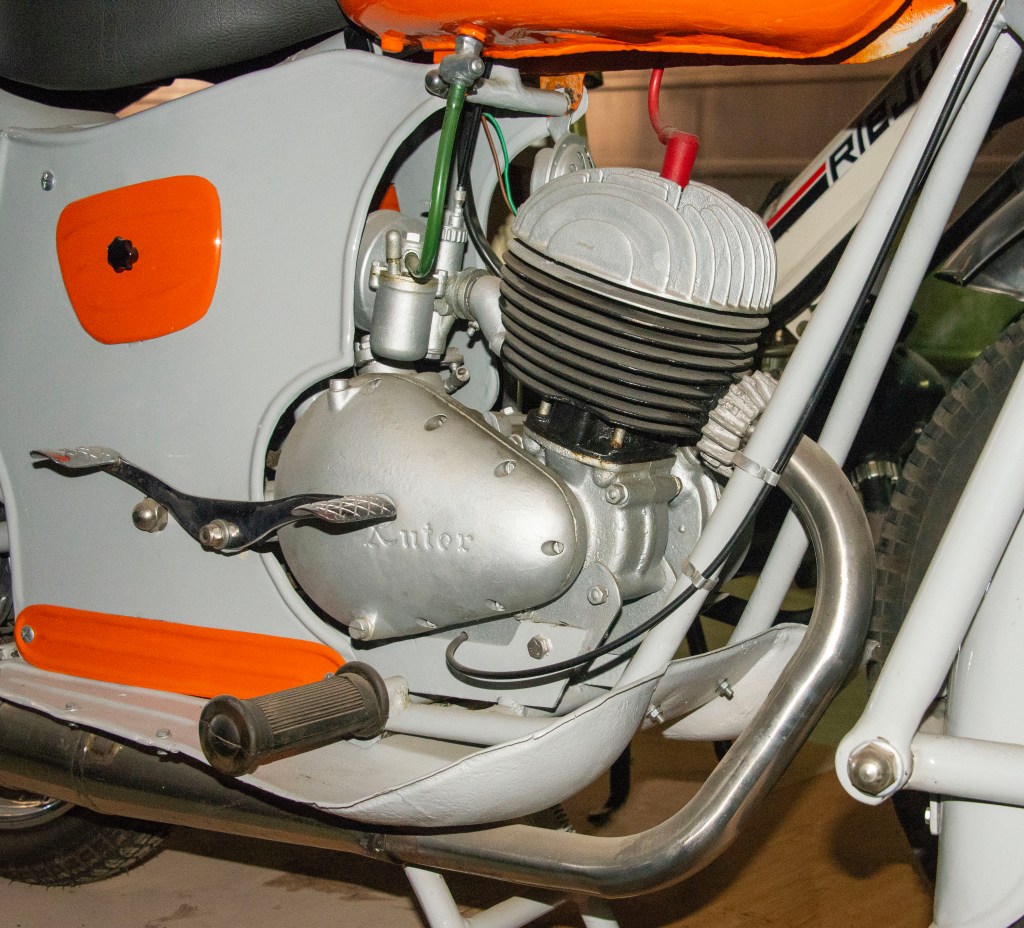
Industrias Ruter state that their 125cc engines are their own design and build. This example has casting Seriel Numbers as below, that I am still researching.

The 95cc version shared the same basic layout but had a smaller displacement, some cosmetic differences, and a more refined overall finish, including a different front suspension design.
Production came to an end in 1959. Banet, by then was 75 years old and still running the company with extremely limited industrial resources – essentially a lathe, a drill, a welding unit, and a Prony brake – and could no longer sustain operations. Frames were supplied by Alfaro and the suspension components by Llobe/Betor. In total, fewer than 300 motorcycles were produced during the brand’s brief eight‑year foray into motorcycling. Ruter were the first of the Figueres manufacturers to disappear.

This is an example of a 1958, 125cc Ruter that is also part of the collection of the late Joan Cabañó and is currently in storage near Figueres.
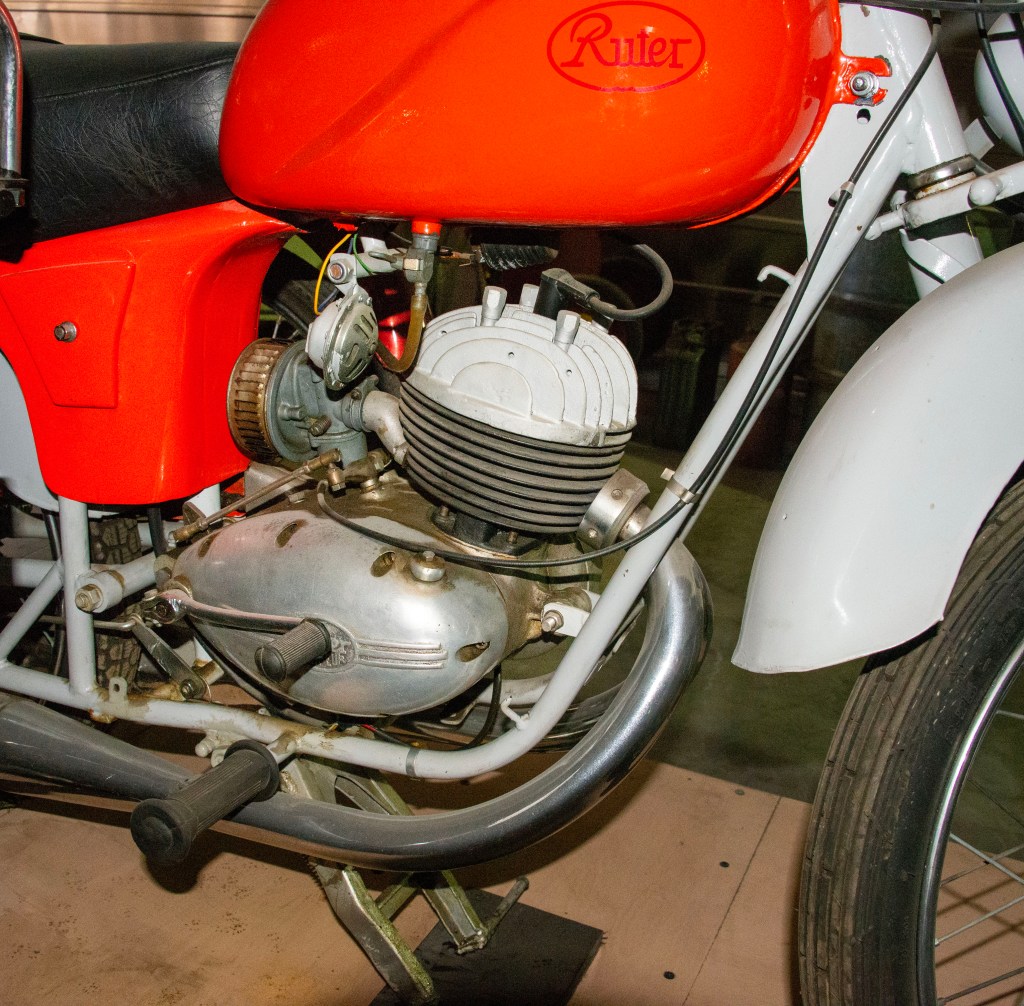
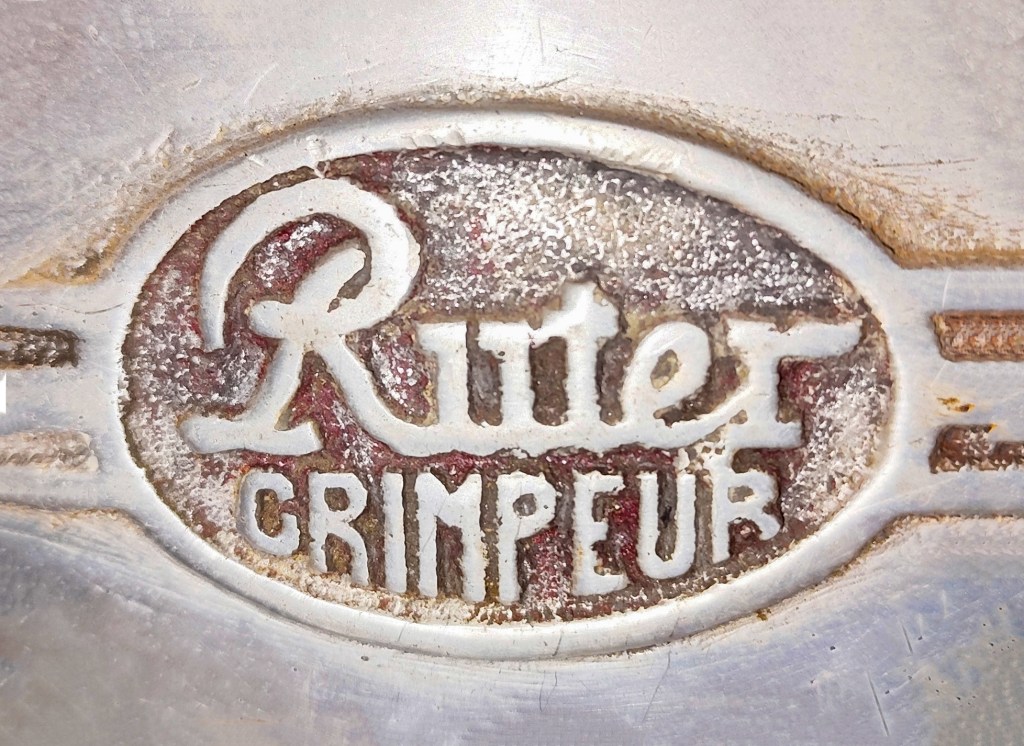
Footnote:
Joan Cabaño was a local businessman (Construccions Metalliliques Figuerenques SA) who had collected items relating to the history of the area – vehicles, motorcycles and tools etc. A small part of his collection is in storage and will hopefully be returned to public viewing soon. Joan Cabaño passed away in May 2016.
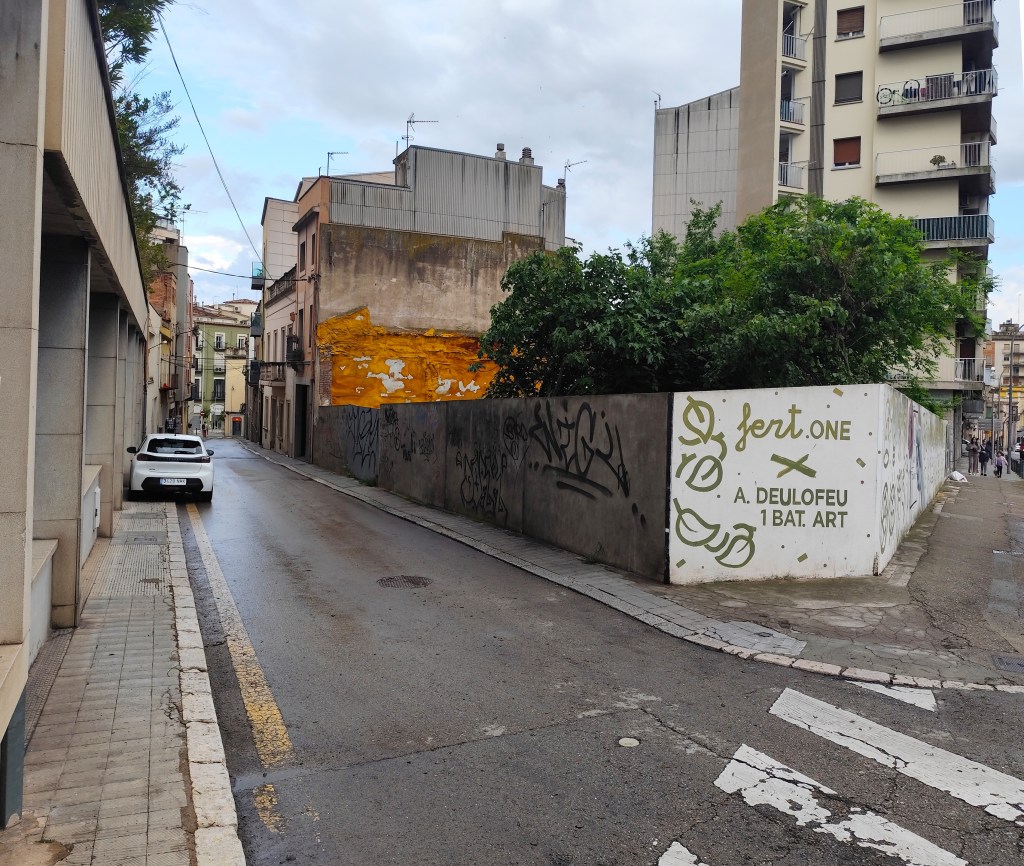
This is Carrer de Llers, figueres. The derelict area behind the wall was where #17 was. The end wall that can be seen is #15.
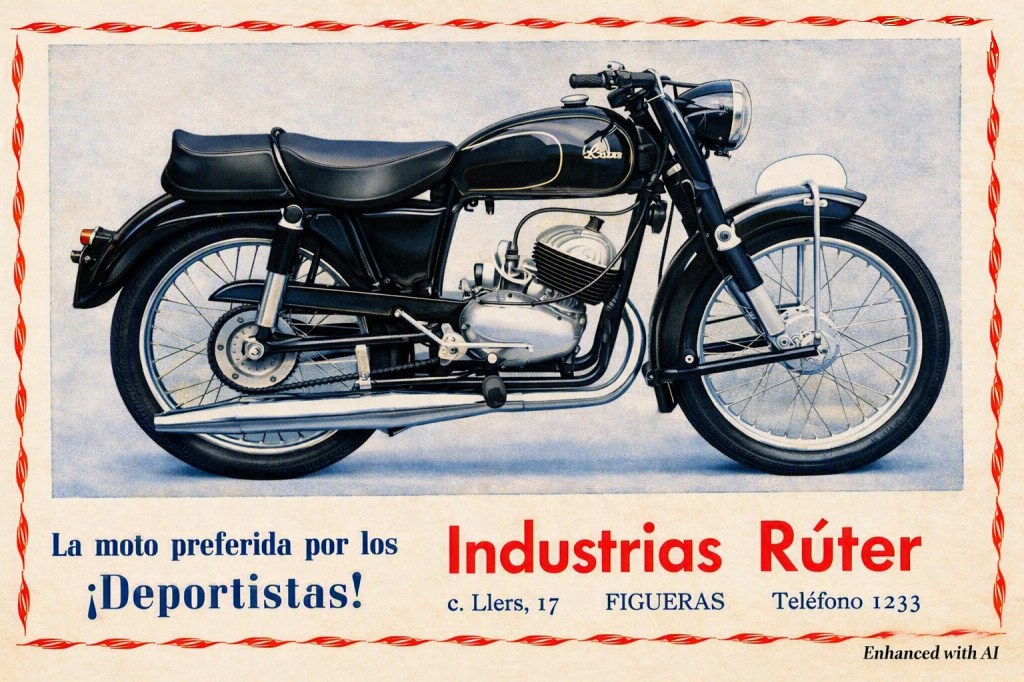
The reproduction of the contemporary newspapers adverts here is authorised by the Ajuntament de Girona and they are taken from their Digital Newspaper Archive. MS Copilot was used to enhance the grain and contrast.
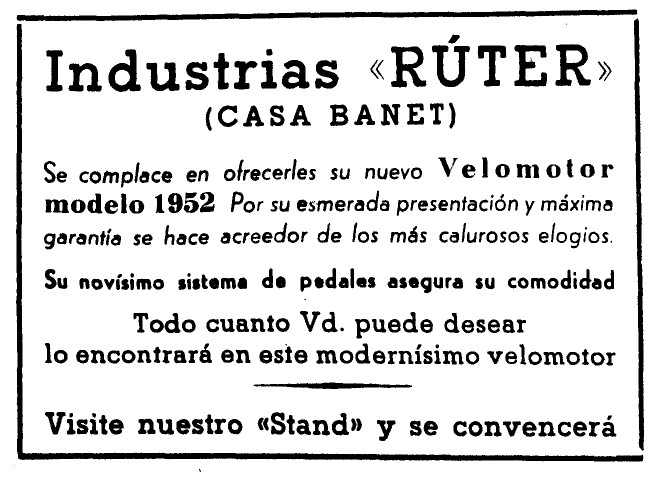
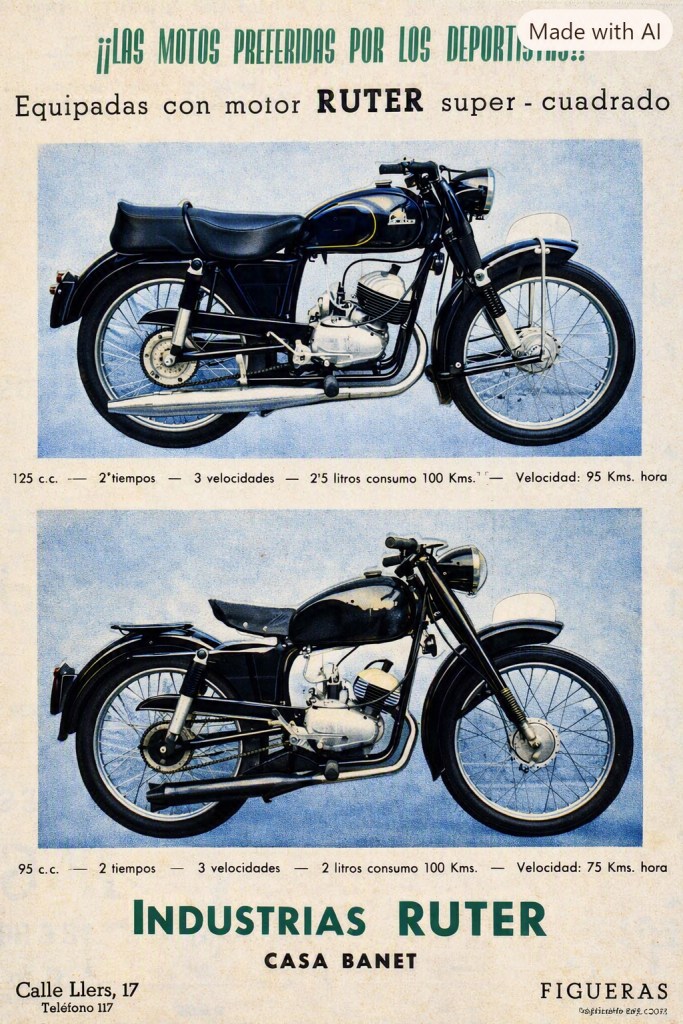
This Ruter advert was kindly supplied by the public Library, “Biblioteca Fages de Climent” in Figueres. MS Copilot was used to enhance the grain and contrast.

