
The Sanglas brand of motorcycle was founded in Barcelona (Poble Nou) in 1942 by two young students of mechanical engineering from Barcelona, the brothers Javier and Martin Sanglas. Their father, a textile entrepreneur, provided the financial backing.
Catalan motorcycle (and micro car) manufacturers had suffered from the slow pace of recovery after the Spanish Civil War and WWII. This situation was exasperated by the excessive bureaucracy and the requirement to obtain government permits to both authorise the production of new models and set the limit of how many could be produced.
There also appeared to be a deliberate policy to restrict these authorisations to protect the introduction of the SEAT 600. The SEAT was built from 1957, was relatively inexpensive and a joint venture between the Spanish State, Spanish banks, and Fiat.
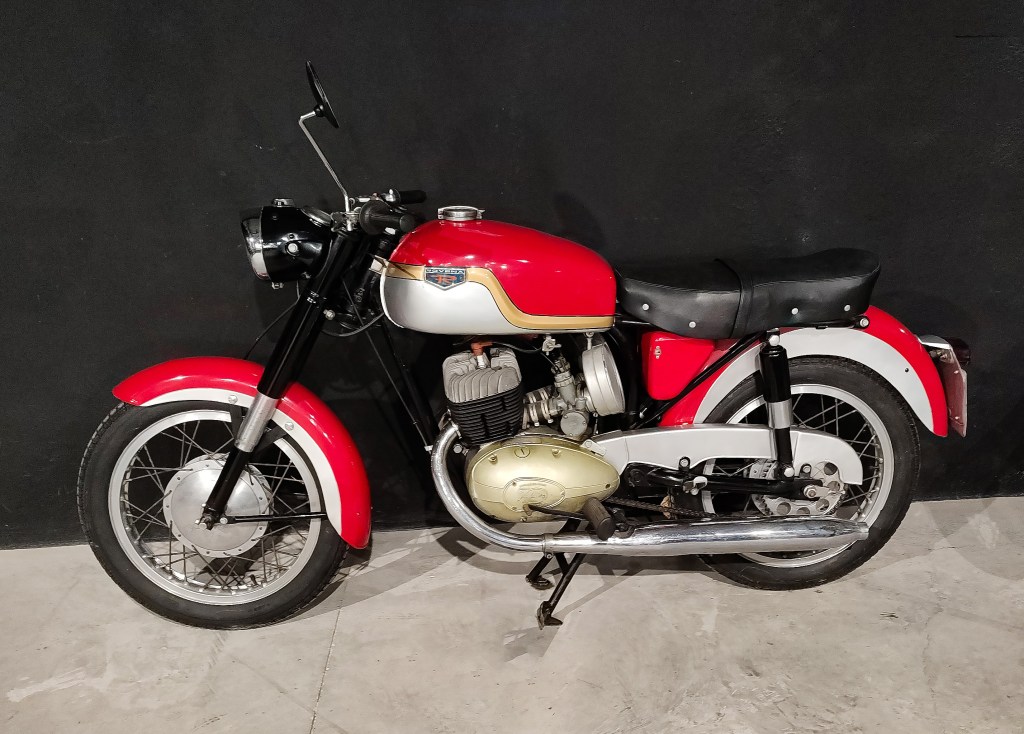
Rovena 250cc Sport at Collection Caldes de Boi
By 1960, Sanglas sales were struggling as the release of the SEAT had a negative impact on the demand for larger capacity motorcycles – their speciality. Javier Sanglas, decided to start producing smaller capacity motorcycles through a secondary brand name – Rovena. It is said that the name was an anagram of Verona, the Italian city that he admired.
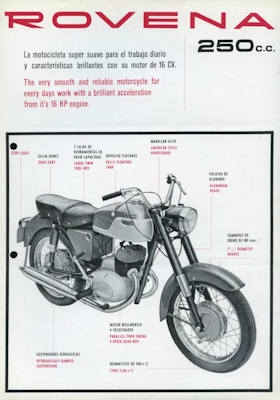
Initially, the Rovena brand produced two models, the Rovena 250cc and the Rovena 250cc Sport. These were both powered by the 249.4cc (50mm x 63.5mm), Hispano Villiers model 2T, a twin cylinder, air cooled, two stroke engine rated at 15CV, with a four speed gearbox. The Sport variant had twin carburettors as opposed to a single carburettor, both enclosed in a shroud.
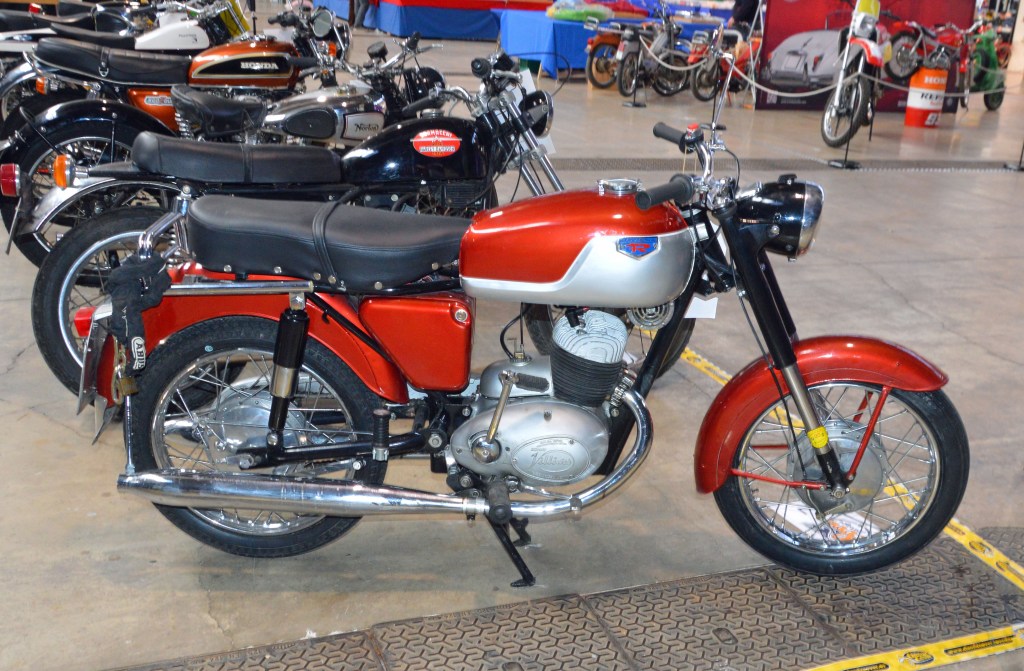
This Rovena 250cc was at Retro-Moto Barcelona 2018.
From 1963, they added a 325cc model that was powered by the 323.9cc (57 mm x 63.5 mm), Villiers model 3T, twin cylinder, air cooled, two stroke engine, rated at 17 CV with a four-speed gearbox.
The Rovena venture had only limited success and production spanned 1960 to 1966, although sales of the Rovena brand from stockpiling continued through to 1970. The Sanglas brand continued until 1981.
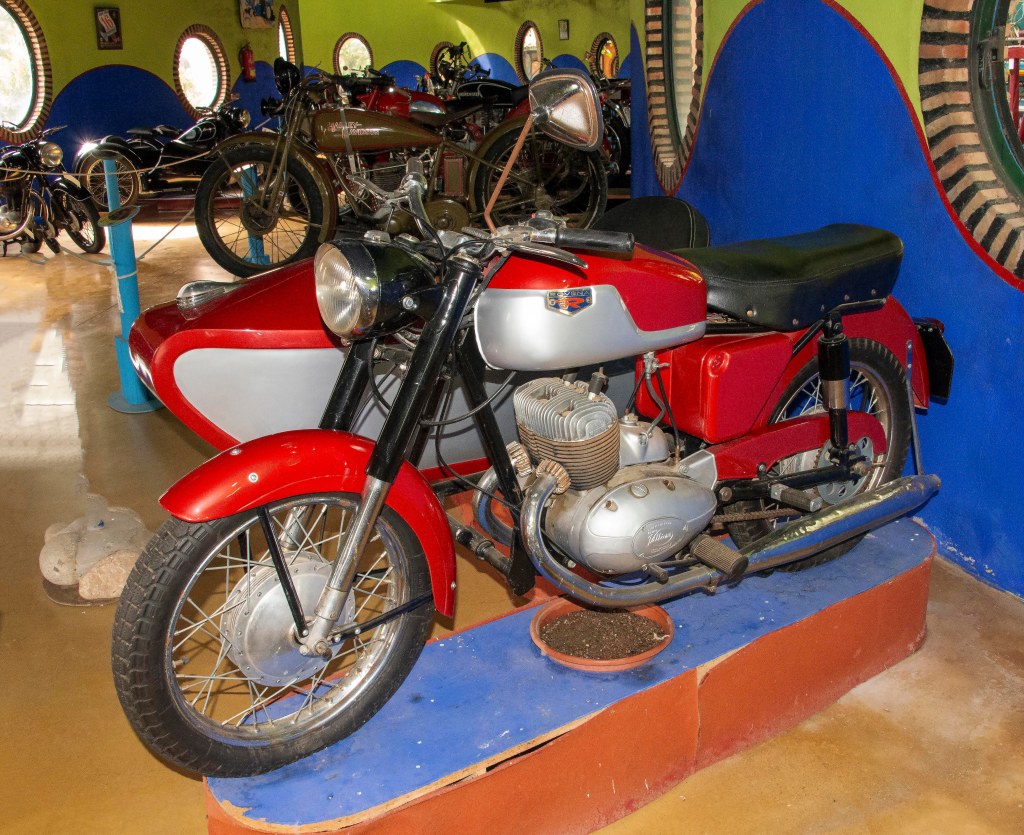
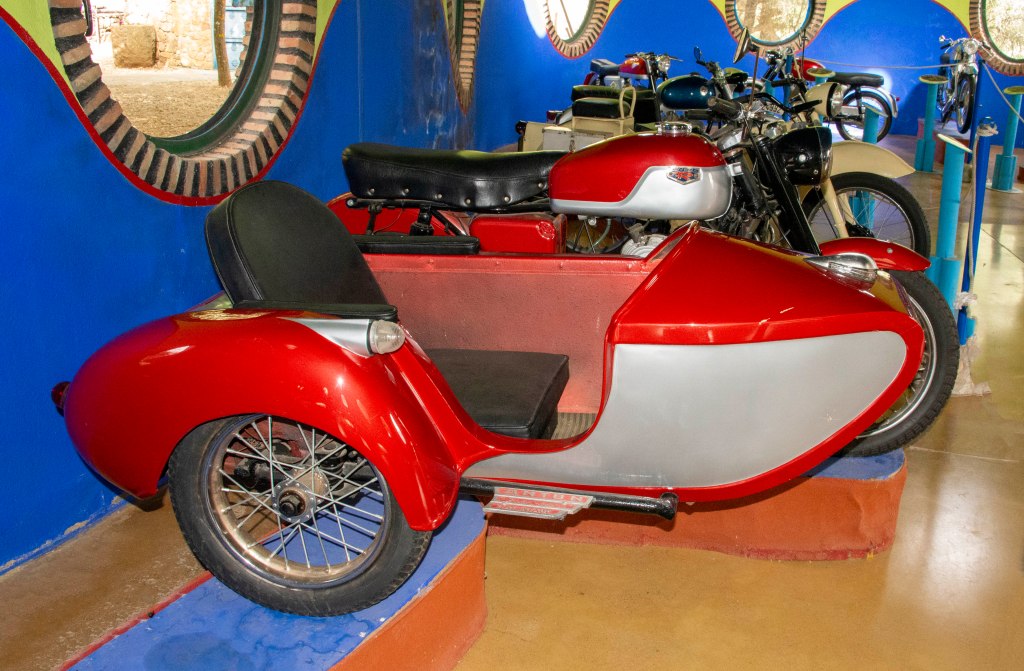
The Rovena lent itself to sidecar pairing by virtue of its more powerful engine of either 250cc or 325cc. The Rovena (above and below) was photographed at the Museo de la Moto y el Coche Clasico, 10700 Hervás (Cáceres) and is coupled to an “Anton” sidecar, a brand built in Madrid in the 1950s.
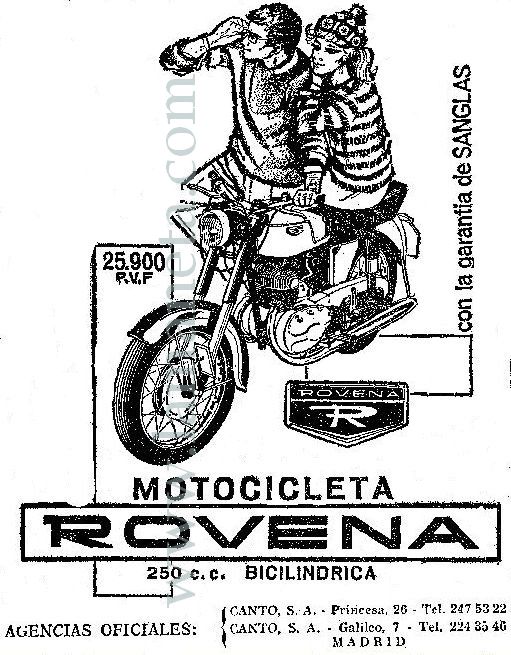
This advertisement is reproduced with the kind permission of the Lamaneta website http://www.lamaneta.com
 Spanish Motorcycles