

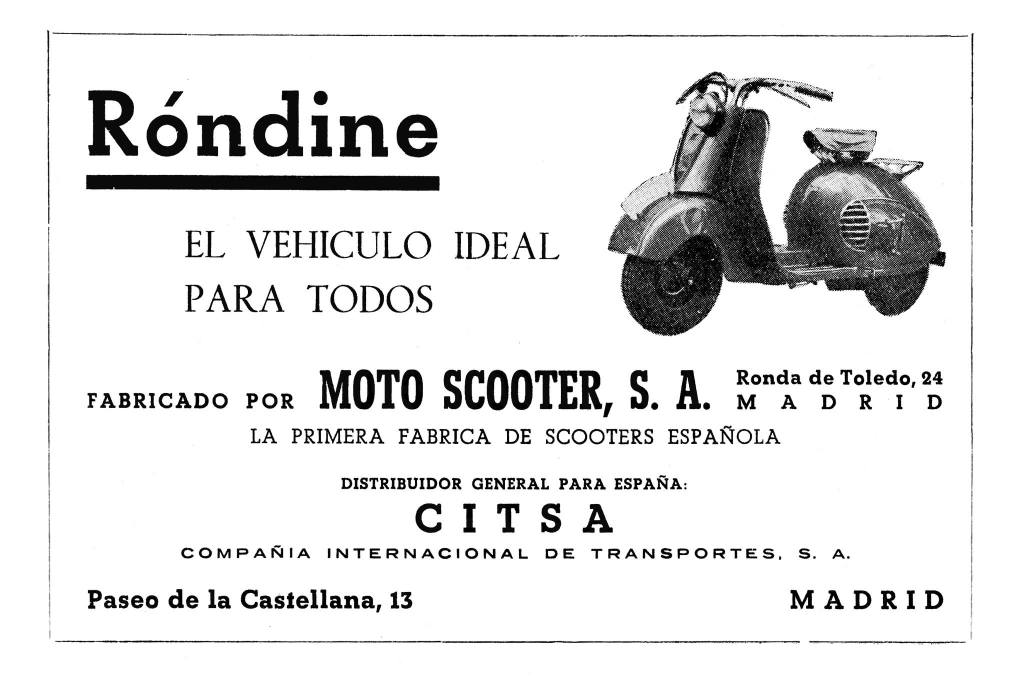
The Rondine machines came from the factory of Moto Scooter SA, an enterprise that was founded in Madrid in 1951 with links to Italy. Rondine is Italian for Swallow and this species of bird is incorporated in their logo and embossed on their crankcase covers.
Their chief engineer and designer was Bruno Hettore, who had overseen the production of a 125cc Scooter but, unfortunately, the launch coincided with the announced arrival of Vespa in Spain. The Vespa was to be significantly cheaper and, faced with this competition, the scooter project was suspended. There followed another, relatively unsuccessful venture with the Titano “Motocarro” – a motorcycle based load carrier that lacked a rear axle differential and subsequently had stability issues on cornering.
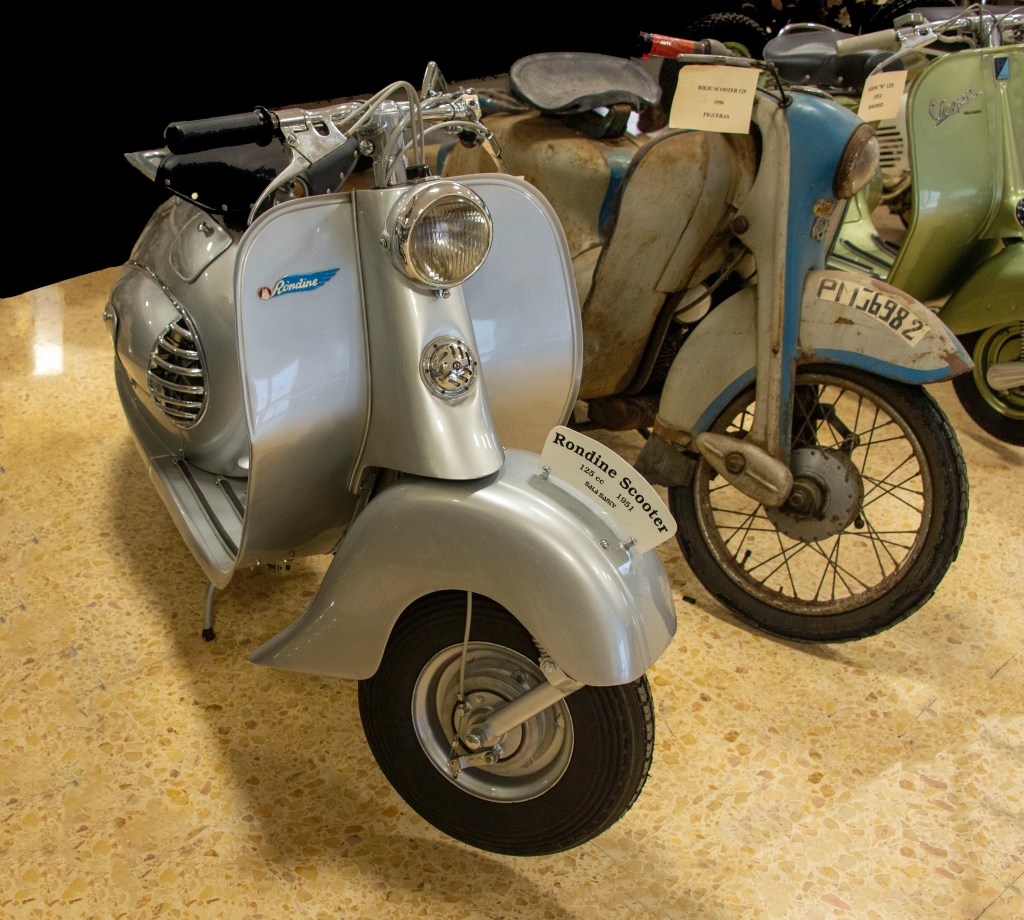
This 1951 125cc Rondine Scooter is part of the Sala Santy Collection, displayed in Riola in 2024.
The Rondine 125cc Sport is one of the lesser-known classic Spanish motorcycles. The superiority of the Sport was maintained by using many parts made within their own Madrid factory under strict quality control. In the early 1950s, the Lube brand was the quality machine produced in Spain (in Bilbao) and the Rondine 125cc Sport compared vary favourably with it. Surprisingly, the Rondine was marketed at a price higher than the Lube by a margin of circa fifteen to twenty percent.
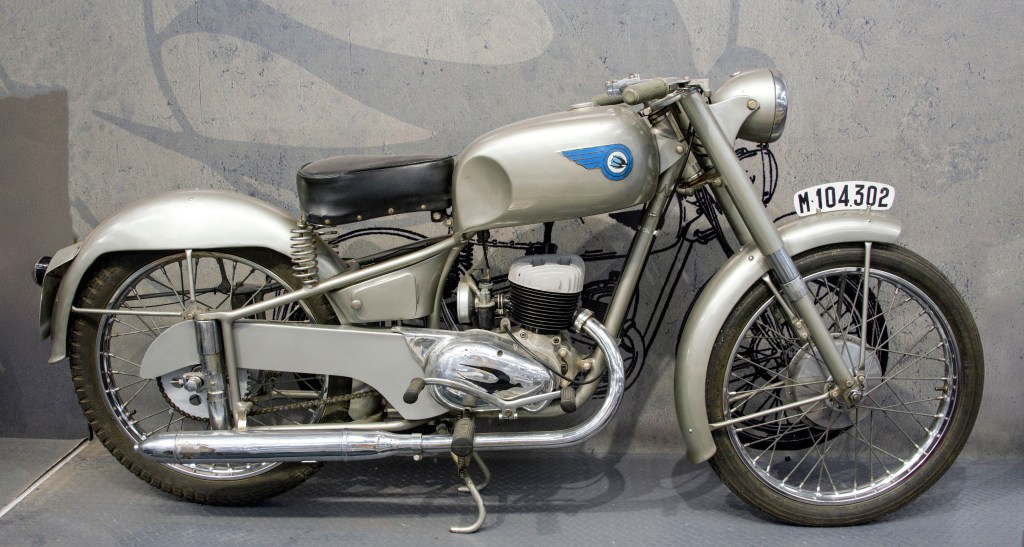
This Rondine 125cc Sport is displayed at the Museo de la Motocicleta Española, 28802 Alcalá de Henares (Madrid)
At this point, the 6.5 CV Sport was proving itself to be very successful in the 125cc category of sporting events held in Spain. It weighed approximately 90 kgs and had a top speed of 100 kph before any tuning.

In a market geared towards mass production, the almost Artisan production methods of the Rondine may account for its limited production numbers. The Rondine did not survive more than a decade but the sequence of the closure of the enterprise is unclear and given as 1959 for motorcycle production.
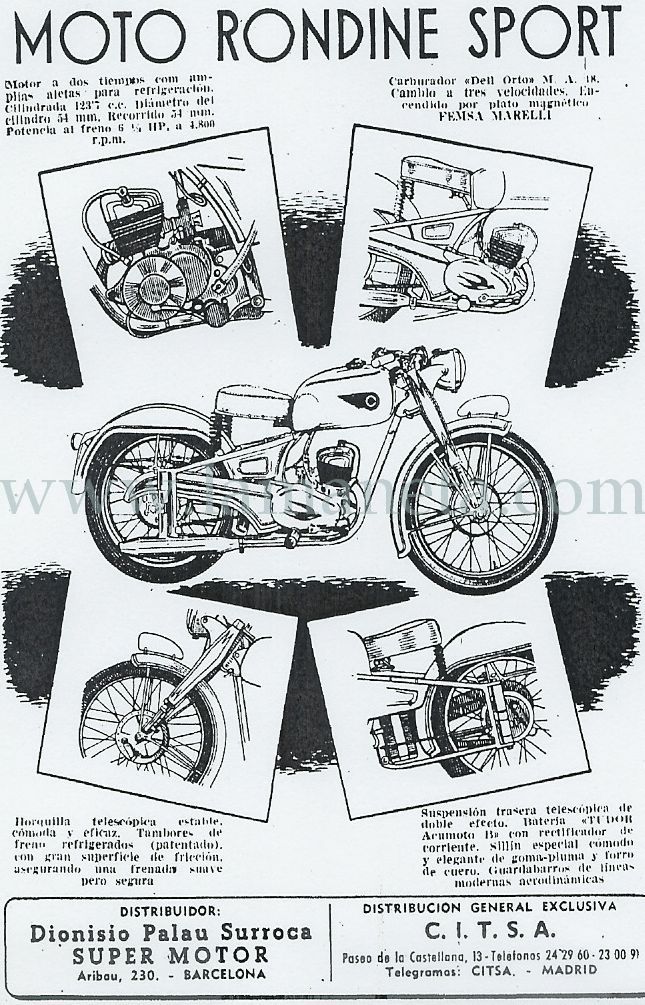
This advertisement is reproduced with the kind permission of the Lamaneta website http://www.lamaneta.com
However, from 1959, a new, enclosed Motocarro – the Trimak – was produced at the same Madrid premises and, on its initial publicity, was identified as manufactured by Moto Scooter SA. By 1963, the publicity for the Trimak Motocarro identified the manufacturer as a new enterprise, Trimak SA, and this denoted the closure of Moto Scooter SA. The Trimak story continued, in various guises, until closure in 1974.
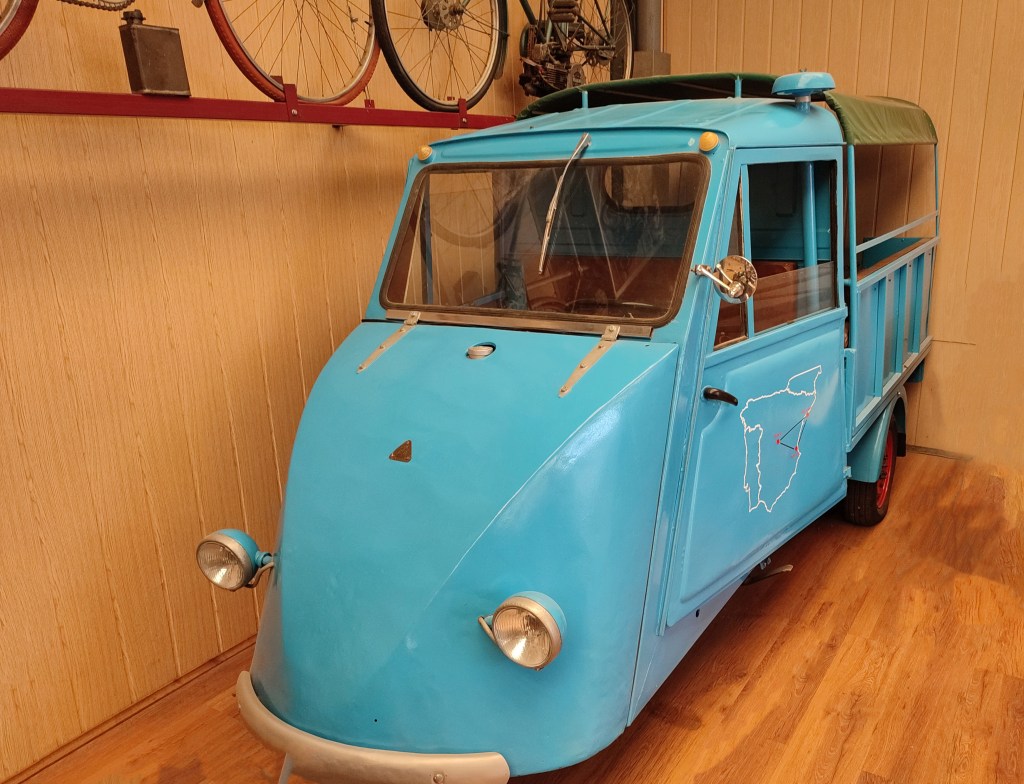
This Trimak is in the Museu Cotxes d’Epoca Marc Vidal 43330 Riudoms (Tarragona)

This advertisement is reproduced with the kind permission of the Lamaneta website http://www.lamaneta.com
 Spanish Motorcycles
Leave a comment