
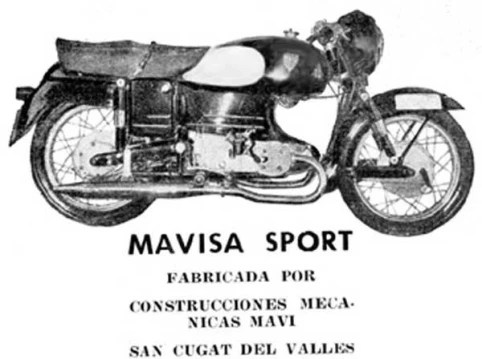
With its gleaming black paintwork, Boxer format engine, shaft drive and Earles type front forks – you could be forgiven for mistaking it for an early BMW, but it isn’t, it is a very rare Mavisa Sport. Mavisa was a Catalan brand, designed by Mecánica Mavi, SA in Sant Cugat del Vallès. The company had been founded in 1953 by the brothers Manuel and Vicente Vila and mainly financed by their father.
Anecdotal evidence suggests that the brothers are said to have had a series of problems during an excursion with two rented motorcycles and that they were determined to design and build a better model themselves. Within 12 months, a series of sketches of the outlines of the envisaged chassis had been submitted to Dunjó from Barcelona, a renowned builder of frames, sidecars, and motorcycle components.
The engine that was proposed by the Vila brothers took the form of a two-stroke, boxer twin with an aluminium cylinder head. The displacement was 248cc and delivered around 14 CV at 6,000 RPM fed by two independent 20 mm Dell ‘Orto carburettors, with a 9.5:1 compression ratio. The transmission was by means of a four-speed gearbox and a shaft drive.
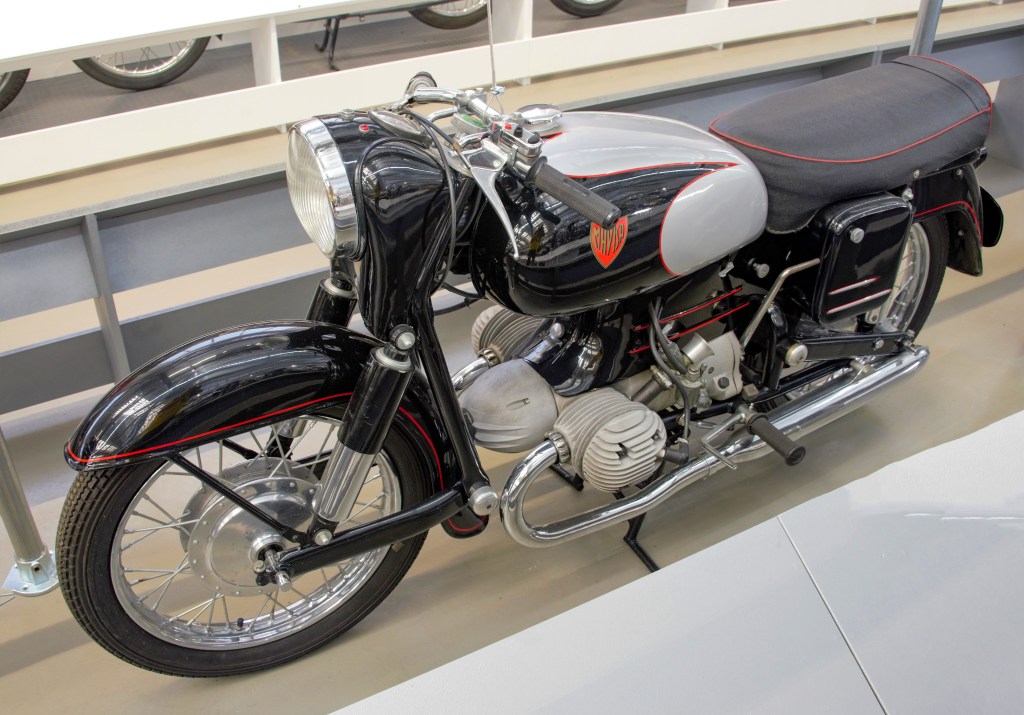
This motorcycle was photographed at the Museo de la Motocicleta Española 28802 Alcalá de Henares (Madrid)

To build it, they had a second-hand lathe, an internal and external grinding machine, a mechanical saw, electric welding equipment, a hydraulic press and various tools. The “factory” was the garage of the family home.
They had to invest almost two more years in the development and testing of the prototype until reaching a reliable and definitive version: the Mavisa Turismo.
They had a Sport unit ready to be presented alongside the Turismo at the Barcelona Trade Fair of 1957. The Sport shared the same frame and an identical engine with the Turismo but differed as it was noticeably lower by virtue of the 14-inch rims – instead of the conventional 18-inch ones. It also had improvements to the dynamo, headlight, carburettor and had front suspension by Earles-type fork and rear by hydraulic shock absorbers.
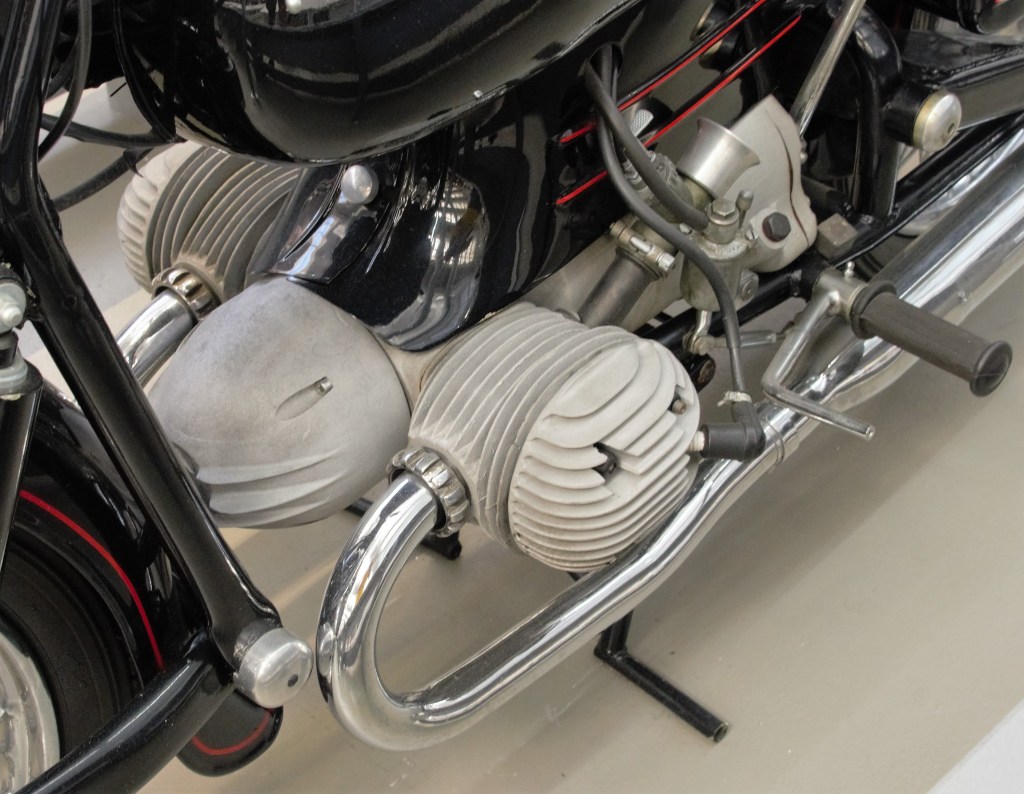
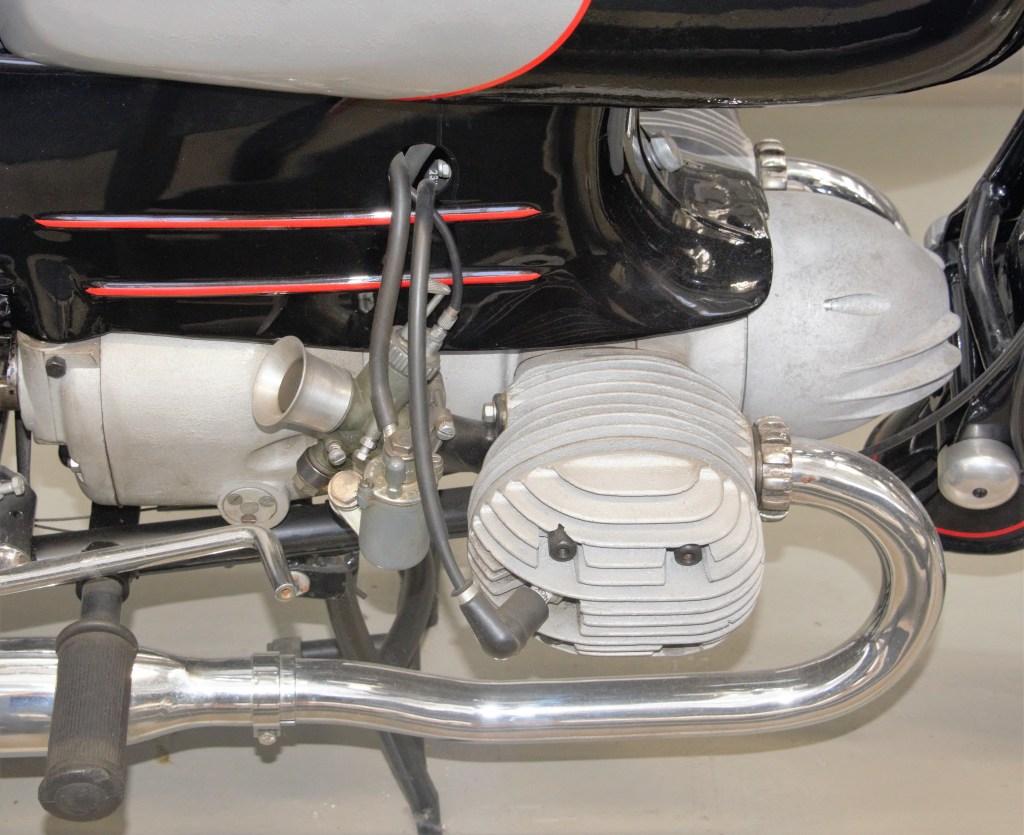
At the Show, the bike met with an enthusiastic response by Spanish Police and, afterwards, the Vilas received a visit at Sant Cugat, from a Senior Police Officer who wanted to formalize an order for a thousand units destined for the “security forces” of the state. The brothers started but the pace of production was slow as there was only the two of them and it was a huge undertaking, requiring a heavy investment to meet the demand. They thought about the idea of sub-contracting out the manufacturing and approached Francesc Xavier Bultó , who had just dissolved his partnership with Pere Permanyer at Montesa. Bulto had set up his own company, Bultaco, and was studying some plans when the Vilas came to his office with their proposal.
Bultó promised to think about it and, at the same time, examined the Mavisa Sport that had been left. After a month, Bultó called them and confirmed that the Mavisa Sport was a very well designed and built motorcycle. Unfortunately, he had just created the Bultaco Tralla and was unable to commit to the Mavisa.
In 1960, the project is finally abandoned, and the Vila brothers closed their garage door for good.
 Spanish Motorcycles
Leave a comment