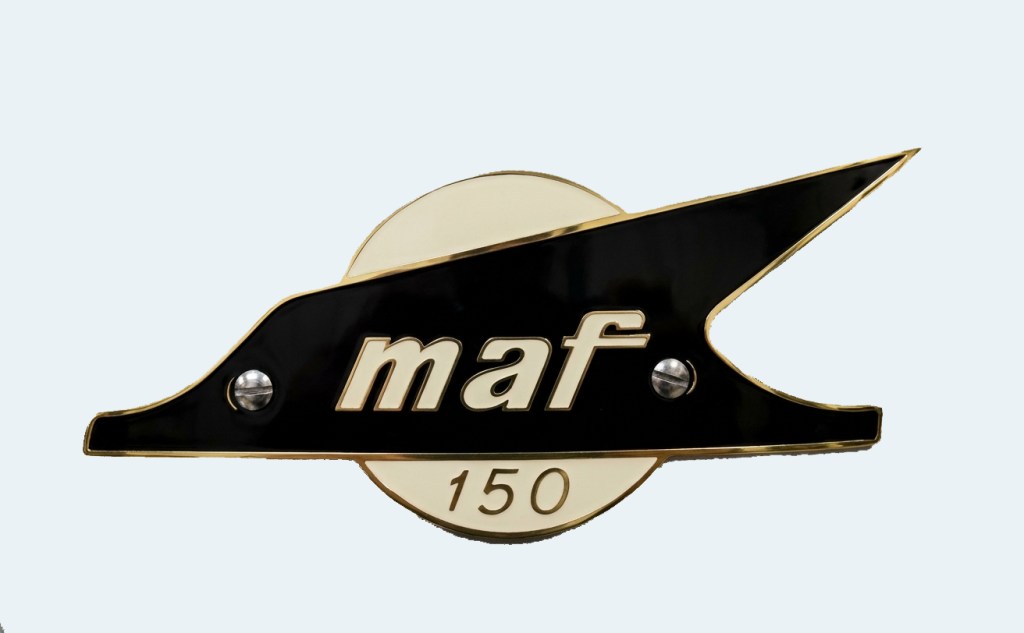

When the Barcelona based Evysca company went into bankruptcy in 1957, they were absorbed by the Figueres establishment Industrias Fita, who were one of their biggest creditors. Fita took on the outstanding assets, tooling and designs etc and initially built bikes that still carried the Evycsa name. They also created M.A.F. (Motores Articulados Fita), as a brand for marketing motorcycles that were initially based on the Evysca design.
The new MAF brand were in production from 1958 until 1964 and were powered by an engine developed in‑house, based on the French 175cc AMC, four stroke engines that Industrias Fita produced under licence for use by Rieju and Evycsa. AMC (Ateliers Mécanique du Centre) were based in Clermont Ferrand, France.
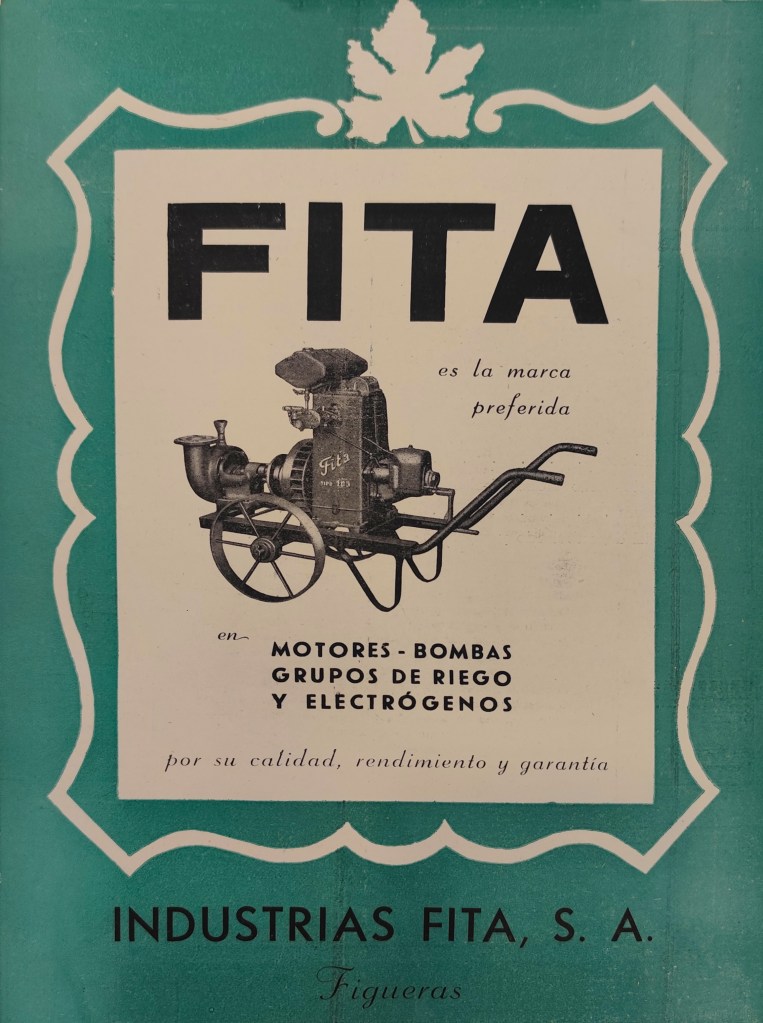
With the MAF brand they targeted the economic and tourist market with 150cc and 175cc variants and the licence with AMC allowed Fita to reduce costs and modify the design as they wished. They had plans to manufacture a 250cc motorcycle model, based on an original Evycsa design but, in the end, it was not produced. However, I have included a contemporary advertisement for that 250cc engine.
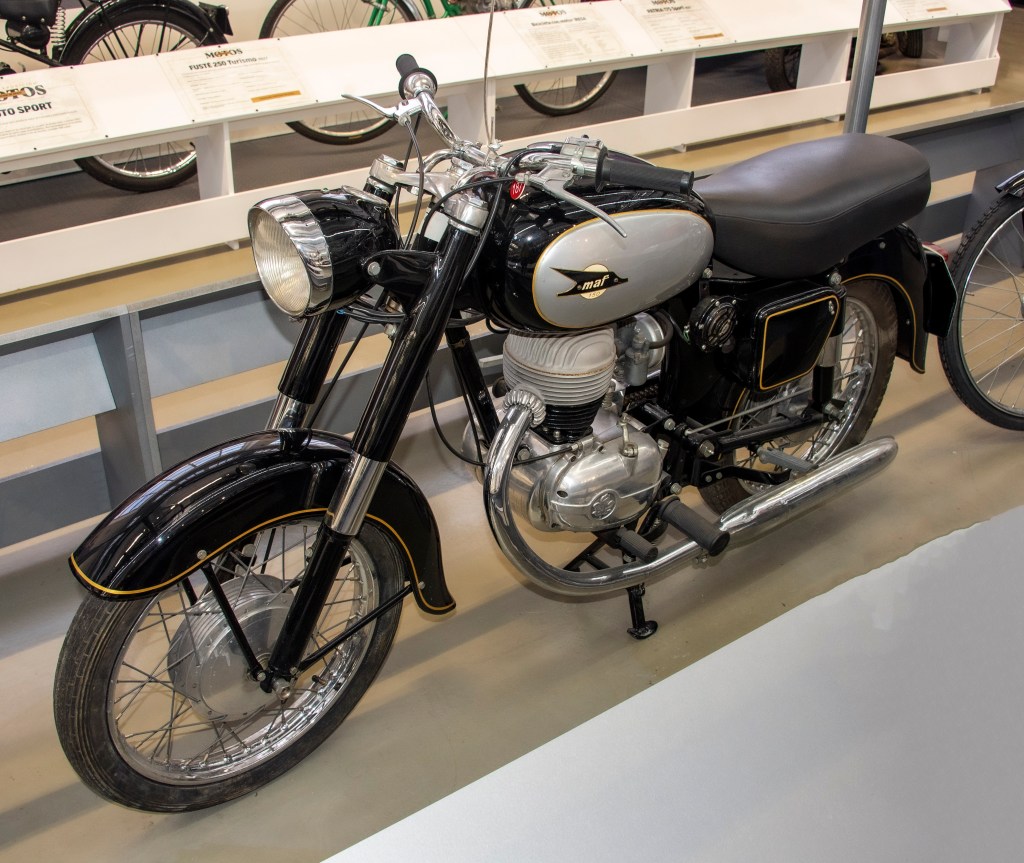
This 150cc MAF was photographed at the Museo de la Motocicleta Española, 28802 Alcalá de Henares (Madrid)
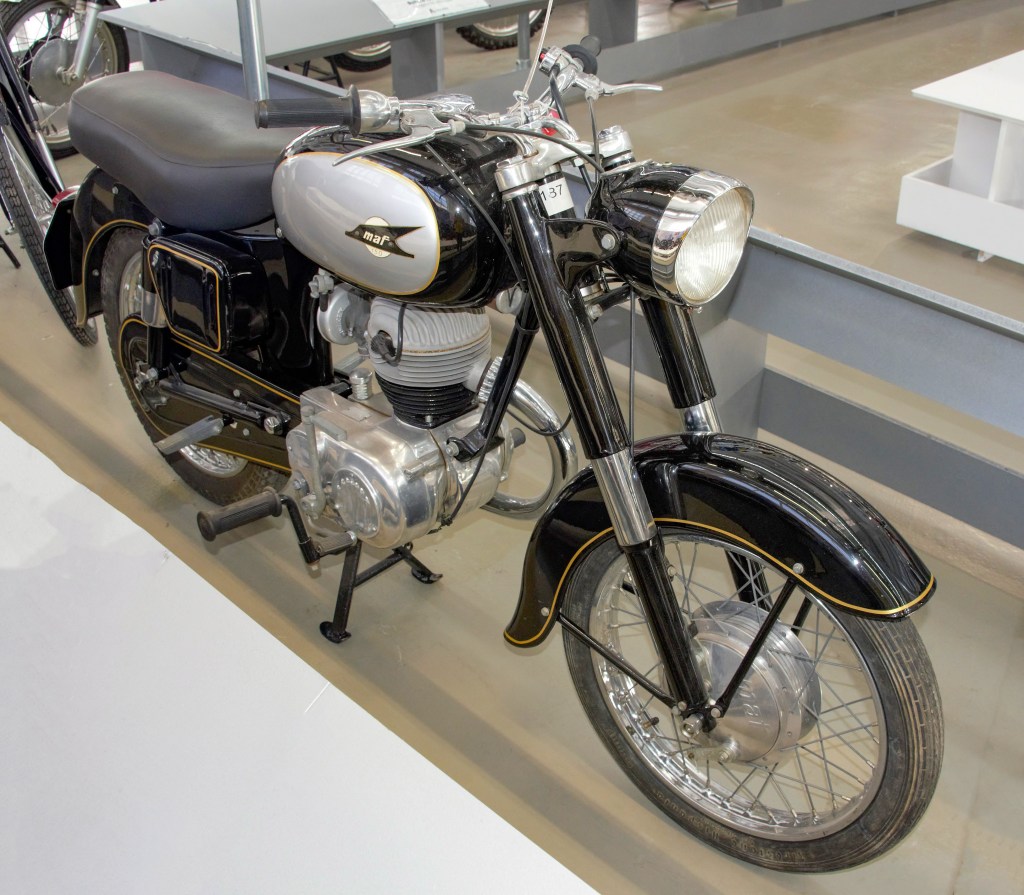
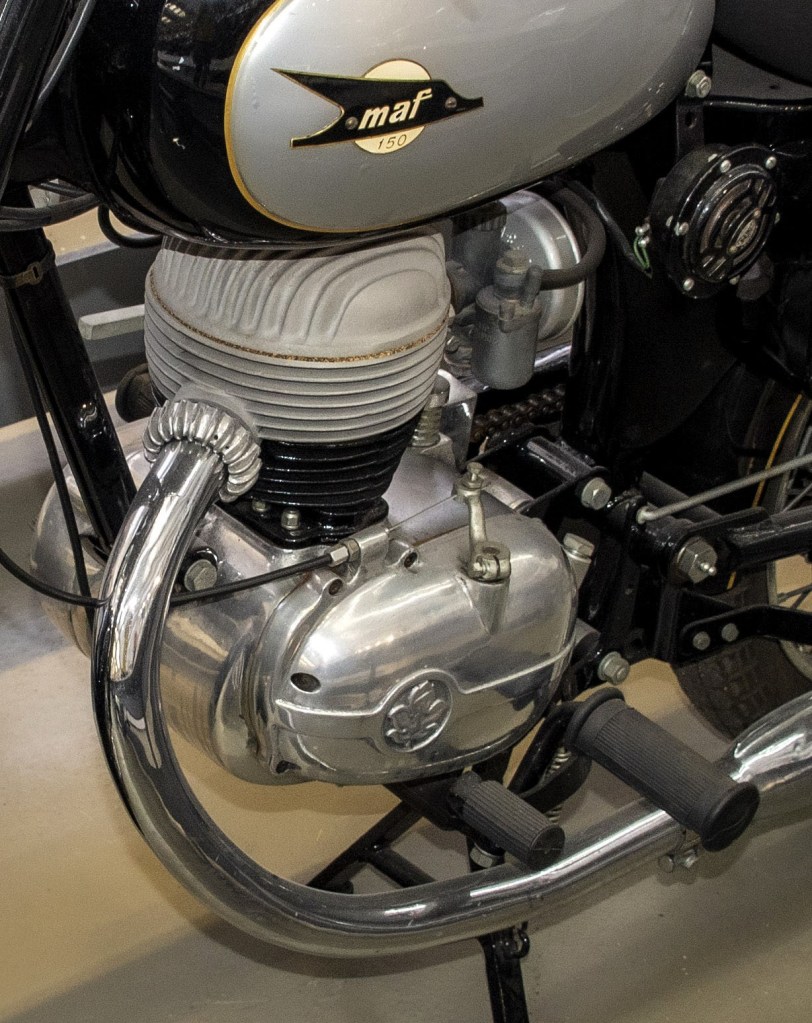
The embossed symbol on the engine crankcase is the normal mark of Industrias Fita on their modified 150cc Fita-AMC engines.
In the early 1960s, during the implementation of Spain’s National Stabilisation Plan, motorcycle sales declined sharply. Manufacturers responded in different ways with Industries Fita choosing to shift focus to its most reliable and profitable products—its well‑known irrigation engines and pumps. As a result, MAF motorcycles disappeared from the market in the early 1960s, following the fate of many Spanish brands, as consumers increasingly opted for the increasingly affordable SEAT 600 car instead of two‑wheeled vehicles.
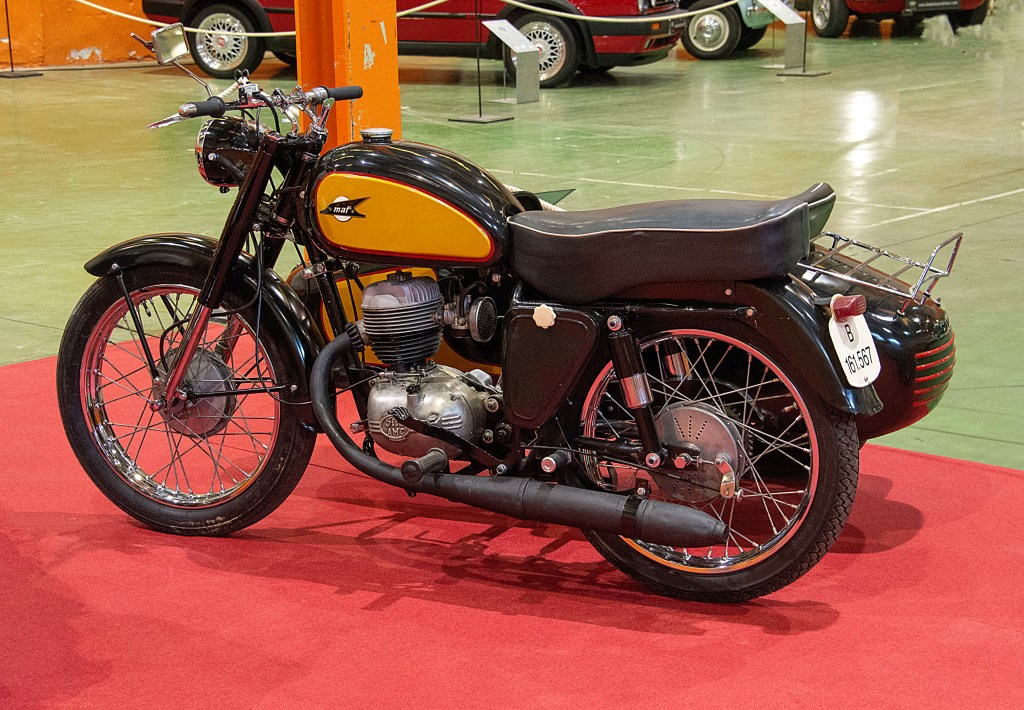
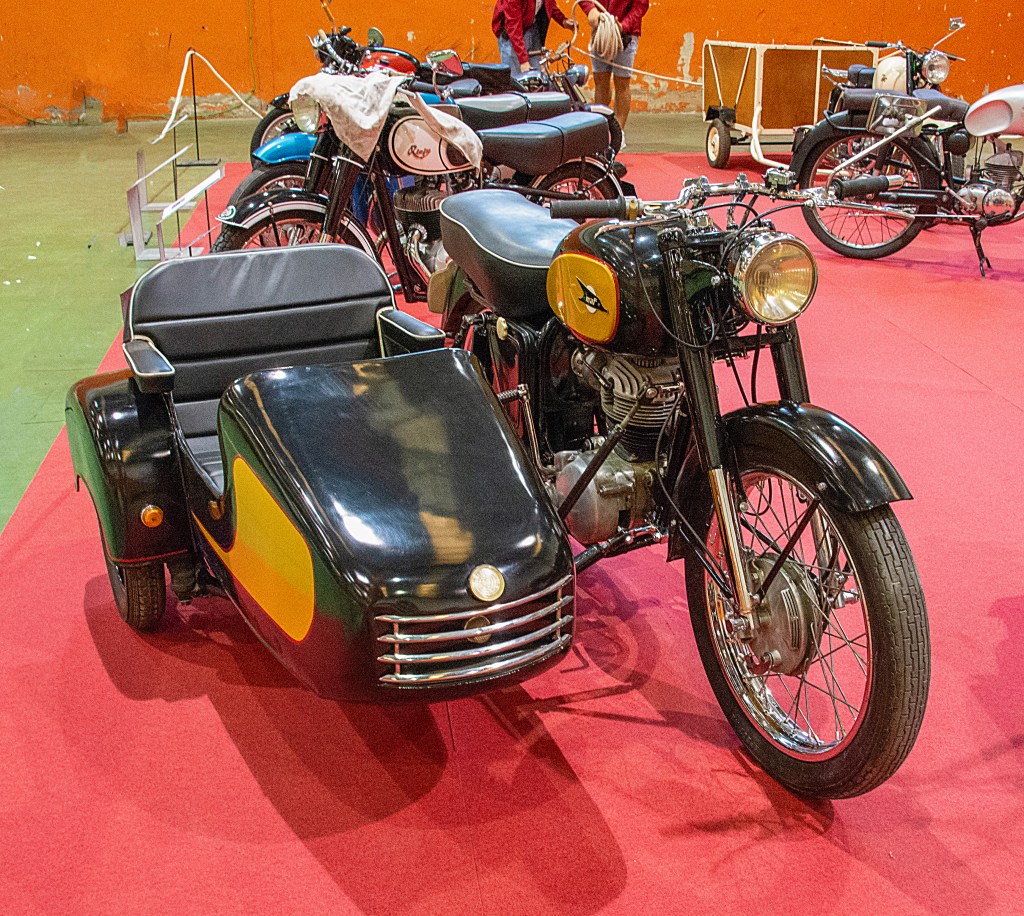
MAF 175cc and Sidecar at the 2025 Mollerussa Classic Show
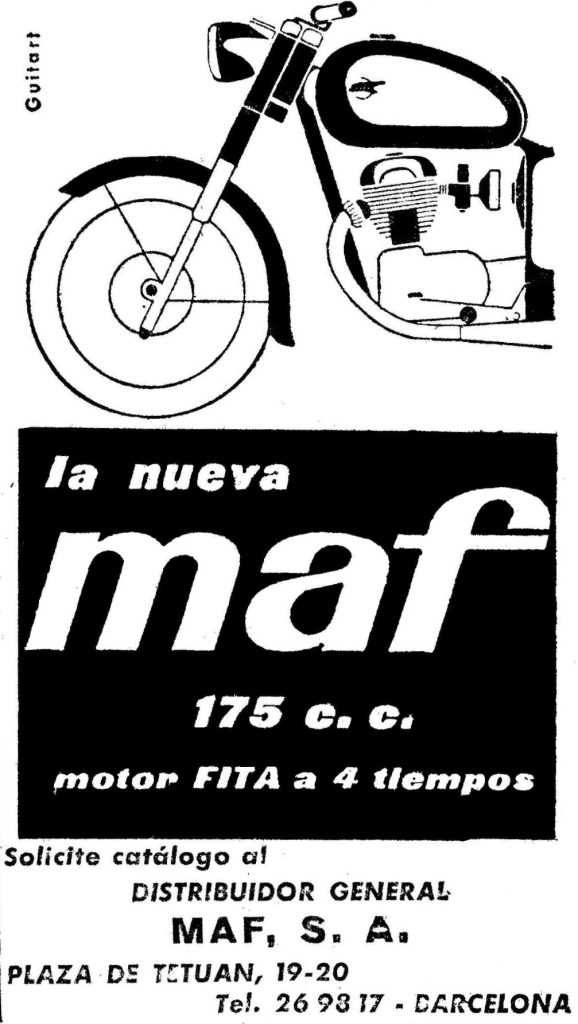
This advertisement is reproduced with the kind permission of the Lamaneta website: http://www.lamaneta.com
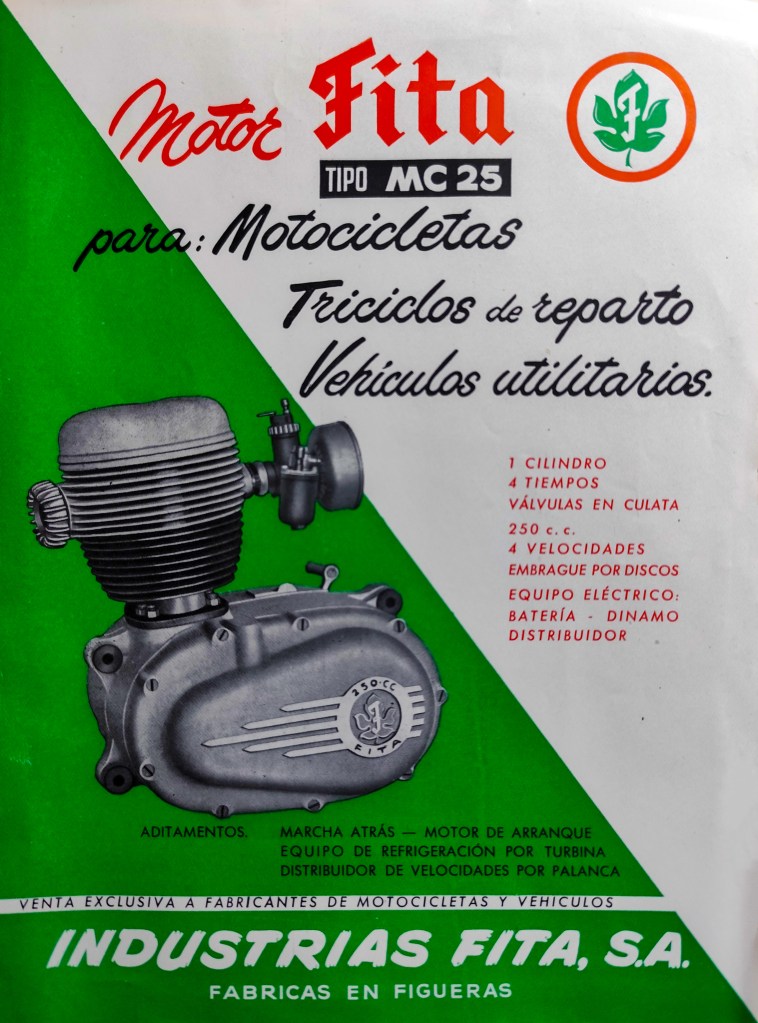
Industrias Fita advertisement for their 250cc, Four stroke engine.
Now we can move to a slight puzzle. Indústrias Fita were building Fita-AMC 175cc engines under licence before they created the MAF Brand but this MAF below is fitted with an original AMC 175cc, four stroke engine.
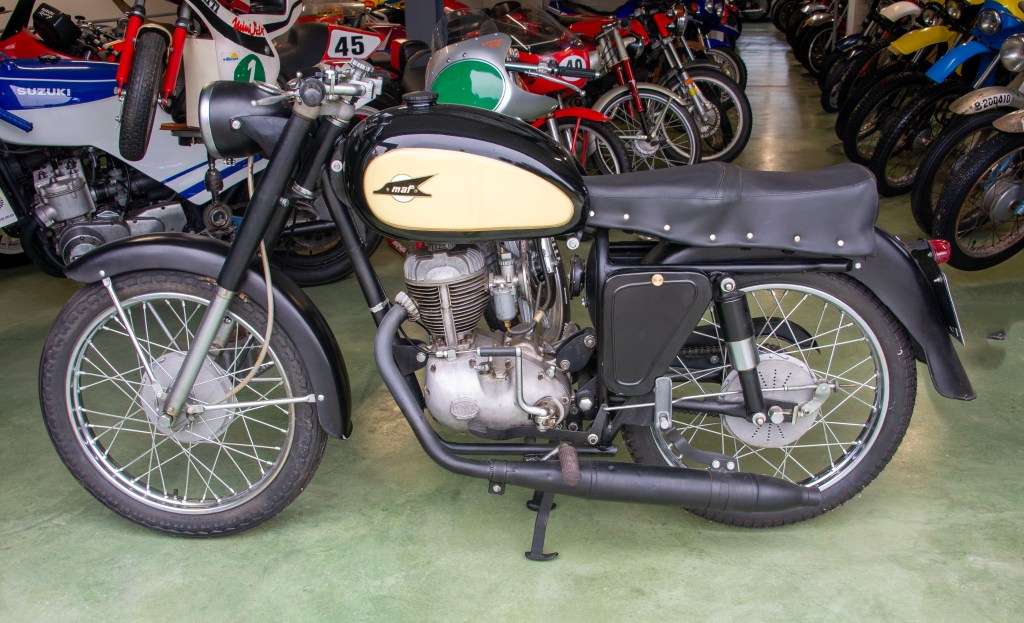
This unusual MAF 175cc is on display in the David Sala Collection at Sales de Llierca, Catalonia
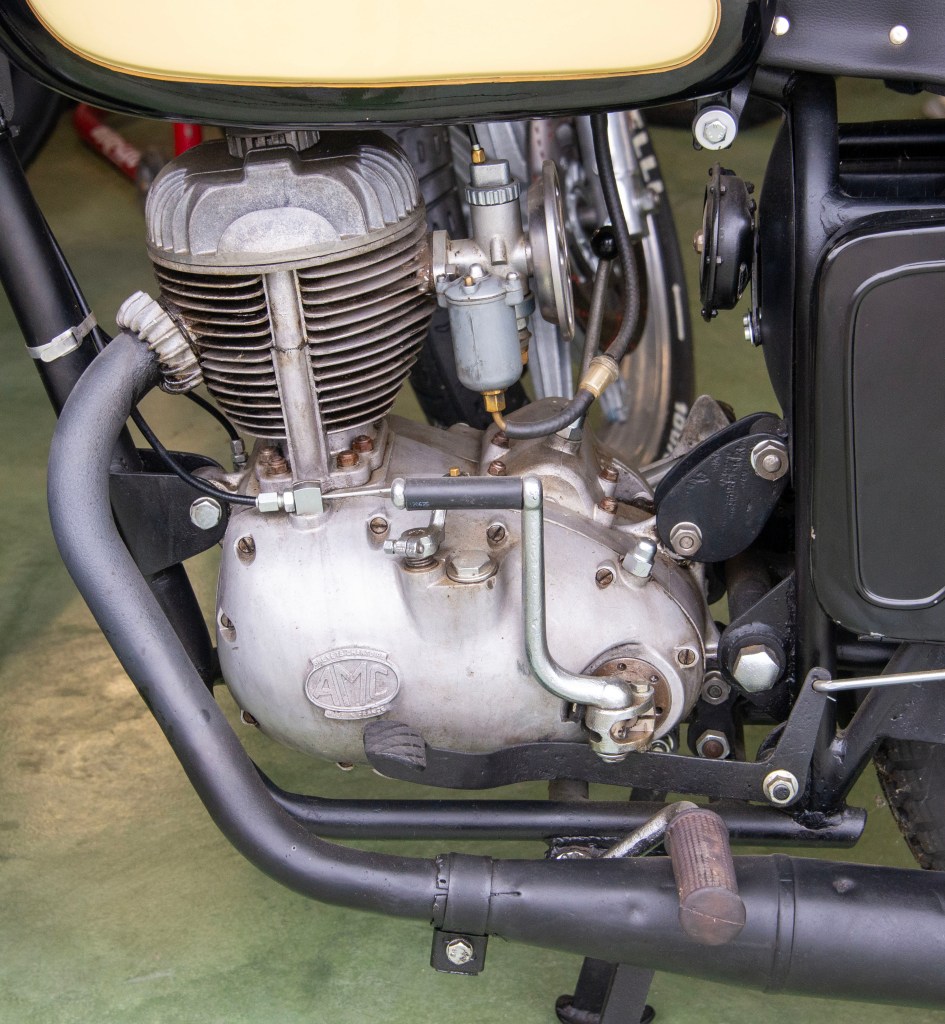
The crankcase cover on this AMC 175cc engine shows the standard AMC logo.
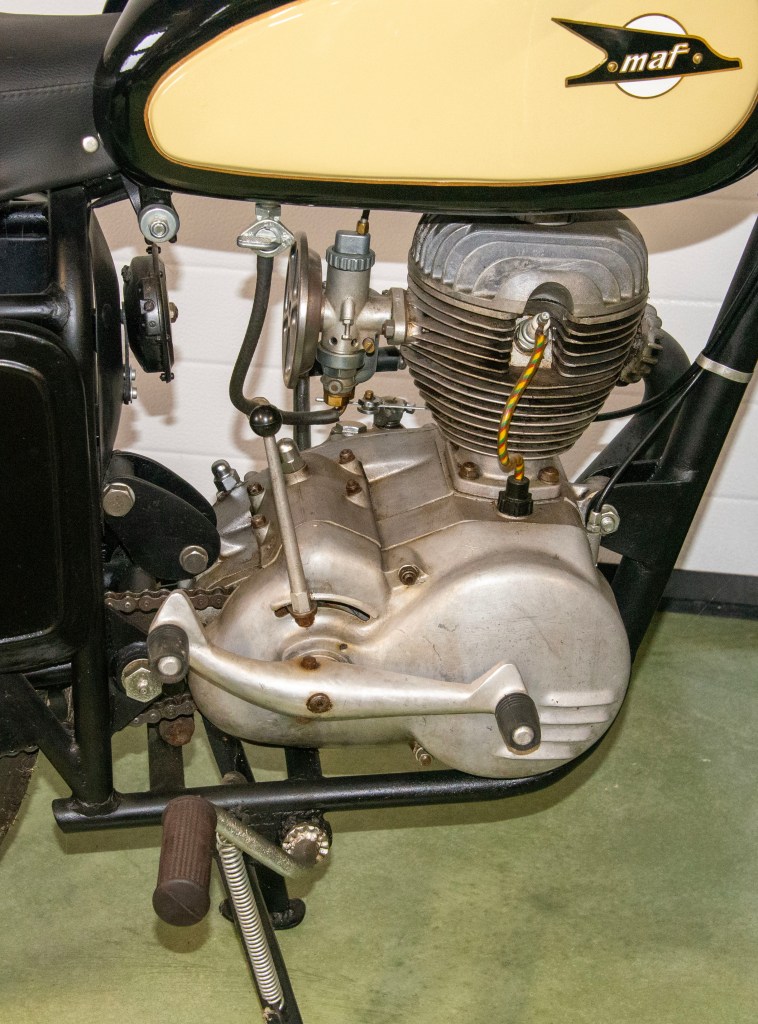
The AMC 175cc engine featured a “heel and toe” gear change lever with an additional hand change lever.
Footnote: Industrias Fita SA
What was to become Indústrias Fita can trace its history back to 1840. In 1912, the company merged with the historic Sala foundry – established in Figueres in 1832 – moving to a new phase focused on agricultural machinery and hydraulic equipment. The combined Sala and Fita workshops were originally located at the corner of Carrer Sant Joan Baptista and Carrer Sant Cristòfol. A year later, in 1913, the firm adopted the name Indústrias Fita SA and relocated to Carretera de Roses.
Known simply as “Fita” to the public, the company became one of the most significant employers in Figueres and the surrounding area. Its household products were so widespread that it was said that nearly every household owned something manufactured there.
Between 1912 and 1913, the factory ventured into automobile assembly, producing two models. However, intense competition in the emerging automotive market forced the company to abandon this line and concentrate instead on its pumps and engines.
During the Spanish Civil War (1936 – 1939), the factory was repurposed to produce war materials. In the 1940s, it returned to its core specialities of engines, hydraulic pumps, and related machinery.
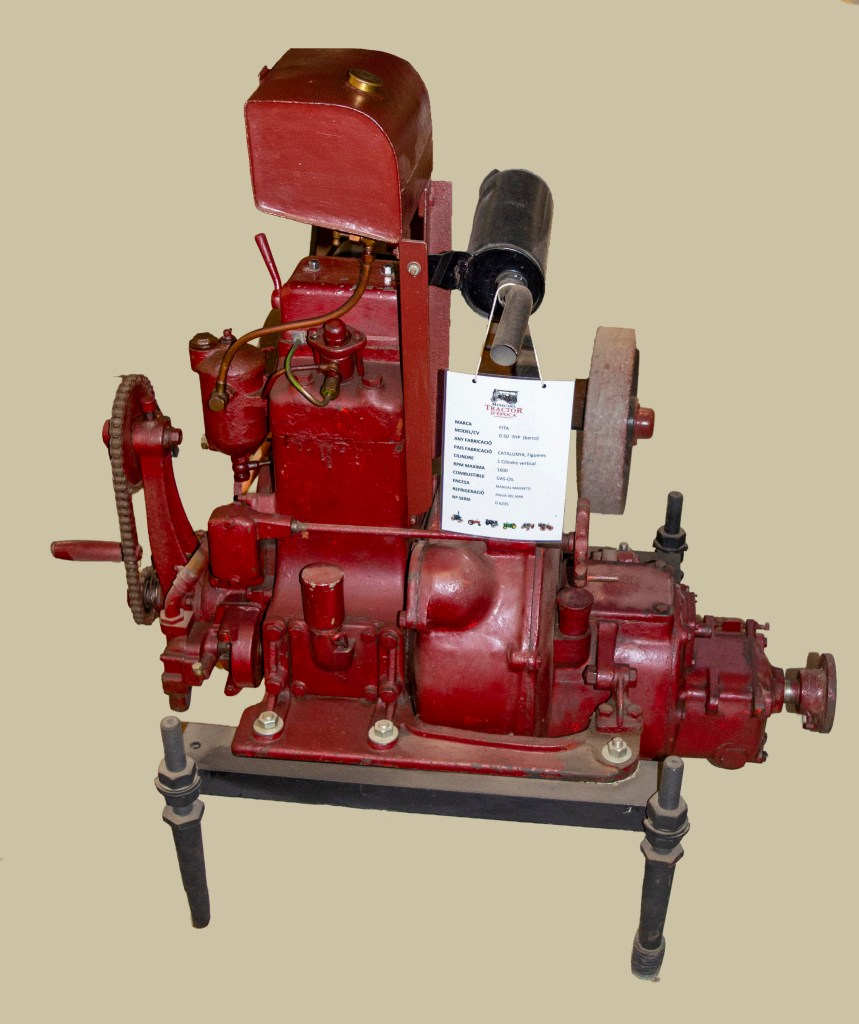
Industrias Fita Type D50, 7 HP, static engine, Seriel Number D6235. This engine is on display at the Museu del Tractor d’Epoca, Castellbisbal (Barcelona)
Sadly, the company’s decline began in 1970, when severe financial difficulties led to the sale of nearly 90% of its share capital to the German firm Hatz, after which it operated as Fita-Hatz. By December 1993, falling orders (especially from Germany) and rising labour costs forced the shareholders to mortgage part of the company’s assets and dismiss 70 of its 83 employees. This marked the beginning of the end: the workshop and foundry gradually shut down, leaving only the commercial division active for a few more years. With its closure, a long‑standing family and industrial tradition came to an end.
In 1989, a proposal was submitted to the Figueres City Council to transform the former engine‑factory site into a multi‑cinema complex which included two residential buildings, but the project was never carried out. Instead, a Mercadona supermarket was constructed there at the end of 1999.
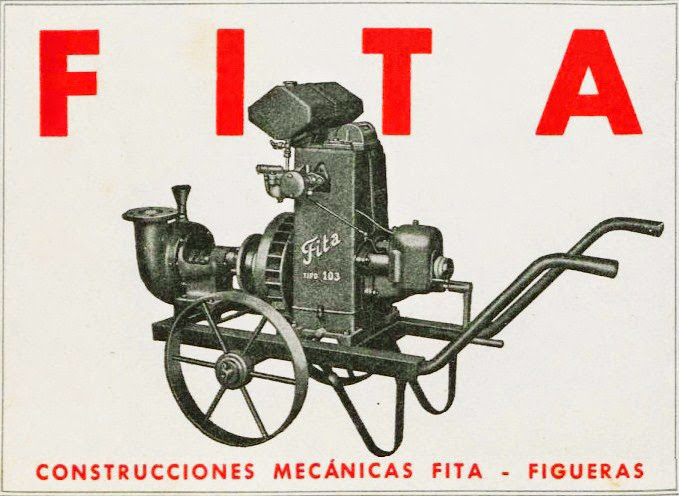
The reproduction of the contemporary newspapers adverts here is authorised by the Ajuntament de Girona and are taken from their Digital Newspaper Archive