In 1950, Kapitán Federico Saldaña Ramos, of the Spanish Army was based in Burgos (Catalonia). He had a strong interest in small vehicle engineering and submitted a series of tricycle and microcar designs to the “Spanish People Create” section of Motor Mundial**. By doing so, he had hoped to attract a manufacturer or investor that would be willing to bring his concepts into production.
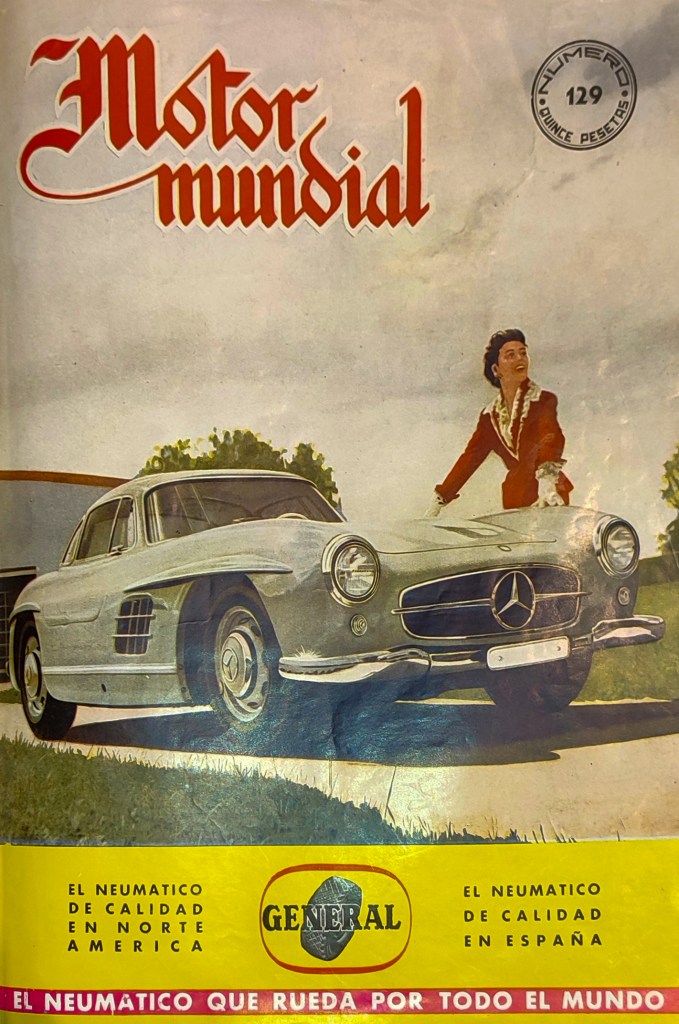
**This is the cover page of a 1950s Motor Mundial magazine. Motor Mundial played a central role in showcasing microcars and prototypes during Spain’s microcar boom (Biscúter, PTV, Kapi, David, etc.). Its editorial style was more technical than many contemporary magazines, often including diagrams, cutaway drawings, and engineering commentary.
By late 1951, Saldaña had completed his first working prototype with which he travelled from Burgos to Barcelona in 1952. The journey served as both a reliability test and the creation of the new company, Automóviles y Autoscooters Kapi S.A. as a manufacturer. The company was formally established in Barcelona in 1952 and although relocating more than once, most of the Kapi advertisements give the address for the Offices and Workshops as Carrer Robreno 86, on the corner with Carrer Numancia, Barcelona. The plot, as viewed on Google Earth, is currently a cleared piece of land now.
The Workshop was operational by late 1952 with an initial aim of producing a vehicle per day, beginning in 1953, with gradual increases planned. This ambition was never met as build quality issues restricted their commercial success. To counteract this failure, Kapi diversified in 1954, adding motorcycles and motocarros to its portfolio.
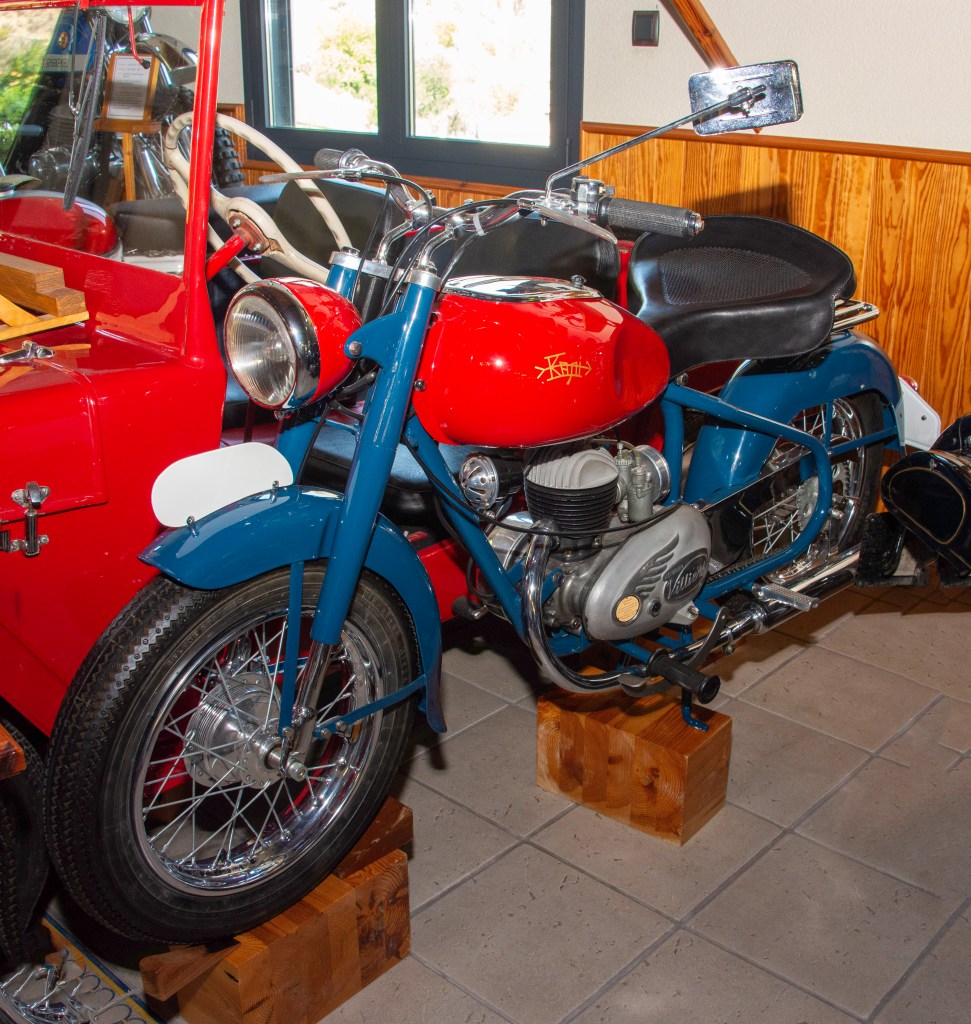
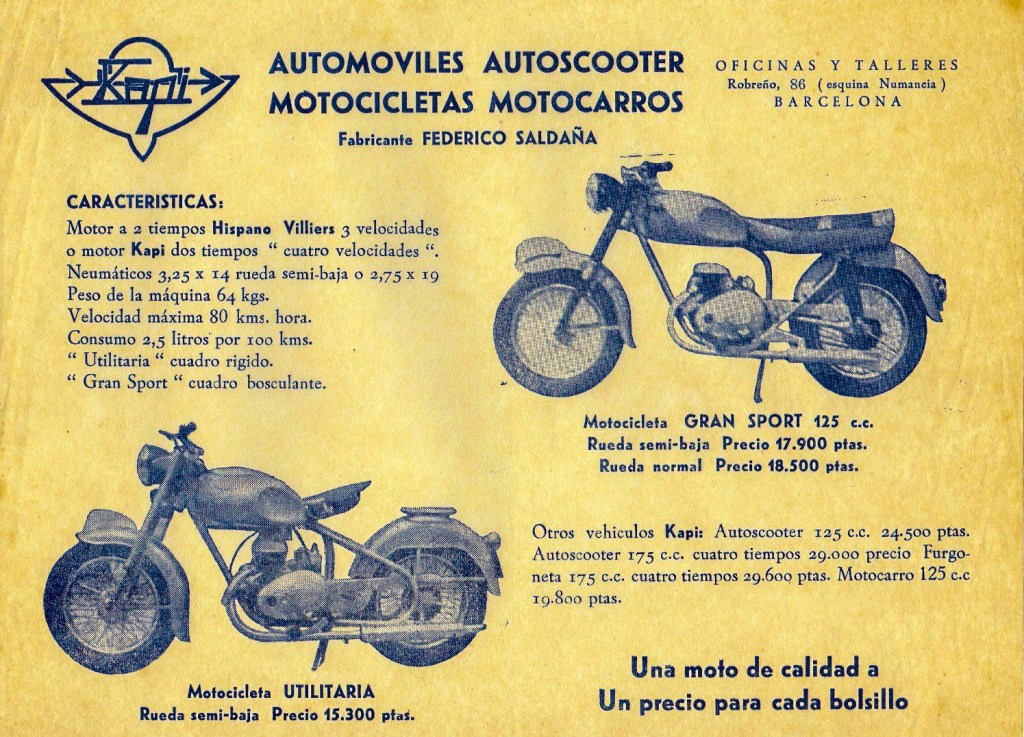
This rare Kapi motorcycle is on display in the Col’leccion Vehiculos Historicos “Vall de Guadalest” near Alicante. It is a 125cc, Utilitaria model from 1954 with the Hispano Villiers engine.
In autumn 1954, Kapi introduced two motorcycle models – the Gran Sport and the Utility. The Gran Sport used the proven Hispano Villiers 125cc, two stroke engines whereas the Utility, was supplied with a “Kapi” engine, which was essentially a Pons unit with modified crankcase covers. Interestingly, the Gran Sport could be ordered with either 14 inch or 19-inch wheels.
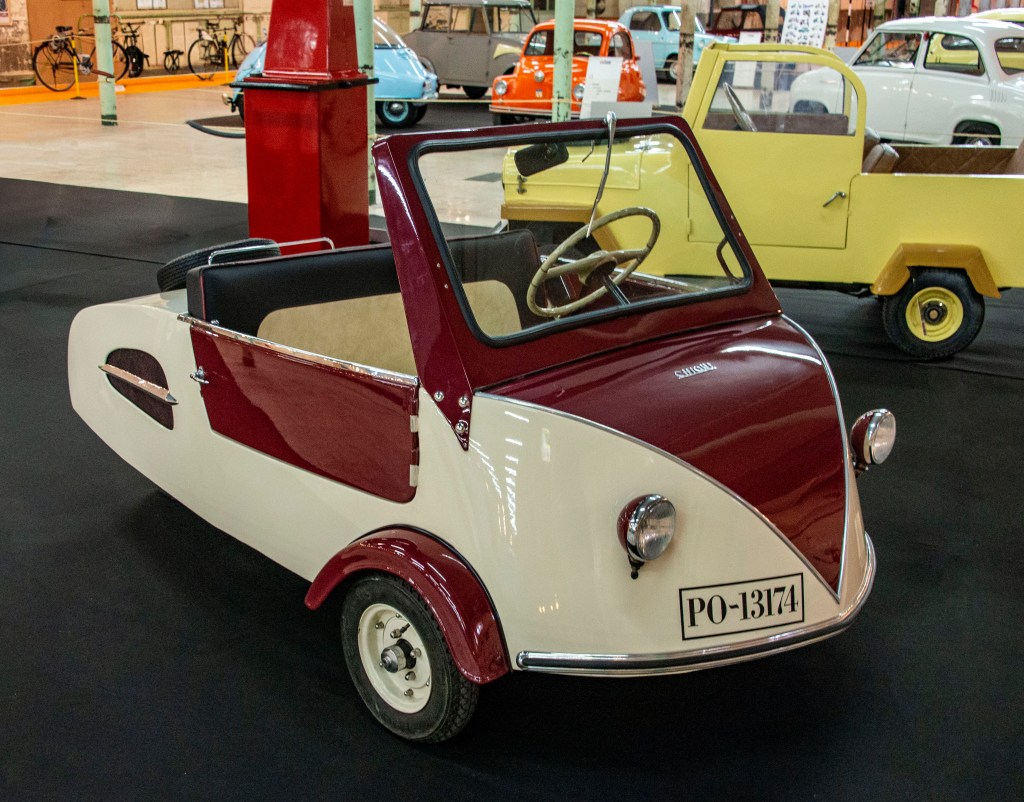
This is a two seater Kapi Chiqui dating from 1956 and is one of approximately twenty that were built. These were powered by an IRESA 200cc (197cc), two stroke, air cooled engine. It is part of a Private Collection and was photographed at an exhibition at Gironella, Catalonia in 2023.
The first Kapi motocarro appeared in 1955, again powered by the favoured 125cc Hispano Villiers engine. By now, 3 different motorcycle models existed but all used the same 125cc powerplant.
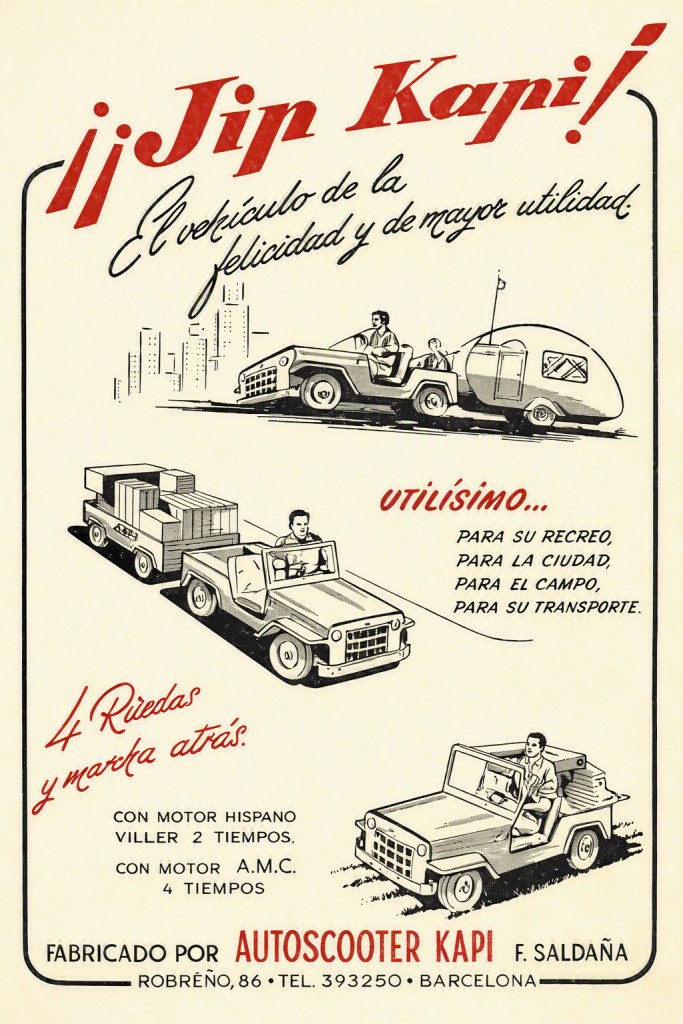
For 1956, the range expanded again to include microcars and motocarros, using various engines – the 125cc and 200cc two stroke engines from Hispano Villiers, the two stroke Iresa 200cc, and the Fita AMC 175cc four stroke (built under licence in Figueres).
The final year of the brand was 1957 and this was marked by the introduction of another motorcycle, built by Arcadio Dunjó of, and featuring a Hispano Villiers engine and Dunjó’s characteristic rear suspension with a horizontal shock absorber. Sadly, Kapitán Saldaña was killed in a road traffic accident in 1957 and, as he alone held the authorised signature powers, under Spanish trading laws, the company had to cease trading.
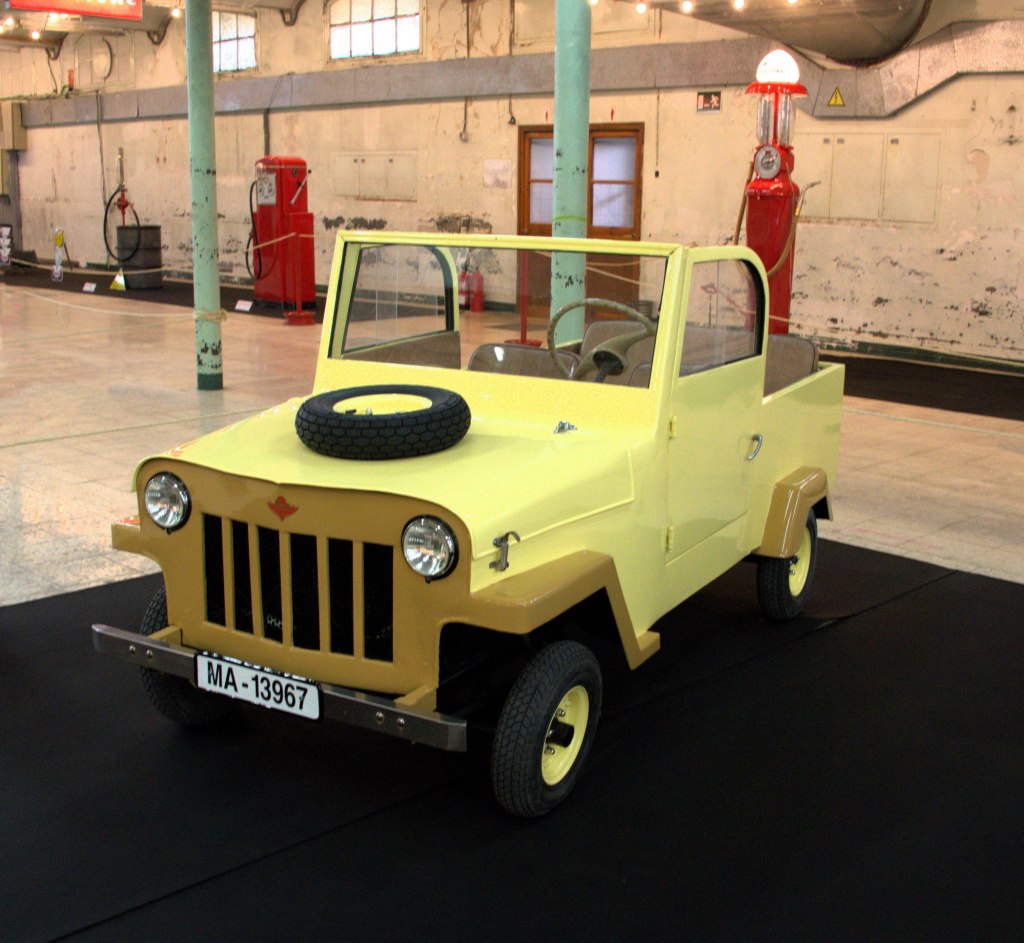
This is a Kapi JIP Pullman, dating from 1956 and is one of approximately twelve that were built. These were powered by a Hispano Villiers 200cc (197cc), two stroke, air cooled engine. It is part of a Private Collection and was photographed at an exhibition at Gironella, Catalonia in 2023.
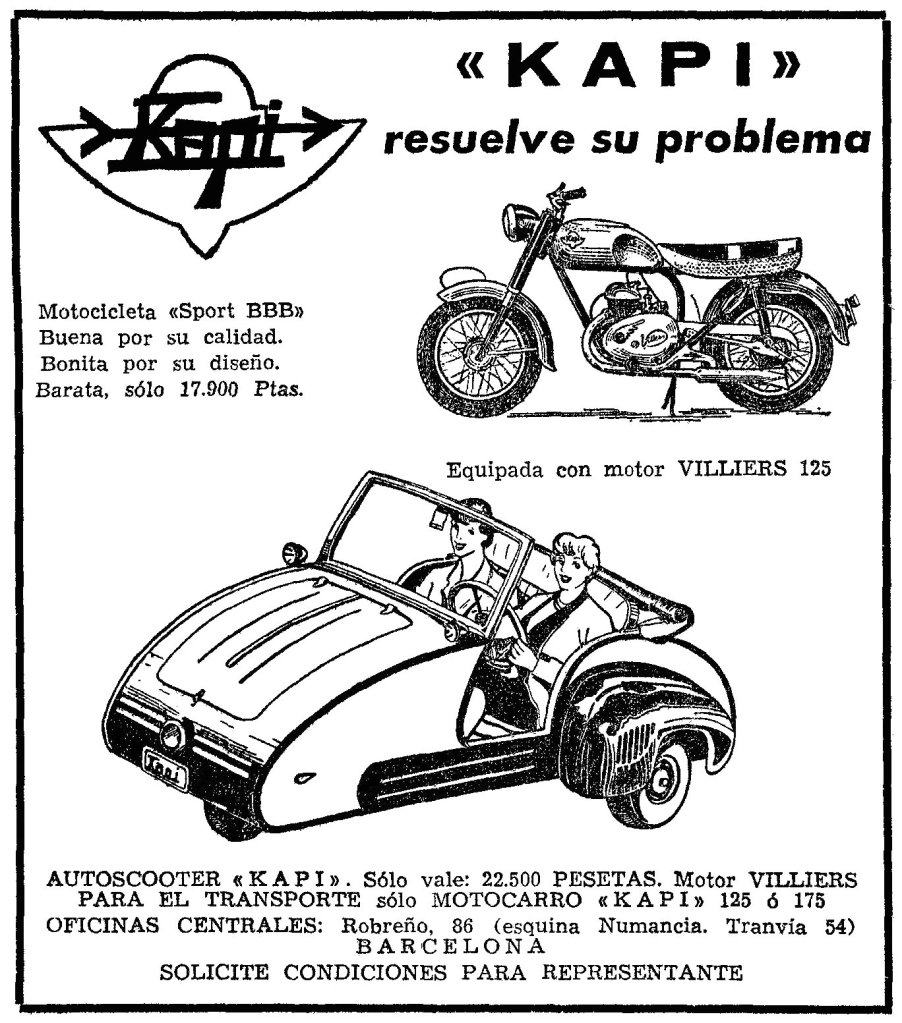
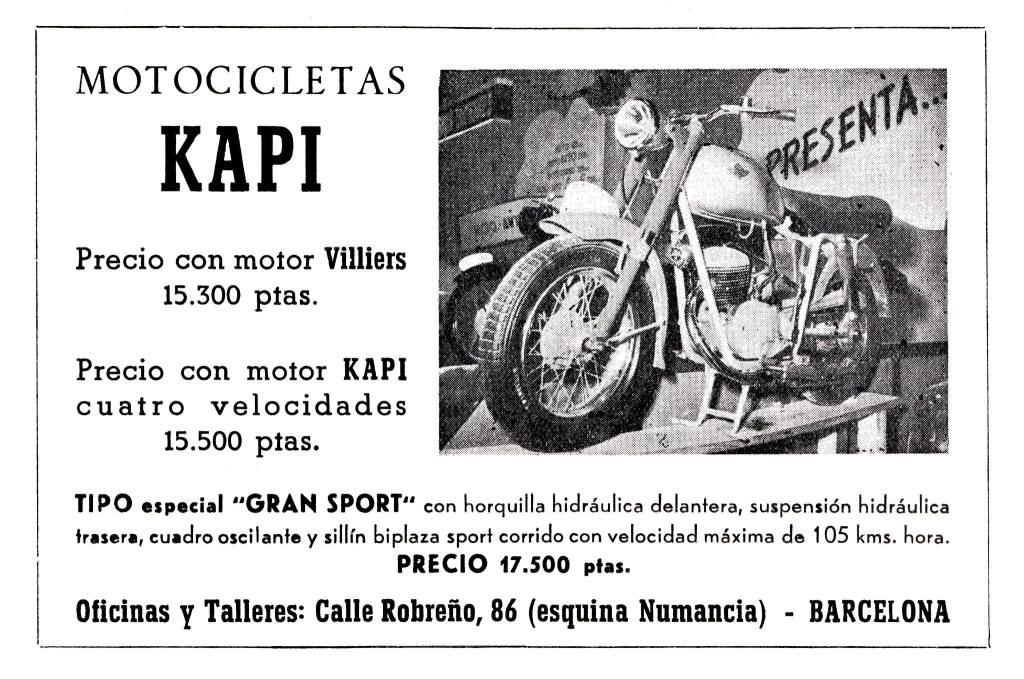
These 1950s adverts were downloaded from the Biblioteca Virtual de Prensa Histórica (BVPH). BVPH works are offered under CC-BY 4.0 license (Creative Commons Attribution 4.0 International – https://creativecommons.org/licenses/by/4.0/ )
 Spanish Motorcycles