
The story of the Gimson brand is rather complex and occurred in different stages with different generations but, from its inception, it was always a family owned and controlled business. What follows is, by necessity, just a brief overview.
At the turn of the 20th century, Pierre Gimbernat, was a renowned watchmaker from Perpignan, in Southern France. He went on to obtain a distribution licence for the French Automoto brand of cycles for the Girona province in Catalonia. As a result, he moved to Figueres (a town 40 kms to the north of Girona, where he established premises at Carrer Sant Pau, 17. Initially, he sold and repaired watches and bicycles whilst additionally importing and selling bicycle materials and parts. After a while, in 1930, he decided to assemble this material and sell it under his own brand, which he called Gimson.
“Gimson” was an English style acronym for Gimbernat and Sons – a name that brought together Pierre Gimbernat and his three children: Pierre, Antoine and his daughter, Françoise. A few years later they would use the tax name Gimbernat Hermanos, SRC . The main tasks within the company were shared between the founder’s three children: Pierre Gimbernat y Font, the eldest brother, led the team, Antoine ran the assembly section and his daughter, Françoise worked in the offices, in the sales department.
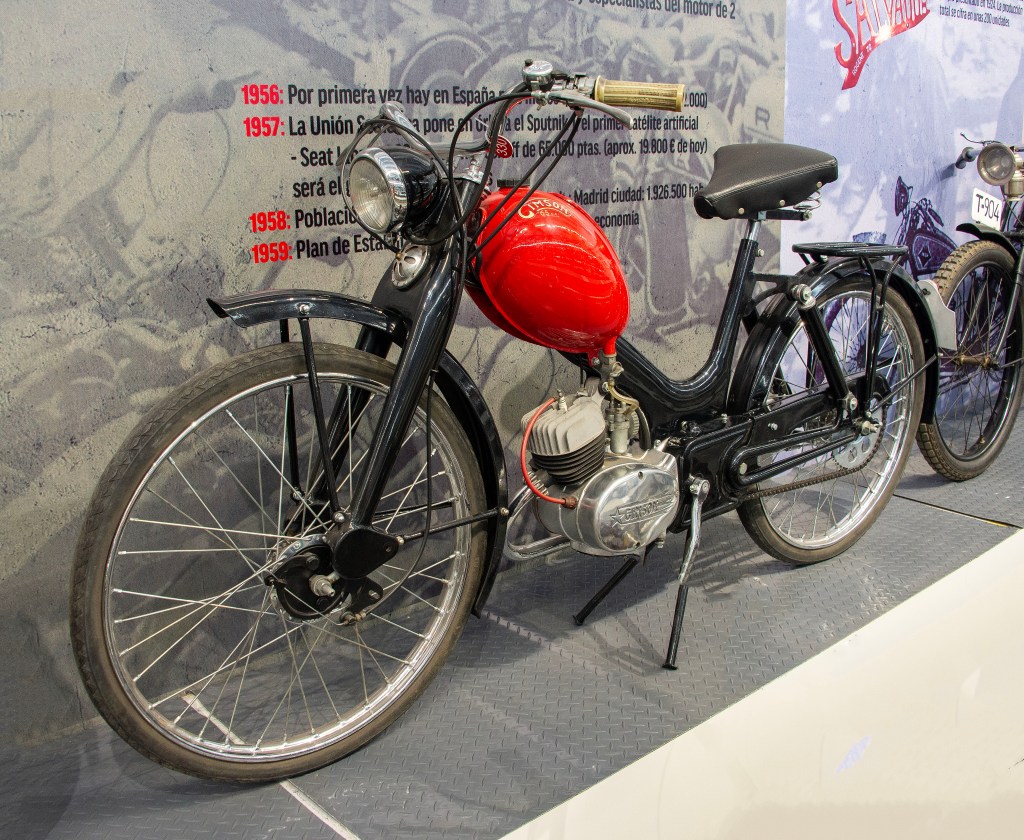
This 1955 Gimson 65cc motorcycle was photographed at the Museo de la Motocicleta Española, 28802 Alcalá de Henares (Madrid)
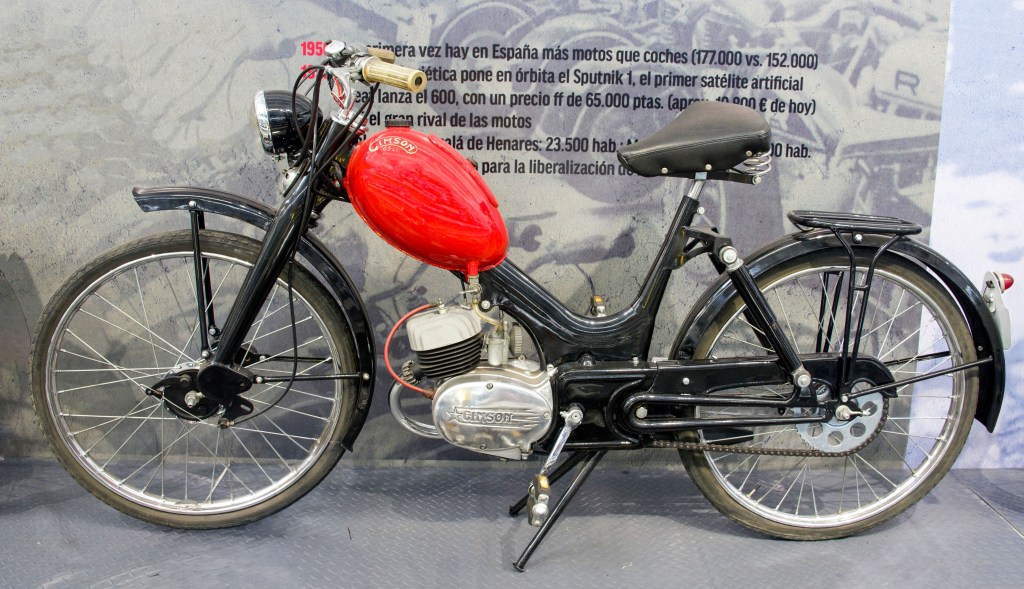
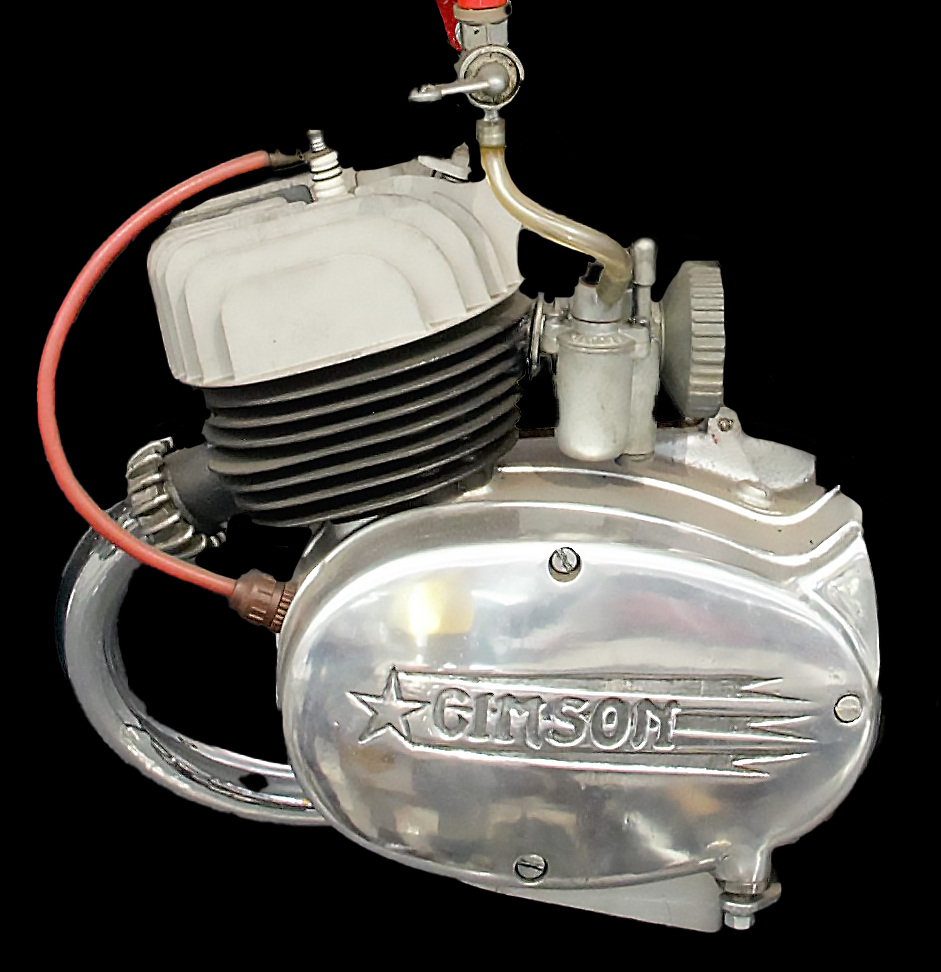
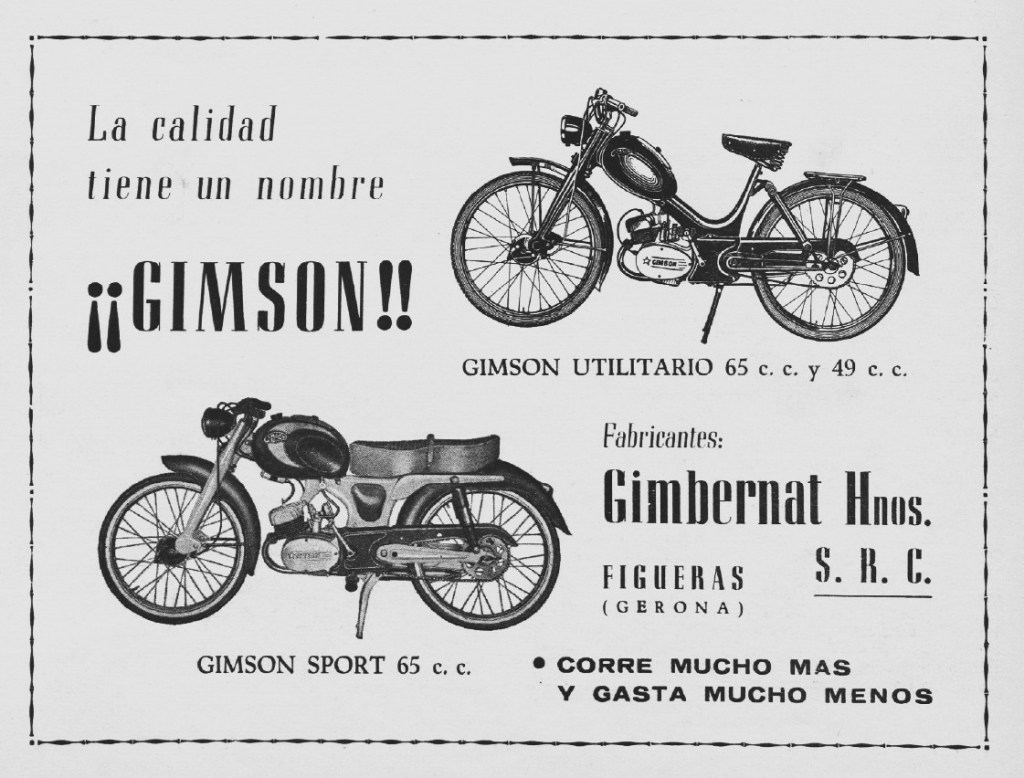
In the early to mid-fifties, Gimson began manufacturing their first mopeds. They experimented with power units before reaching an agreement with the Parés brothers of Barcelona who produced the Gamo engine. These engines were used for their 49cc and 65cc models, with crankcases being embossed with the Gimson name.
The company achieved commercial success and ended up having more than a hundred employees. At one point, Gimson won a contest to provide bicycles to the Spanish Civil Guard, before the unit was equipped with Sanglas motorcycles. These bicycles were used to patrol the countryside, they were the standard model, even though they had a special support to place the rifles.
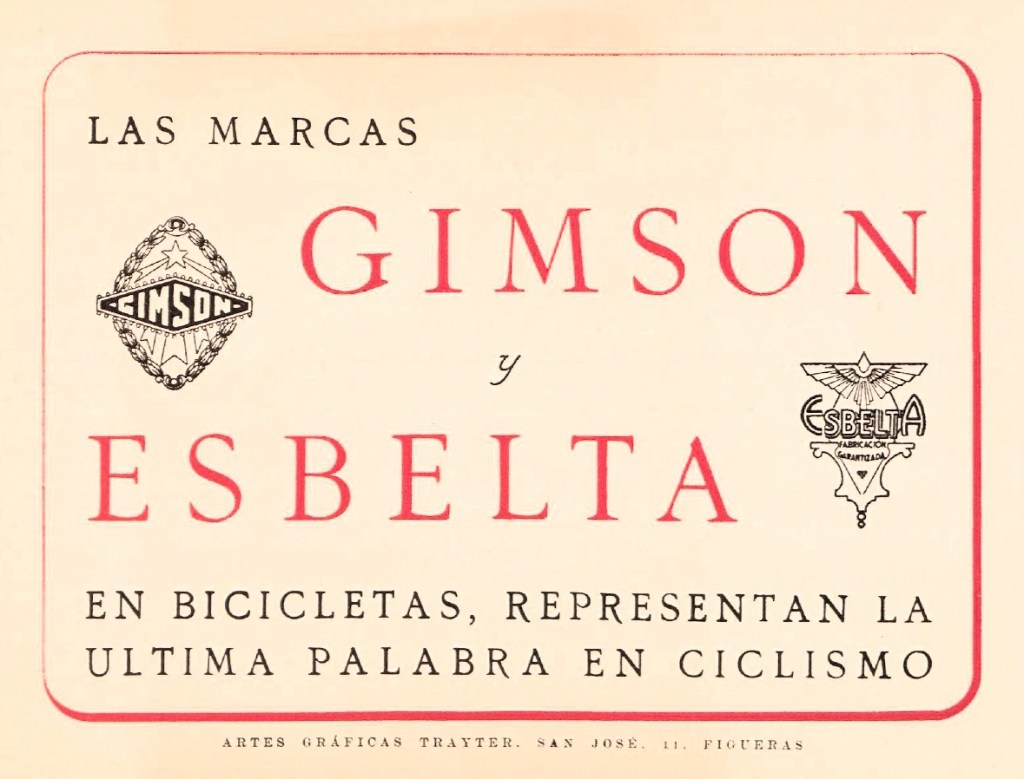
From the mid-1950s to mid-1960s, Gimson launched another range, marketed under a different brand name – Esbelta. In essence, Esbelta was essentially a branding exercise whose output started with a velomotor, based on a Gimson cycle (with a Ducson front fork) and powered by a Mosquito auxiliary engine. By the early 1960s, the Esbelta was released as a 49cc moped with embossed crankcase covers. The Esbelta mopeds used a range of engines including Gamo, Cucciolo, Villiers and Flandria.
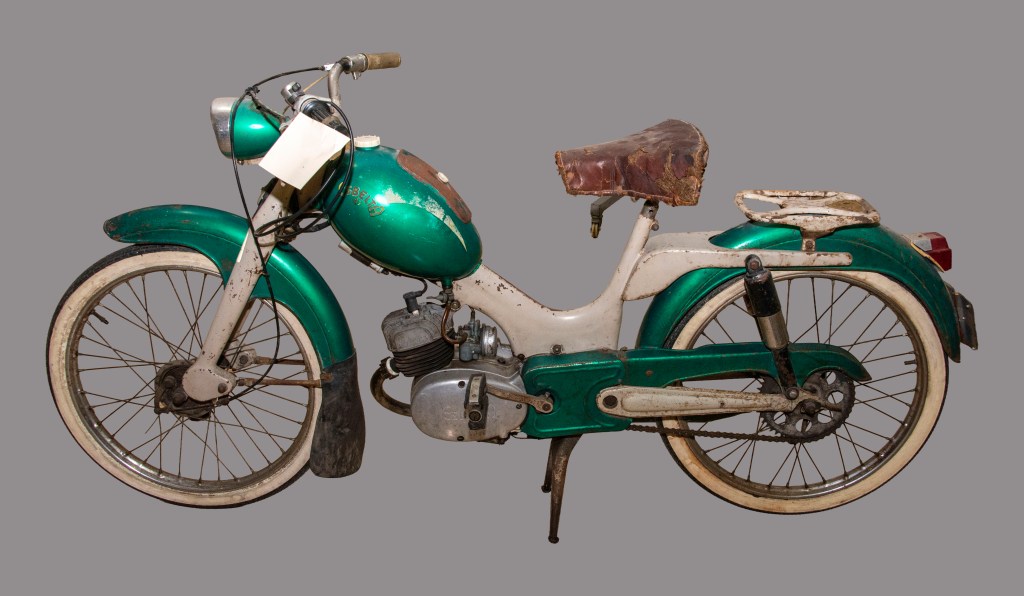
This 1962 Esbelta 49cc moped is part of the Sala Santy Collection
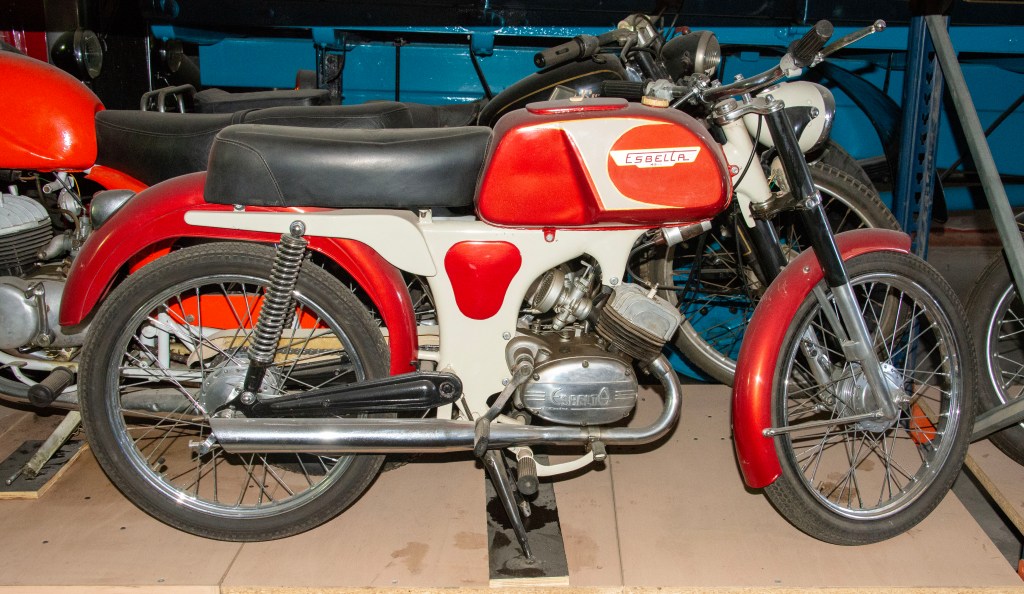
This Esbelta 49cc motorcycle is part of the collection of the late Joan Cabañó and I am very grateful to the Directors of the Museu de la Tècnica de l’Empordà (MTE) of Figueres who allowed me to visit the items in storage.
In addition to their own mopeds, the Gimson cycles were of a very high quality and were often used as the base on which to mount an auxiliary engine – a common economic transport solution at the time. Auxiliary engines used included the El Raton 48cc and the Rex 65cc, both of which incorporated a contact roller and were mounted directly over the rear wheel. There are examples of both in the excellent “Bicicletes de Foc”, the Collection and Museum of Josep Iglesias, based in 08180 Moià, Catalonia.
When the Pares brothers ceased production and supply of their Gamo engines, Gimson had to look for another source and in 1963, they struck a deal with Flandria (Belgium) to manufacture their engines under licence. The first model to have this Flandria engine was the Gimson Polaris before it was used on the Skipper and Elite.
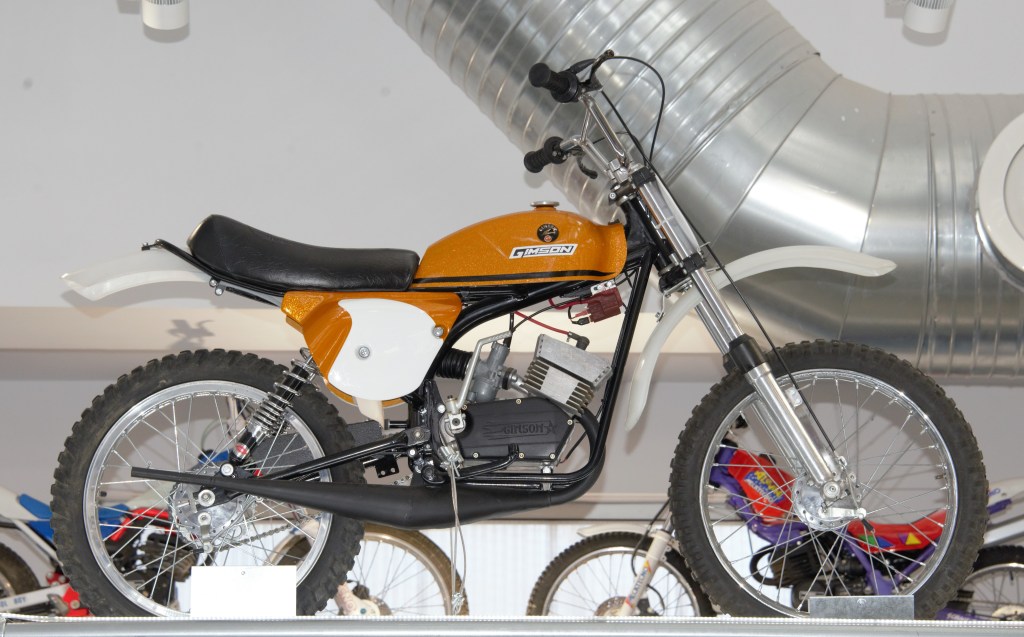
This Gimson 75cc Cross Competition bike (above) was built for the 1975/76 RFME Junior Trophy. It used a Flandria engine, based on their Cubic Compact System cylinder head at 75cc. This bike is on display at the “Made in Spain” Museum in Alcale de Henares.
Despite its early success, the company still faced difficult challenges – firstly with the premature death of Pierre Gimbernat y Font, the son of the founder, followed by the 1973 oil crisis that hit the whole sector. Later, as Spain opened up to foreign imports, very strong competition came from Japan.
The combination of these factors meant that the company found itself with a large workforce that the orders couldn’t support. Despite some restructuring, Gimson eventually ceased operations in 1982.
 Spanish Motorcycles