

Founded in 1939, the company BAESAL changed its name to BJR Construcciones Mecánicas in 1943, taking the initials of Bautista Esplugues and his two sons, Juan and Rafael.
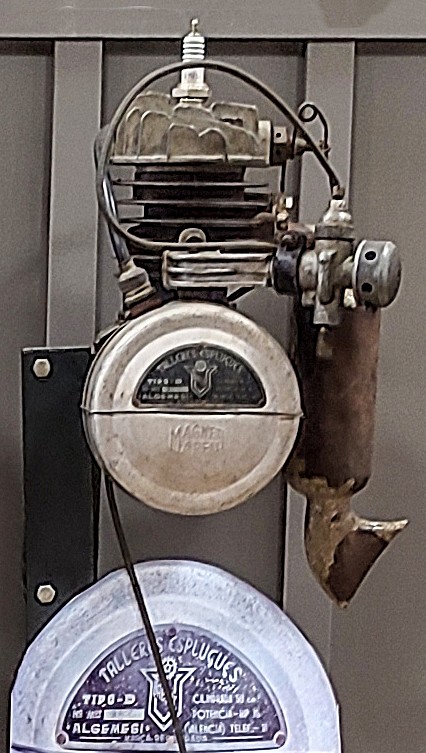
This is a Type D, 50cc, Talleres Esplugues from 1944 and is part of the Sala Santy Collection at Riola (Valencia)
The early model “A” was replaced in 1944/45 by model “B”, a 50cc two stroke engine with a single gear, mounted on one side of the rear wheel without a clutch and with direct transmission to the rear wheel by means of a gear that could engage and disengage at the riders will. This “B” model would be followed with modified “C” and “D” models until 1951 when BJR completely changed its business model, moving away from auxiliary engines and velomotors and embarking on a program of manufacturing small motorcycles.
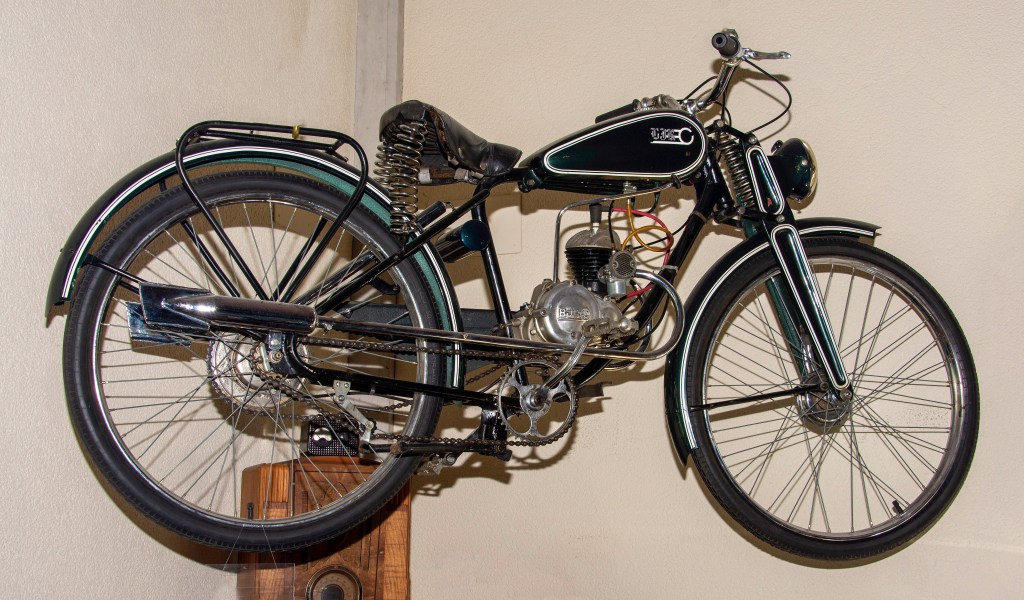
This BJR Model D, was one of the last series of velomotors built by BJR in 1948-1951. Powered by a 65cc, two stroke engine. This example is in the Museo de Vehiculos históricos Valle de Guadalest, near Alicante in Spain.
Their initial BJR motorcycle was fairly basic and powered by an air cooled, single cylinder, two stroke, 125cc engine. This would evolve and gain twin telescopic rear suspension and other improvements and be designated “XZ-125”. In addition to their revamped 125cc, in 1955 the company also launched the model that would become their mainstay, the YZ-175cc, another air cooled, single cylinder, two stroke, engine.
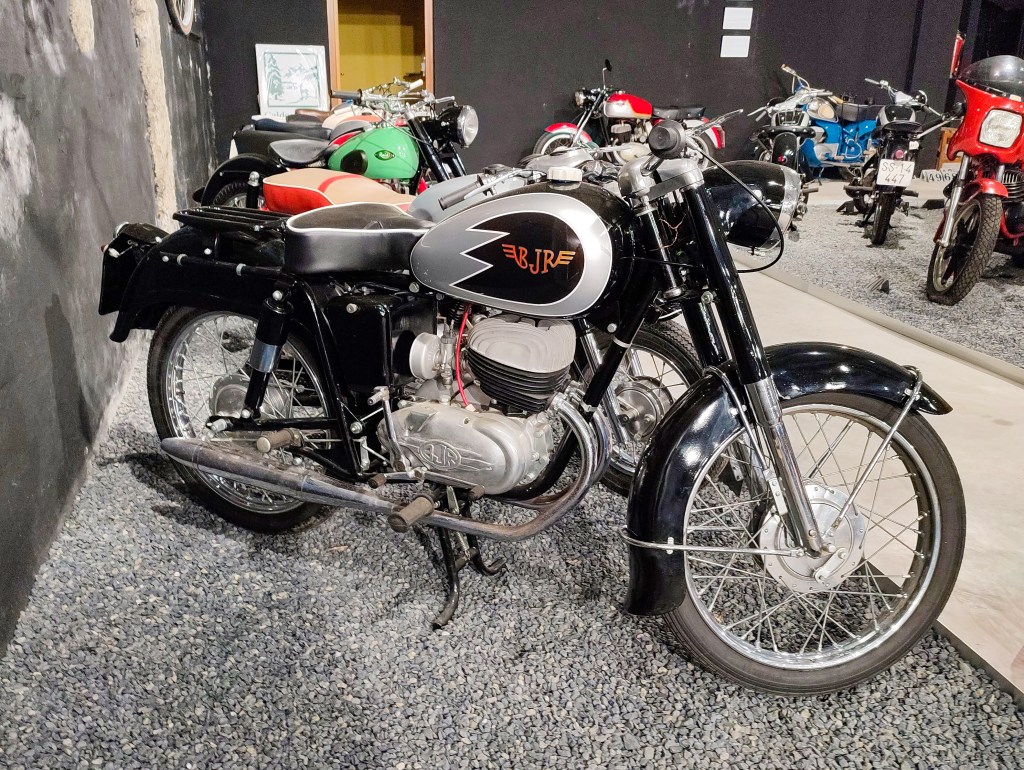
This BJR YZ 175cc is on display as part of the Walter Ankli Collection at Caldes de Boi, in Catalonia.
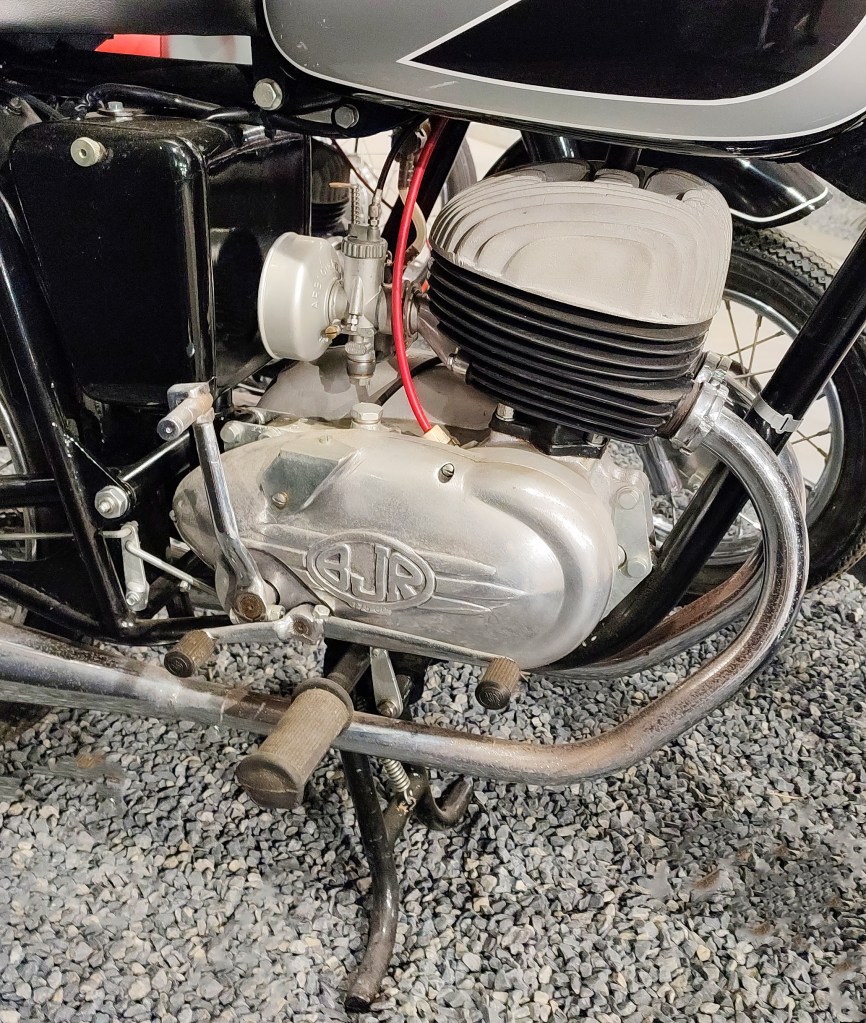
The next, significant change was the building of a prototype 175cc, four stroke engine. This revised prototype was designated as the “Vincam” and was presented to the public at the Barcelona Trade Fair in 1958. It was well received by the public and the motorcycle trade press but, unfortunately, BJR wasn’t in a financial position to take the bike through to production. I believe that there is one prototype Vincam in a private collection.
The BJR output continued with little change (with the addition of a small 44cc moped from 1957) until its eventual closure as a motorcycle manufacturer in 1962.
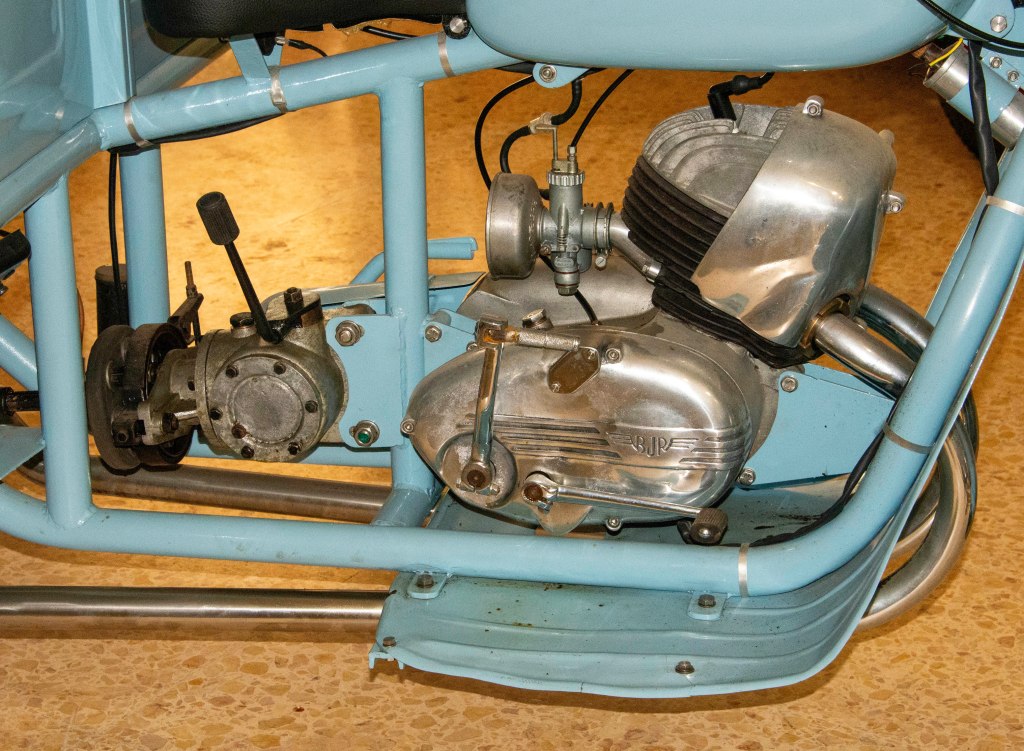
A 175cc, delta type motocarro was added to their output – the Eco 200. It included a load carrying area at the rear, front suspension of the Earles type to improve stability, forced air turbine engine cooling, shaft drive and differential-based secondary gearbox.
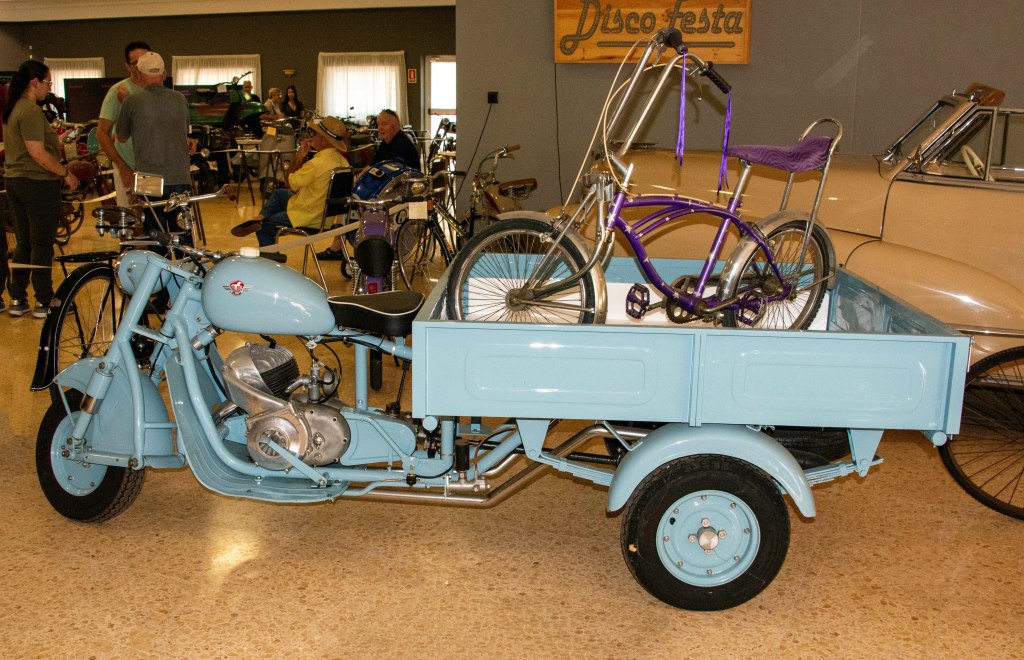
The Eco 200 motocarro is rare. This example is part of the Sala Santy Collection that is exhibited in Riola (Valencia) every 2 years.
The photos show the secondary gearbox, and the turbine forced air cooling fitted to the 175cc two stroke engine.
The firm ceased motorcycle production in 1962 and was acquired by the company, Maquinaria del Mediterráneo SA, thereafter, dedicating itself to the manufacture of quality small tractors equipped with Lombardini or MWM engines.
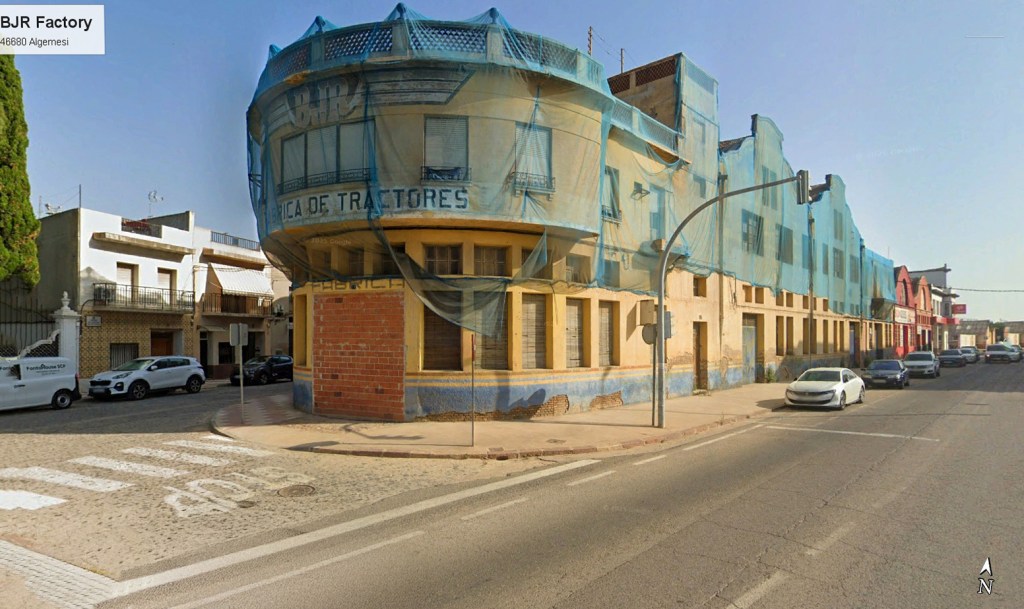
Map imagery © Google Earth. Data providers: © Google
This download from Google Earth shows the old BJR Factory in Algemesi in 2025. The Factory was in a triangle formed by the main Ronda del Calvari and Ave del Santíssim Crist de l’Agonia (left).
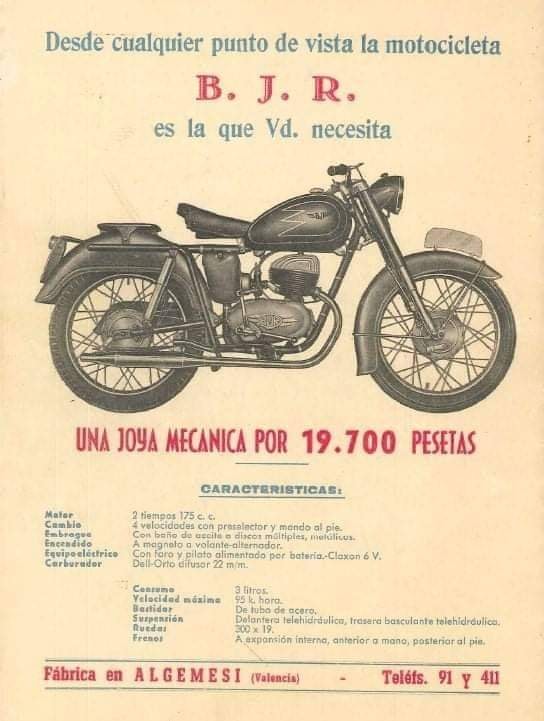
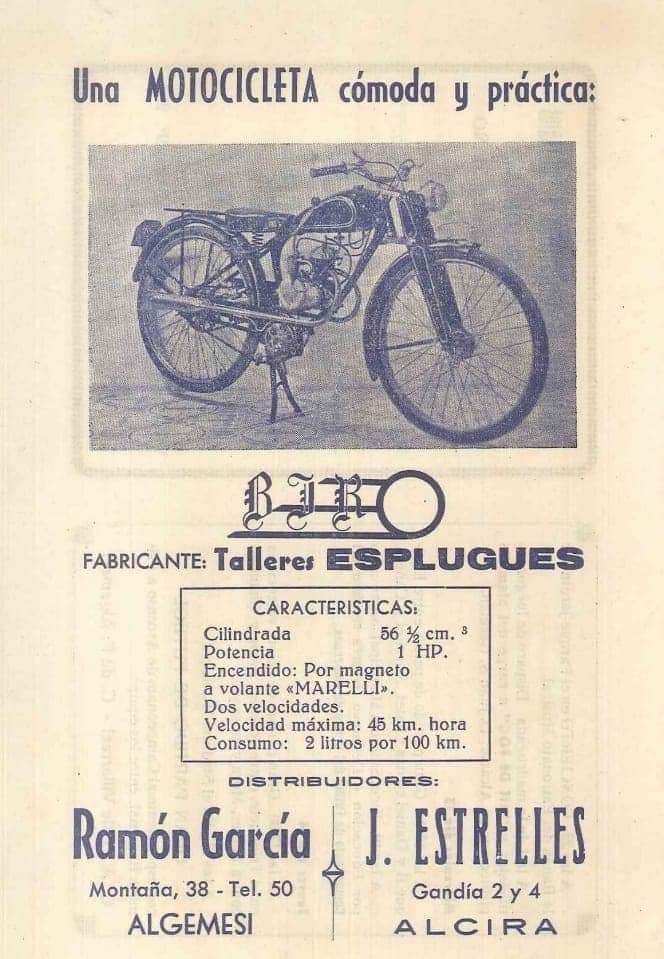
In the advert (above) you can see the BJR initials just below the photo
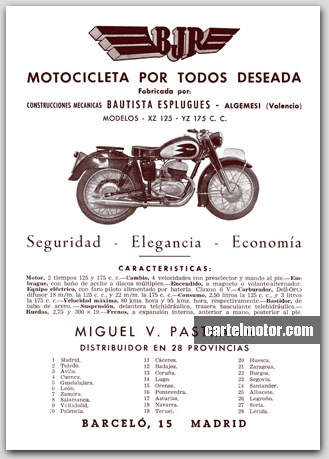
This publicity document was downloaded from http://www.cartelmotor.com
The BJR brand name continued to be used and the last BJR tractor was sold on 17th May 1996, but they continued to manufacture spare parts for a few years after that.

