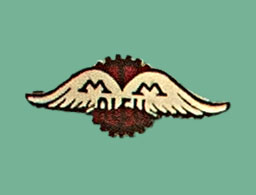
The Aleu family had a mechanical workshop – Manufacturas Mecániques Aleu, SL – with a facility at Carrer de Montserrat, Esparraguera, Catalonia. They produced some parts for motorcycles and made the decision to market a complete machine so, from 1952 to 1956, the Aleu brothers became a motorcycle manufacturer.
Their motorcycles were known for having attractive and pleasing lines, but they acquired a reputation for a lack of reliability and were let down by poor quality materials, a common problem in post-WW2 Spain. Clearly influenced by the Ardilla brand, the company created its debut model with a 125cc, air cooled, two-stroke, single-cylinder engine with a claimed output of 4.9 HP at 4,500 rpm. Fuel consumption was approximated at a frugal 2.5 litres per 100 kilometres. In 1953, the brakes and engine underwent further modifications and improvements.

This motorcycle was photographed at the Museo de la Motocicleta Española, 28802 Alcalá de Henares (Madrid)
The company had ambitious business plans and had intended to diversify its product offerings, in an effort to stabilise its future and remain in business. Aleu displayed some of these novel ideas at the Barcelona Trade Fair in 1954 as prototypes and included the Nito motorcycle with an air cooled, single cylinder, 197cc (66 mm x 57.8 mm), 2 stroke engine that developed 8 CV at 4600 rpm and featured an aluminium cylinder head and a swinging arm rear suspension system.
In 1954, they had also proposed a three wheeled microcar, the Bambi. A prototype was built and featured a convertible body, with no doors, with 2 front wheels and a single, driven rear wheel. It was to include the new Nito engine.
Aleu enjoyed some competition success in regularity events and motocross but, despite their early accomplishments, Aleu motorcycles could not find a setup that was sufficiently attractive enough to boost their sales volume. Their sales and, subsequent production, remained stubbornly slow, which had a negative impact on the viability of the company and limited their opportunity to invest in their ideas. The production line output made it harder to sustain its workforce, which numbered around 25 by this time.

In 1956 the Aleu brand and was absorbed by one of its suppliers and principal creditor, Manufacturas Mecániques Monfort, who took over its manufacturing permits, machinery and employed its workforce.
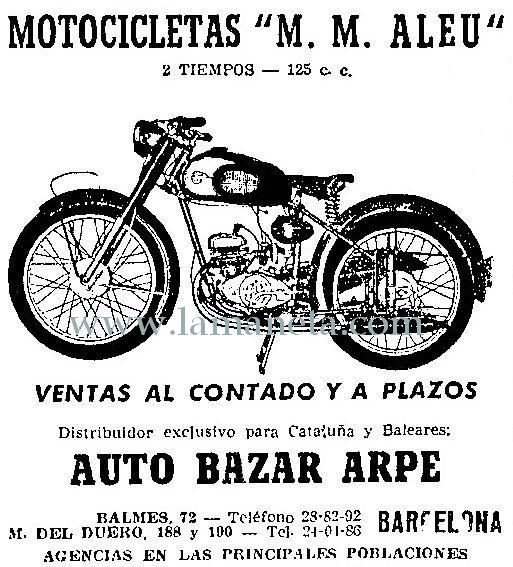
This advertisement is reproduced with the kind permission of the Lamaneta website http://www.lamaneta.com
 Spanish Motorcycles
Leave a comment