Dunjó is a recurring name in the history of the development of Spanish motorcycling and refers to Arcadio Dunjó Berta, a skilled engineer with ingenuity and outstanding craftsmanship.
Dunjó was born in 1911 in Barcelona and started out as an aeronautical mechanic. During the Spanish Civil War, he worked on the Polikarpov I-15 biplane fighter aircraft of the Republican Forces and, as a result, he had to move to exile at Toulouse in France after the Civil War. Whilst in France, he continued working as an aeronautical mechanic.
Dunjó was able to return to Spain in late 1942 and was involved in bicycle production and development and eventually set up premises in Federico Soler Street, Santa Perpetua de la Moguda (Barcelona) and was active there in the period 1951/1964. From here he designed numerous motorcycles and microcars, and he became one of the major suppliers of frames to other manufacturers during the 1950s, including Derbi, Dusco, Iso, Kapi, Mavisa (only eight units), MYMSA, Reina, Rieju, and others .
In 1957, Dunjó collaborated with Solans and Corominas, from the Hispano Villiers engine company and launched a motorcycle under the Dusco brand (acronym of their surnames), Dunjó created their only model – the 125cc, A-125. Eventually production proved to be sporadic and only circa 30 units were manufactured, but they were never produced as a series.
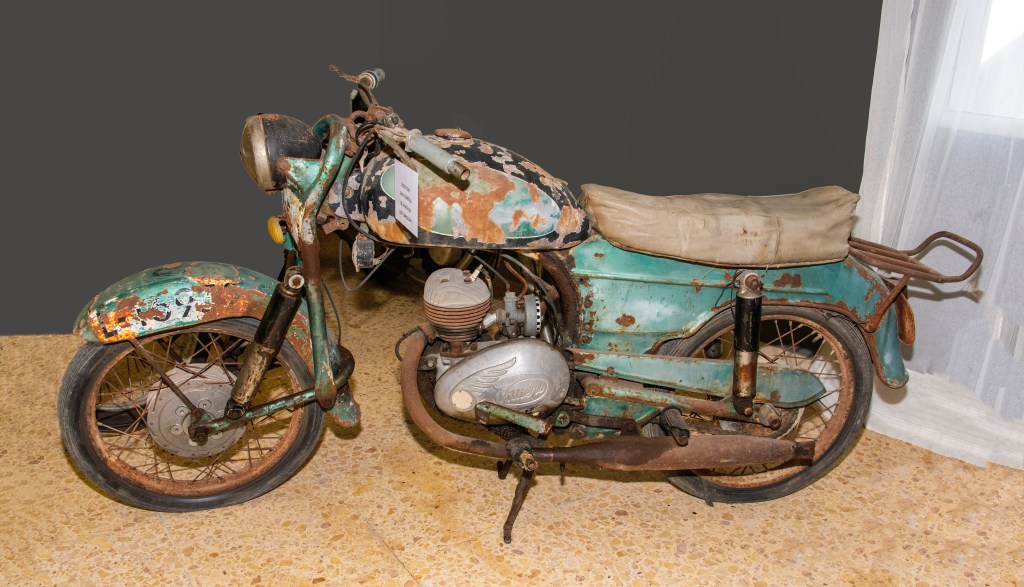
This unrestored Dusco 125cc is in the Sala Santy Collection. Dunjó had a liking for Earles style front forks and backbone type frames.
Again in 1957, he manufactured a scooter, the Dunjó-Castells, that was produced for the Barcelona Motobic brand distributor (Castells), and it used a Motobic 80cc engine. It was unusual in that it was a monocoque design, manufactured from sheet metal without a tubular frame.
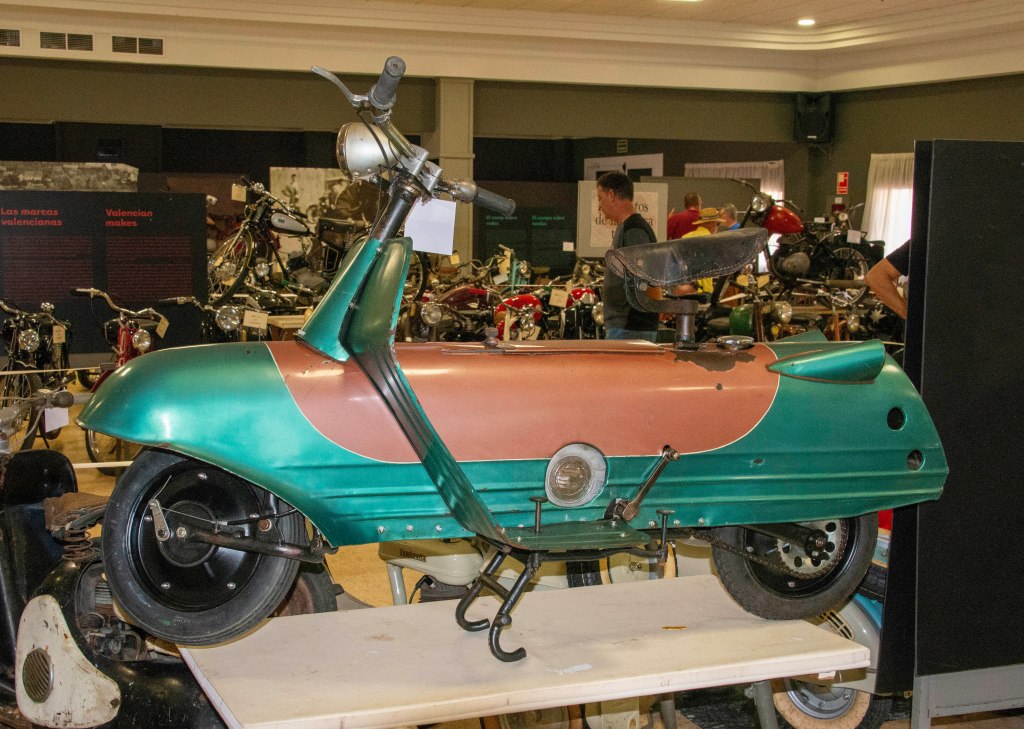
This rare Dunjó-Castells Scooter is in the Sala Santy Collection
Earlier in his career (1951), an unsuccessful attempt was made to produce a small, two stroke, diesel auxiliary engine with the intention that it could be fitted to bicycles. The Dunjó engine was only 30cc (34mm x 34mm) and rotated at 9,500 rpm with an external flywheel and a high compression ratio of 20 to 1.
During testing it achieved 52 km/h which was to be reduced for the production run but internal disputes between the partners meant that the project was abandoned without reaching commercial production.
Then, in 1956, Dunjó produced three different Microcar units equipped with different 125cc engines, but these prototypes weren’t developed further, and, to my knowledge, none have survived. Dunjó would also become a sought after sidecar manufacturer and his creations were widely used.
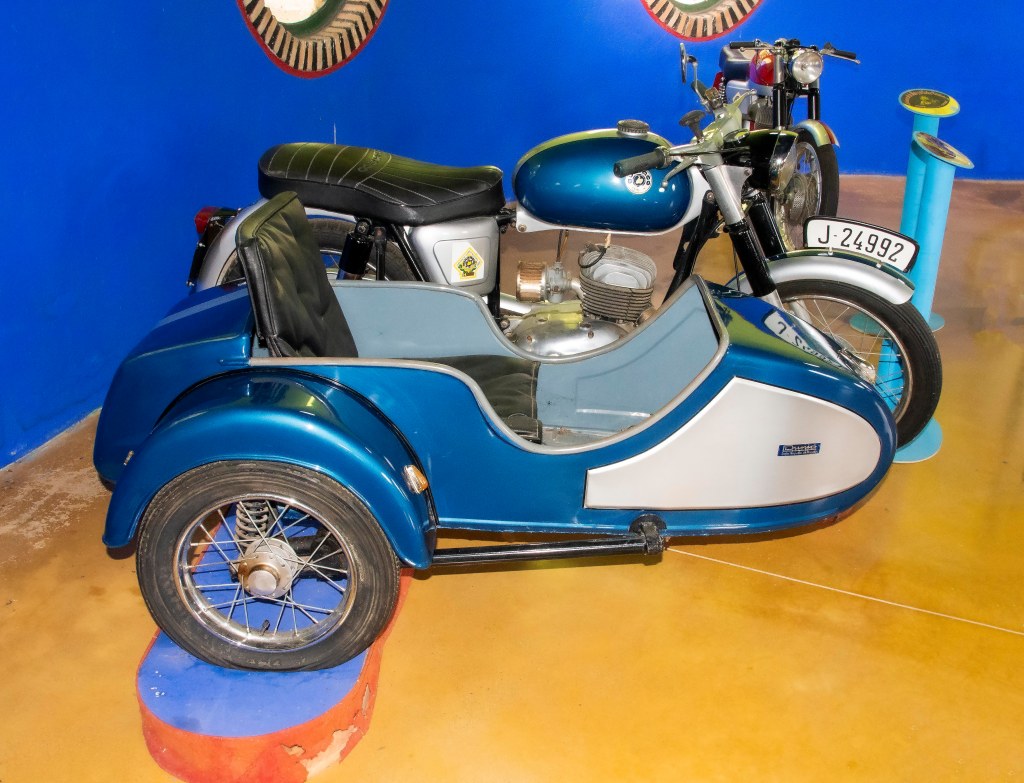
This Dunjó sidecar is attached to a 1960 Bultaco Mercurio 155cc and was photographed at the Museo de la Moto y el Coche Clasico, 10700 Hervás (Cáceres)
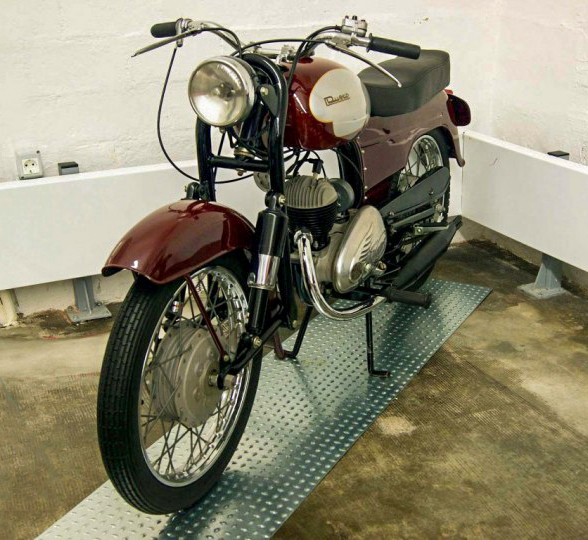
1957 Dusco A-125 125cc The photo was downloaded from the 360carmuseum.com website, who I have contacted for permission to share here but the website seems to be defunct.

