In the 1940s, Alfredo Avello, a Basque entrepreneur in Gijón, Asturias, ran a workshop that specialized in engineering and manufacturing. Whilst machine tools were the mainstay of his business, his personal passion was for motorcycles. As the decade ended, Avello’s craftsmanship (and production capacity) drew the attention of MV Agusta, the Italian motorcycle giant.
At the time, MV was collaborating with the Alpha workshops in Barcelona to produce the MV Alpha line of motorcycles. However, despite strong sales, Alpha’s limited manufacturing floor space was proving a bottleneck in efforts to increase production.
To overcome this, in 1951, MV Agusta transfered its manufacturing contract to Avello’s more expansive and advanced facility in Gijón. This move created the MV Avello brand, under which MV Avello badged motorcycles were marketed in Spain until 1956. (After this year, the bikes adopted the MV Agusta name for sales in Spain).
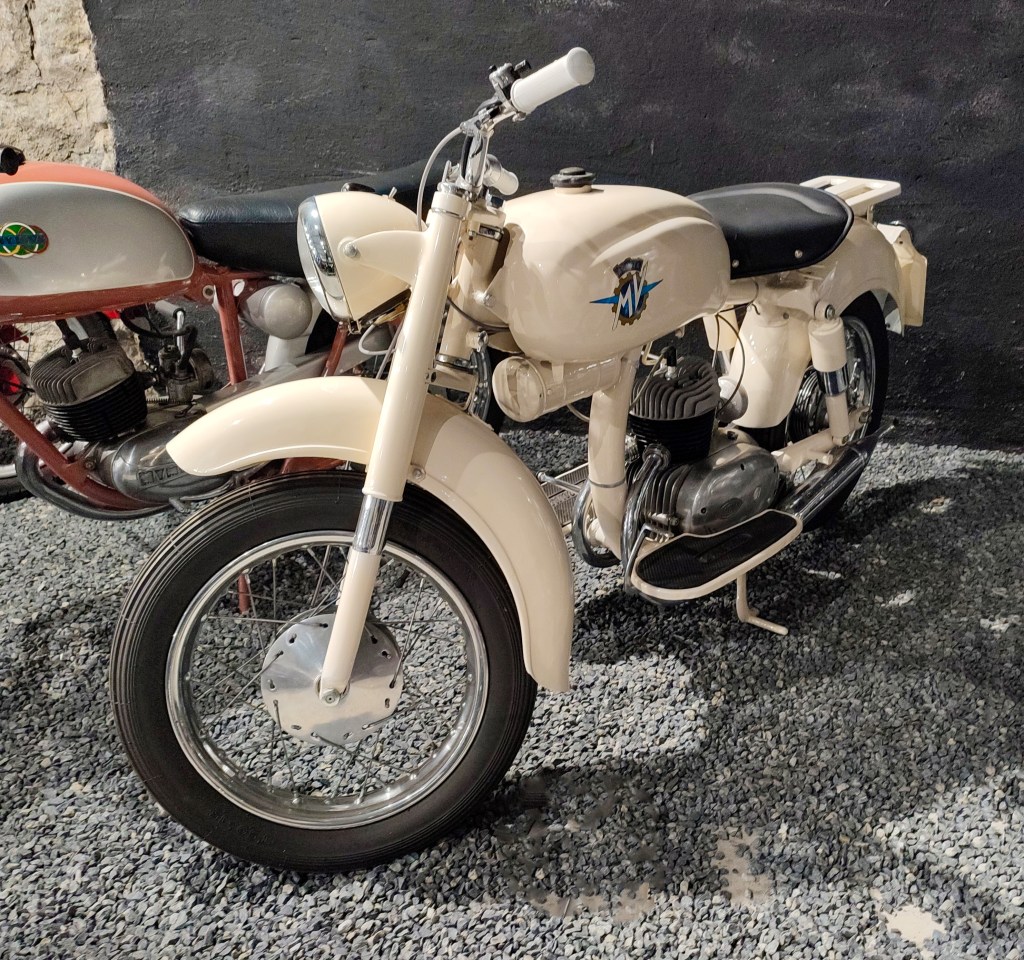
This 125cc Pullman was on display at Caldes de Boi, in Catalonia
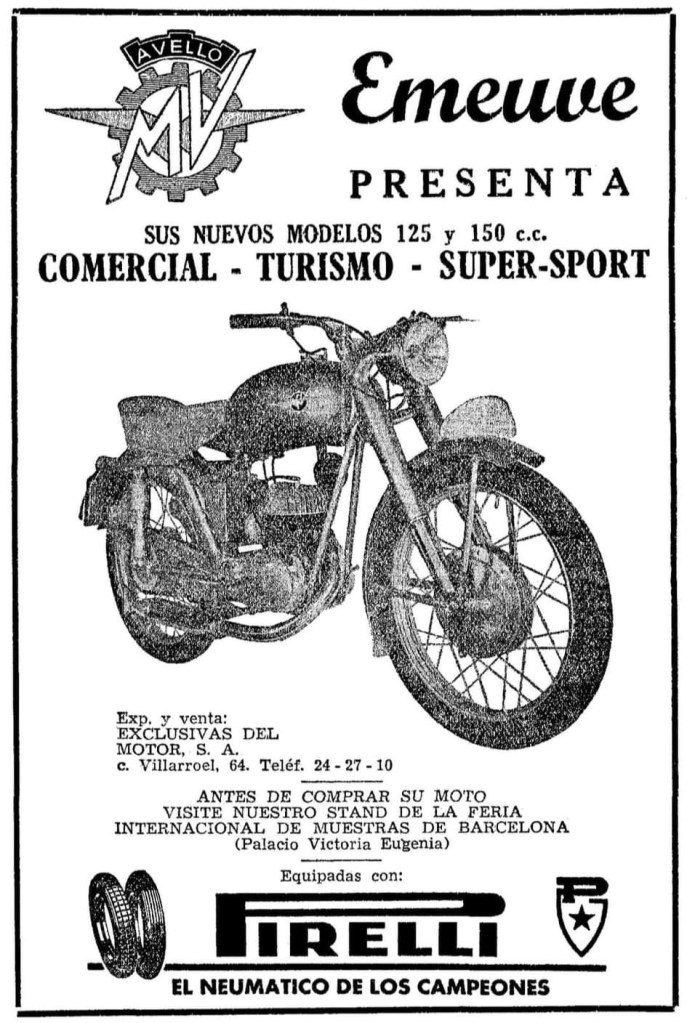
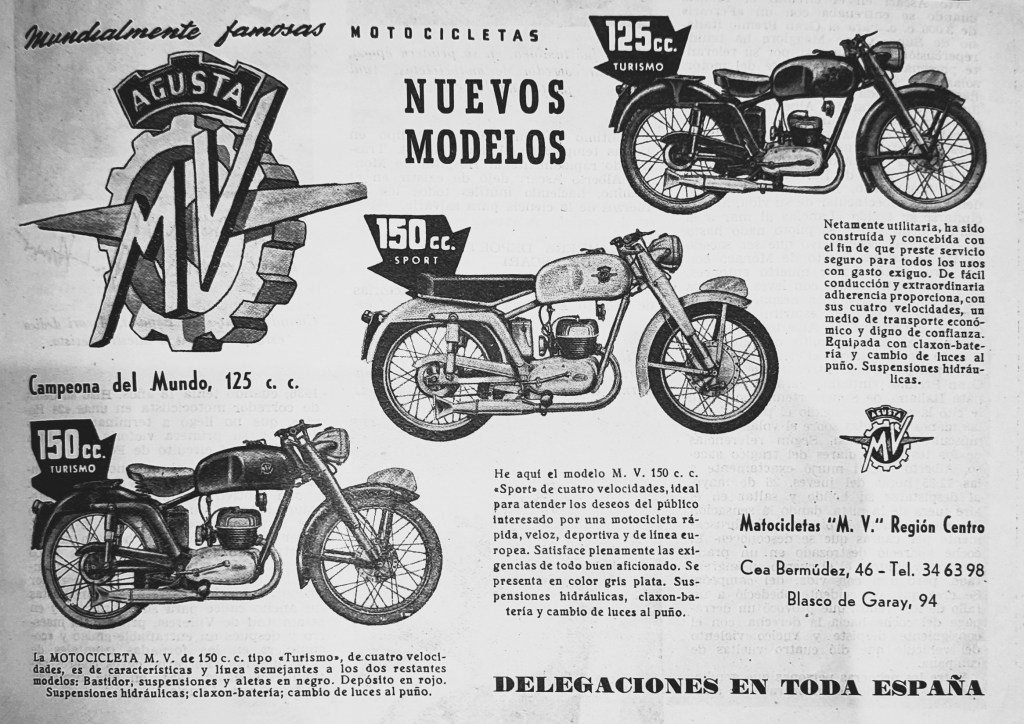
The new MV Avello output continued with small. two stroke singles, starting in 1951 with the 125cc and this was followed in 1954 with the 150cc, Turismo model and in 1958, the 125cc Pullman was released. Then, in 1959, MV Agusta presented the small engine displacement sector of the Spanish market with another direction and introduced the 125 TR – a 125cc, 4 stroke, single. In 1961, the 150cc MV Agusta Sella and the 235cc Deva, both four stroke singles, were also released by the Avello factory. These models used names of local rivers in Asturias, rather than those of the Italian models that they were based on – the Gran Turismo 150 and the Tavere 235cc.
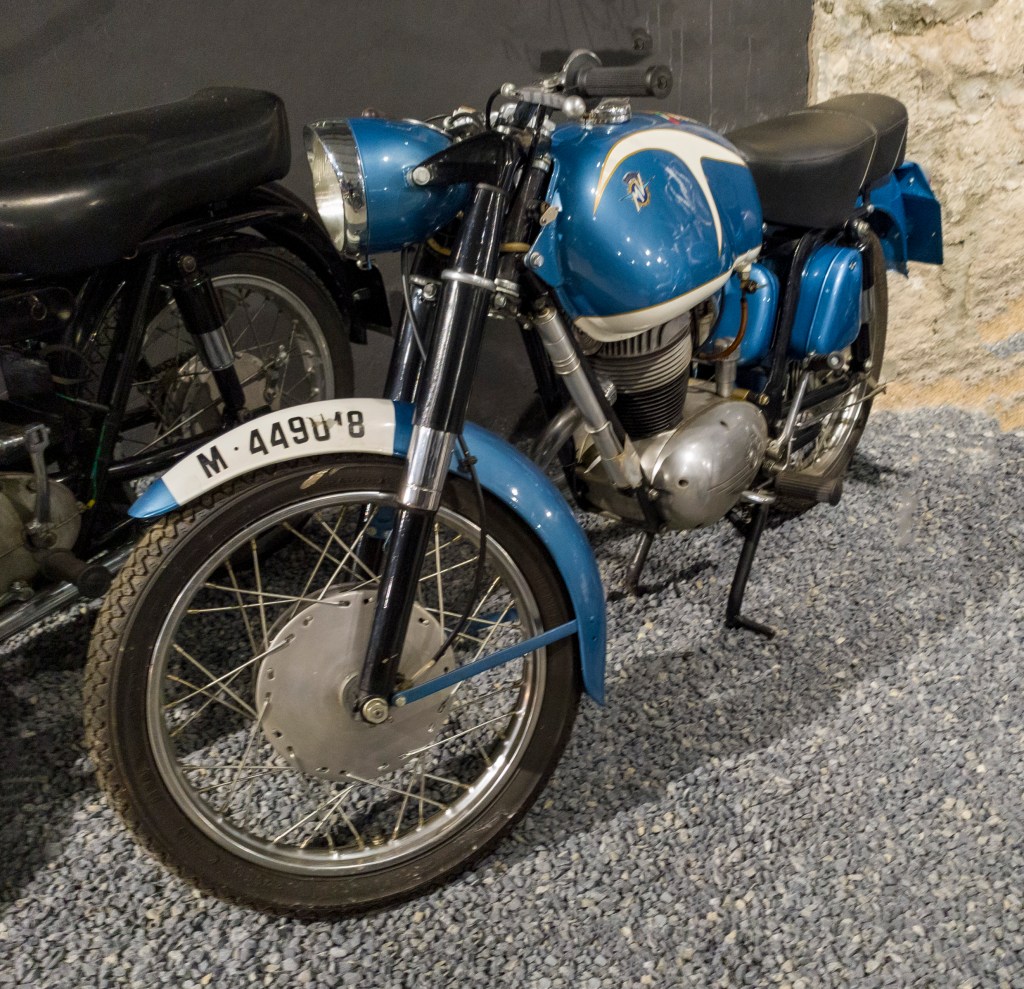
This 150cc Sella is on display as part of the Walter Ankli Collection at Caldes de Boi, in Catalonia.
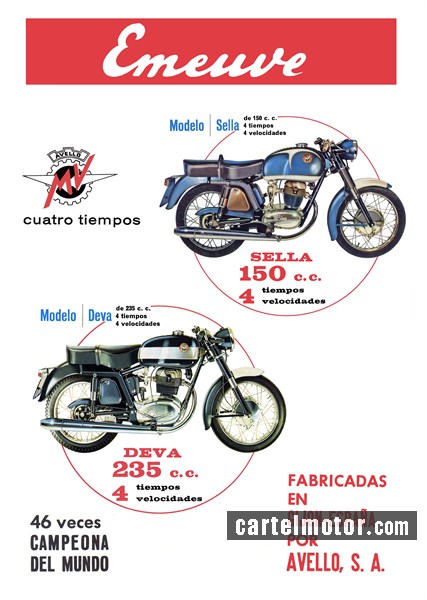
This publicity document was downloaded from http://www.cartelmotor.com
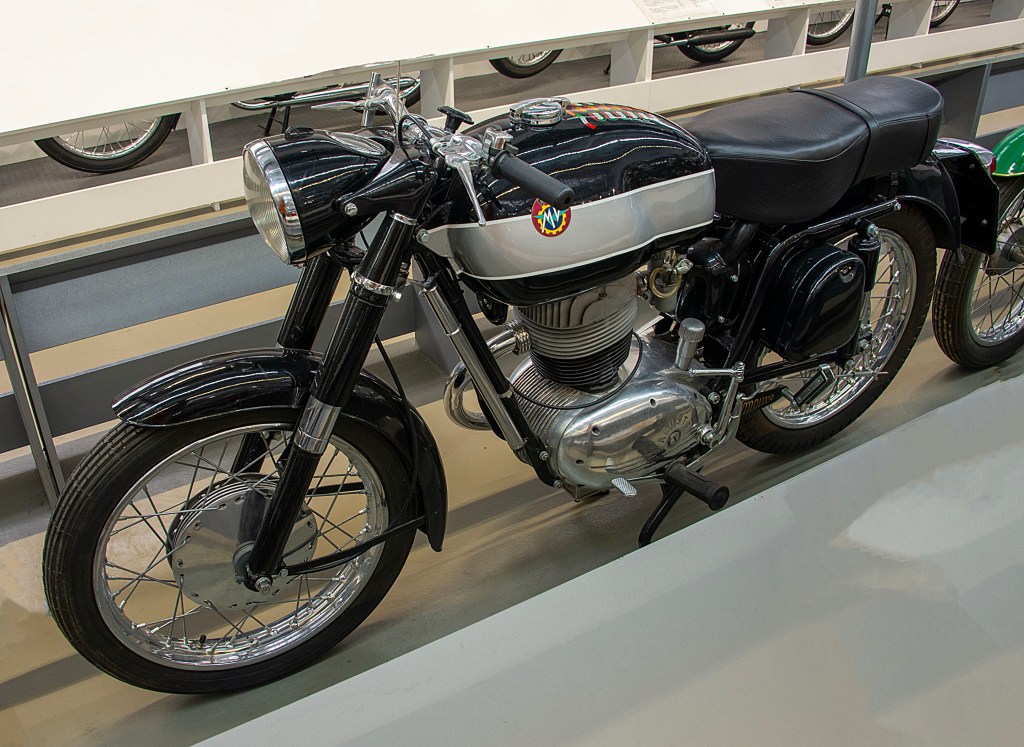
This MV Agusta Deva 235cc (1966) was photographed at the Museo de la Motocicleta Española, 28802 Alcalá de Henares (Madrid)
However, although the brand prospered, a difference in vision became apparent. Avello favoured the continued creation of smaller, single-cylinder motorcycles, which were more in tune with Spanish consumer preferences. Conversely, MV Agusta, from its headquarters in Italy, aimed to concentrate on larger, multi-cylinder, four-stroke motorcycles, mirroring their success in road racing competitions. This ambition was most notable in the 500cc category, where MV Agusta reigned supreme in the World Championship from 1958 to 1974.
In 1972, the collaboration between Avello and MV Agusta came to an end and Avello entered into a formal partnership with the Austrian industry giant Puch, which had previously secured a 50% stake in Avello back in 1970. In the years that followed, the Gijon facility began by manufacturing models that combined Puch engines with Avello frames, before eventually shifting to produce motorcycles under the Puch name.

